

Social Media, Risk, Cross-Functional and Strategy
Renowned author and literary critic Lawrence Clark Powell said, “Write to be understood, speak to be heard, read to grow.” The idealism inherent in this statement is inspirational for the pharmaceutical industry when overcoming communication challenges. Barriers are eliminated through insightful interpretation of the written word, verbalization of details that ensure full comprehension and total absorption of etched material to expand knowledge base. A smooth and seamless exchange of information results from the creative ways enlisted to handle social media, risk, cross-functional and brand strategy dialogue.
Social Media
 In the digital age, it is imperative that pharmaceutical companies have an online discourse with patients to continue moving forward and not fall behind. Facebook is a tremendous opportunity to engage and connect with patients worldwide. The challenge with social media is that the continuous redesign of rules and regulations require strict adherence. Worldwide regulatory bodies, including the World Health Organization and the United National Health Care Organization, mandate the type of drug information companies can disseminate. In the United Kingdom, referring to the name of a prescription drug or an internet address is considered advertising which is prohibited for prescription medications. In the United States, the Food and Drug Administration stipulates that brands must add the associated risk information to their social media campaigns and allow accessibility to effective risk discussions.
Prevailing over this challenge by posting generic – rather than specific – information about drugs creates a community that explores widespread topics and promotes a mission with patients as Facebook “fans.” The potential to advance the corporate image of pharma companies is reinforced when patients read and comment on engaging medical information. Although pharma is not permitted to direct patients about the benefits of medications or which to purchase, they are at liberty to respond in broader terms and promote online drug awareness campaigns. Pharma should delineate the terms of engagement on Facebook pages and state plainly the types of comments that receive a response.
Cross-Functional Communication
 In a 2014 study “Pharmaceutical Regulatory Affairs: Arming Regulatory Groups with Voice and Influence to Meet Strategic Challenges,” 48% of drug companies reported a lower level of comprehension with interdisciplinary regulatory requirements. Some internal teams are not aware of the timing of changes in the regulatory environment. These individuals believe that an agency approves a drug merely because it is clinically beneficial but they fail to notice its cost-effectiveness and trial design. Internal groups do not understand fully the impact of regulatory strategy on developing drugs, authorizing medications to be put on the market, and marketing after the approval process has ended.
The remedy is for regulatory affairs to lead discussions with cross-functional teams about processes that provide clarity on current guidelines. Regulators should promote the benefits of guidelines and set forth perspectives and priorities that impact the way prescription medication is developed. Focusing on the rules that increase the chances of medications entering and remaining in the market not only results in improved internal team communications but also stronger relationships with regulatory agencies.
Risk Communication
 Communicating risk is a critical component in the reputation of pharma companies. Summary of product characteristics, package inserts, patient information leaflets and cartons are all tools currently regulated based on templates. The call to action arises when the use of templates limits the flexibility of companies to adapt risk messages to certain targets. These templates do not afford companies the opportunity to understand the message perception by different audiences and the fundamental drivers of change in patient and prescriber behavior to increase safety and minimize danger.
The comeback is for pharma companies to assimilate a separate group of communication professionals who focus solely on coordinating conversations aligned with objectives that are accepted by key stakeholders unaffiliated with regulatory agencies. Pharma companies need to emphasize promotional material with supporting factual sources. A team of professionals must determine communication effectiveness, gauge audience reaction and modify the level of risk accordingly. It is essential that trained individuals who know how to manage risk, which may become public later and damage the company reputation, be assigned exclusively to handle the internal dialogue about impactful issues. The relationship between risk communication, perceptions and management is of major concern and it is important that it be addressed.
Drug vs. Brand Strategy
Pharma companies focus their communication efforts on illnesses with the best or “one and only” treatment. In the future, if the severity of diseases diminishes with just one treatment or with only one medicine that is different from others on the market, communication strategies will have less value. Newly introduced medicines are only unique for a short period of time because constant innovations enable more effective drugs to enter the market. Innovative drugs with reduced prices enter the market and profits decrease.
The technique to settle this is to shift communication strategies from centering on drugs to building brand policies. Connecting brands to concepts makes the pharma industry stronger. Pharma needs to promote what differentiates them from their competitors with a distinguishable brand identity. An umbrella brand protects and empowers medications and also makes it easier to launch drugs that have curative capabilities while a new communication strategy uses brand journalism and consumer engagements to spread the word about the brand. Articulating messages with clarity and being aware of brevity is of utmost consequence. When brand leadership is revealed to the general public, prestige and stature enhance the reputation of the drugs.
In conclusion, communication is a two-way street, but the conveyance does not always occur fluently. Messages from the sender are not necessarily understood in their entirety by the receiver in the intended sense which results in a communication breakdown. Pharma needs to gain the confidence and courage to develop creative solutions that master dialogue challenges with social media, expressing risk, communicating information cross-functionally and brand strategy.
References
“Cross-Functional Communication of Pharmaceutical Regulatory Strategy Boosts Organizational Impact.” Business Wire. (2014)
Cura, M. and Costa, M. “Communication in the Pharmaceutical Industry from Product to Brand.” Developing Ideas. (2015)
Elgie, D. “Pharma Brands on Social Media: Overcoming the Challenges.” Emoderation. (2015)
O’Riordan, B. “6 Challenges Facing Pharma Communications.” Pharmafile. (2015)
“Risk Communication and the Pharmaceutical Industry.” SpringerLink. (2015)



 Advantages
 Opportunities
 Benefits
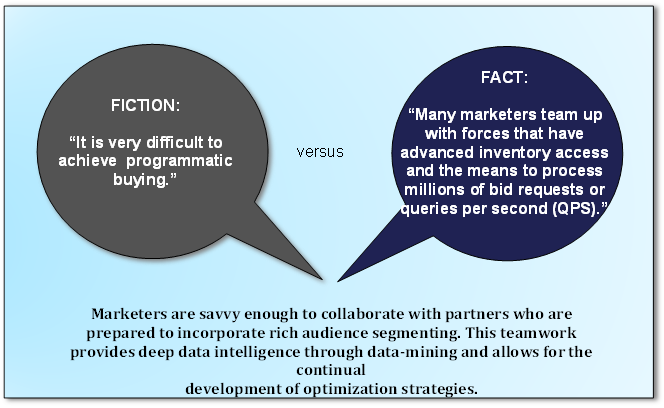
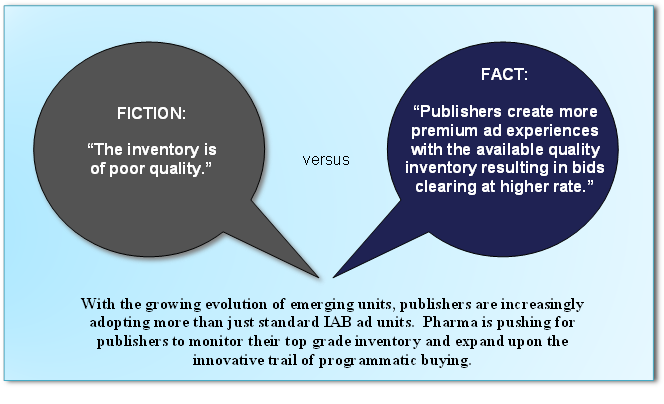
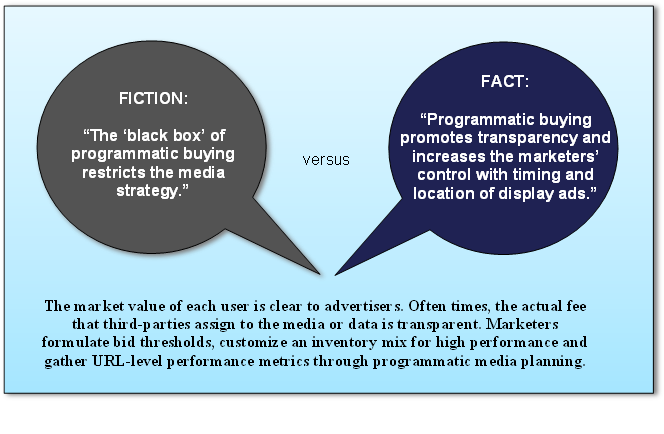
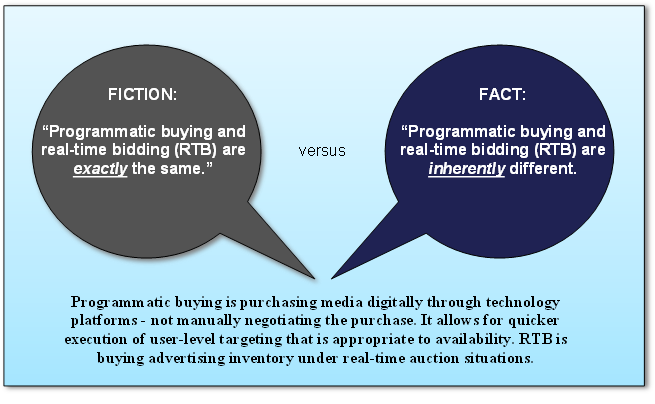
 Managing Global Frequency. Marketers effectively map users to all of their devices, match users across a myriad of platforms and determine frequency to an individual. They control their messaging and influence their bidding strategies to usher users into frequency where conversions emerge.


 In the book “The Innovator’s Prescription: A Disruptive Solution for Health Care,” Clay Christensen, who developed the theory of disruptive innovation, stated, “There are more than 9,000 billing codes for individual procedures and units of care. But there is not a single billing code… for helping patients stay well.” In the pharmaceutical industry, disruptive innovation improves health by generating ideas that create new drugs at the expense of existing ones. It is an alliance between technological advances and new business models that dramatically changes the performance of the industry. The progressive spectrum of disruptive innovation challenges include lessons from the past showing resistance to change, implications surfacing in the present which emerge from cautious analytics and trailblazing dynamics in the future aligned with patient centricity.
 As the above example shows, the advancement of pharmaceutical innovation efforts are most often prevented by established world views, opinions, customs, attitudes, societal values and complex psychological and emotional issues ingrained in the network of relationships that define individuals singly or collectively. In certain situations, innovation challenges are rejected directly because they are seen as threats to the means of support and character of many stakeholders, such as pharmaceutical companies, Federal regulatory institutions and the American Medical Association, that deploy an intangible but forceful influence on decision-making. Resistance to change in pharma emanates from industry incumbents whose jobs rely on sustaining the existing business model and political power. As Upton Sinclair said, “Never expect someone to understand change when their livelihood depends on not understanding it.”
 In the future, the drug lifecycle needs to incorporate many facets of patient centricity, including the use of new technologies such as gene- and proteomics, gene therapy, nanotechnology, and Big Data driven predictive analytics. Precision medicine will identify exact patient needs and tailor molecular profiles to create the most beneficial treatment plans for patients on an individual level. New social media tools will allow patients to share information and participate in collaborative discussions with regulators and pharma.

 mproving core competencies, emphasizing cost control, focusing on comparative effectiveness, and elevating market access are part of a new strategic planning process. Payers, such as private insurance plans, pharmacy benefits managers, governments, and employers, have moved to the forefront of the pharma industry. They now strongly desire information about drug safety and efficacy to compare drug cost effectiveness to alternative treatments. In the past, determining how much payers would pay for drugs was a major challenge for marketers. However, most recently economically justifying and identifying the intrinsic value of a certain drug is a more important challenge.
 Creative ways are now engaged to capture treatment benefit through subjective research. These practices demonstrate full product value to patients, regulators, and payers. Patients visually express disease experience with mood boards using a collage of images and/or text that represents their emotions and thoughts with drawings or online platforms such as Pinterest. People receiving medical care also utilize body mapping to indicate the location on their body where they experience signs of disease and pain. Patients tell their story in video diaries, often times using smart phones to point out their disease experience in real time. In prior years, face-to-face interviews and focus groups were sufficient, and drug developers relied on merely clinical outcomes. Nevertheless, currently patients recognize the significance of comprehending and collecting subjective research about patient attitudes, preferences, and experiences.
 Six Sigma and Lean Manufacturing allow pharma to predict and eradicate errors which boost operational efficiency and increase the chance of quality products and compliance, as opposed to relying on end-process testing. These techniques also optimize resources, control inventory, reduce waste and errors, improve customer service and change the market entirely. They identify and remove the causes of defects while minimizing variability in manufacturing and business methods. These tools employ empirical, statistical methods so that a certain group of people materialize as experts in these methods and become an integral part of the infrastructure of the organization. Presently, profits are declining due to greater competition emanating from generic brands and an increase in errors within the manufacturing process. On the other hand, Six Sigma and Lean Manufacturing offer the possibility of saving pharma an estimated $90 billion dollars internationally.
 The National Research Council describes Precision Medicine (PM) as adapting medical treatment to the specific characteristics of each patient. It arranges individuals into subpopulations that differ in their likelihood to contract any particular disease. PM is the advanced and detailed understanding of the root causes of a disease and how best to respond with proper treatment taking into consideration genetic changes and ultimate cures.
 Preventive and therapeutic interventions, such as physicians dispensing prescription medications during medical visits, benefit patients without high cost or side effects. Health care professionals have the ability to prescribe the right drug for the right patient at the right time at the right place. Patient savings are realized in terms of time, energy, convenience, and money. Also, better health outcomes are achieved with patient adherence because the early stage obstacle of compliance is removed – the patient taking the time to process the prescription through mail order or at a pharmacy. Furthermore, assigning clinicians the power of POC prescribing confronts the dilemma of health disparities.
 Relative advantage. Gather an understanding of the ROI and cost mindset of the patient, medical staff, and decision makers.


 Health beliefs are predisposing characteristics that are not easily changed.
 Developing Specific Targeted Strategies