
Latest News


July 27, 2018 0

The theme of this month’s newsletter is consumer trends. Here’s a recent one worth talking about: According to new research, consumer trust in pharma has hit a new low, dropping 13 points from 51% to 38%.

How can an industry that does so much good have such low credibility? Listen to patient testimonials in focus groups and those that are seeking treatment are incredibly appreciative of their prescribed treatment — especially when it allows them to breathe easier, or control their sugar levels, or prevent a heart attack. So why the drop? According to the research, the high cost of healthcare was partly to blame. Most respondents also said they believed pharma companies put profits ahead of patients.

This latter sentiment uncovers a real need for pharma brands to discover new, more personal ways to connect with patients. 68% of consumers said they would trust a pharma company more if it also provided them with information, tools, and support to help them manage their disease.

So let’s give the patients what they want! This doesn’t require a complete overhaul of your current marketing strategy; rather, brands can identify the right engagement opportunities where refined messaging will resonate most with patients — both inside the physician’s office and out. Promote the patient savings programs to make your drug affordable; explain the how and why of how your drug works in easy-to-understand terms (if regulatory will allow you!).

Putting the focus on the patient first, offering information, and resources throughout his or her care journey that helps them better understand their own condition, more effectively talk to their doctor and more easily find and follow the right treatments, is exactly what is needed to start to turn this trend around.

Point-of-care platforms are already providing patients and caregivers with disease-specific education and information in the waiting room, exam room, and beyond. Take advantage of these channels and feature accompanying content to show you empathize with patients and are truly a trusted partner in their care.

While trends are transitory, we can’t afford to ignore these perceptions of our industry. We all know the good work we’re doing to help patients live better, healthier lives. This research, however, should serve as an important reminder that we could be doing even more to show patients that their best interests are truly at the center of everything we do.

Linda Ruschau


July 27, 2018 0

Whether you’re new to the DTC pharma space in the US, or an industry veteran, what you need to know to stay ahead.

The advertising of prescription drugs on TV and in magazines is a uniquely American phenomenon. Turn on the news or flip through a magazine and you’re likely to notice a pharmaceutical commercial or ad. In fact, prescription drugs are now among the top 10 most advertised product categories in the US.

In the 15 years I’ve helped pharma brands forecast and test their direct-to-consumer (DTC) ad campaigns, I’ve seen a shift in the content. Where ads originally focused on drugs for widespread medical conditions (e.g. high cholesterol, depression), today’s campaigns address health problems suffered by much smaller populations, such as Crohn’s Disease and lung cancer. But that’s just one example of how the DTC pharma market has evolved in the US.

My SKIM healthcare colleagues and I recently attended the DTC National Conference in Boston to explore the industry’s latest trends and innovations. Here I’m sharing our top three takeaways from the DTC conference:

1. The Promise & Pitfalls of the 6-Second DTC Ad

Often referred to as “bumper ads,” the 6-second YouTube ad is a popular option for consumer marketers. But can these work for pharma brands? With their long length, complex messages, and side effects requirements, pharma DTC commercials may seem like unlikely candidates for this media.

However, 6-second DTC ads are not only plausible; their utilization is expected to grow. While the 6-second length is prohibitive for branded DTC ads with product claims and side effects, “reminder ads” are compatible with this short format.

What’s the ideal scenario for this type of media buy?

Woman on tablet

Since reminder ads only emphasize the drug brand name and contain no information about product benefits or side effects, we recommend their use in supplementing larger, branded campaigns. Brands spending at least $50 million in annual advertising will see most success with bumper ads. Since these 6-second ads typically employ the same creative look and feel as the longer commercials, they can aid viewer recall. However, without that level of ad spend, these 6-second DTC reminder ads are risky as they lack context and meaning when they’re seen by patients who haven’t been reached by the associated branded campaign.

2. Consider Addressable TV for Advanced Targeting

Successfully targeting and reaching the intended audience has always been a challenge for pharma marketers planning DTC campaigns. The population of patients who are eligible for the medication may be relatively small, meaning that a high percentage of advertising impressions are “wasted” on viewers who have no interest in the advertised product and will never be candidates for treatment.

“Addressable TV” is a digital innovation that allows marketers to target specific households using algorithms based on demographic and geographic data, similar to digital video. With nearly 50 million US households ‘addressable’ via cable set-top boxes, advertisers can now identify those homes whose members have a greater likelihood of having the medical condition that is treated by their pharmaceutical product.

Couple watching TV

Take as an example osteoarthritis, a medical condition that primarily affects an older demographic. Marketers can use Addressable TV to advertise an osteoarthritis drug directly to households with individuals 60+ years old vs. those with younger viewers who may be tuned in to the same programming next door.

When we work with pharma brands to forecast the impact and ROI of DTC campaigns, we model the awareness-generating ability of Addressable TV differently than we model traditional television. Current industry analysis indicates that Addressable TV is more effective; we will see if this trend remains evident as more and more data becomes available.

3. Explore Ad Concepts with Real Patients vs. Actors to Enhance Campaign Authenticity

Pharmaceutical DTC campaigns are sometimes criticized for using actors who don’t resemble actual patients, presenting an unrealistic depiction of the medical condition. Perhaps with this criticism in mind, some advertisers have opted for real patients in campaigns instead of actors.

“Before and after” photos are a staple of advertisements for dermatological medications. These photos become more convincing if real patients are depicted. Not only does the portrayal of the true efficacy of the medication become more accurate, the authenticity of the message is enhanced.

Nervous to ditch the actors? In our pharma DTC concept testing research, patient groups evaluate different ads and rate them according to standard metrics, such as their expected likelihood of asking their doctor to prescribe the medication. Patients can often sense when an advertisement is inauthentic and the message is more likely to resonate when authenticity shines through.


This article is republished with permission. Click here to read the original posting.

Fred Church


June 29, 2018 0

The latest Chantix smoking cessation DTC television ad is featuring my favorite wise guy actor Ray Liotta. Looking a little grayer and heavier Ray is still the iconic member of the De Niro/Pesci crew from Goodfellas, maybe only slightly behind The Godfather in my favorites list. Ray is also in my favorite baseball movie Field of Dreams, portraying the leader of the dead baseball players returning to Kevin Costner’s cornfield.

Ray’s lifelong bugaboo was getting to stop smoking. Pfizer is using him to promote Chantix and rather than just being a paid announcer he is actually a real patient, still paid handsomely I assume. I like him in this role. Usually I wonder how much a celebrity adds to a drug pitch. Do potential users really care that a Hollywood type uses a drug? There have been very effective celebrity campaigns, Sally Field for Boniva, Jennifer Aniston for Dry Eye, Phil Mickelson for Psoriatic Arthritis to name a few.

Bob Ehrlich
“Ray got my attention.”
-Bob Ehrlich

A celebrity campaign needs to get the audience to believe that the celebrity actually uses or really believes in the drug advertised. There are some celebrities who endorse anything and pushing garlic pills, grape juice, reverse mortgages, might hurt your credibility when pushing a cancer treatment. Drug companies need to be very careful that the celebrity chosen has limited exposure as an endorser of health products.

Ray Liotta, to my recollection is not a serial endorser. In fact I do not remember him doing any commercials. That is a good first step. Can I Imagine Ray Liotta having a smoking habit? Sure can. Is Ray credible saying he has had a lifelong problem stopping smoking? Yes. So far so good. What is interesting about the campaign is that Chantix has been on air for years with regular folks pitching their success. Maybe they felt they needed to reinvigorate the story and potential customers would stop and re-engage after all the years of real patient testimonials. Ray got my attention, maybe a bit less than Joe Pesci would have, but any Goodfella is better than none.

I do not know if this is a one off use of a celebrity for Chantix or the first in a series. One thing we know is Hollywood is likely full of smokers, and addicts of other less than legal substances. No credibility issue with Ray having a smoking addiction. I am sure Pfizer will be very careful vetting their celebrity candidates. With all the problems of celebrity reveals on past sexual harassment/assault it is important to do your homework. I think they have chosen well here. Congratulations to Pfizer and their agency for a well done celebrity campaign.

Bob Ehrlich


June 1, 2018 0

Allergan’s Botox is going “Brotox” in its latest DTC campaign. That term is not mine as I borrowed it from a Forbes article. Men, yes, we men are a vast untapped market for smoother skin. As I age, my frown lines are forming, and why not try to look better. For me being the frugal sort, I will personally pass and learn to love my new post 60 visage and save my money.

For those men interested in starting on the cosmetic road to rejuvenation Botox has decided to talk to you directly. From the actors in the DTC spot, it looks like the target are 40-50 year olds who are concerned about maintaining their youthful looks. A Matthew McConaughey type in an expensive suit is seen adjusting his tie as the announcer says, “details make the difference”. Another scene shows another professional who seems to be an architect while the voice over says what Botox is indicated to improve. A third actor is shown jogging while the indications are further discussed.

Bob Ehrlich
“Botox is going ‘Brotox' in its latest DTC campaign.”
-Bob Ehrlich

The tone of the ad is that men who get Botox are not vain, just fine tuning their details which make the man better. The closing tag line is “The details make a difference; the man makes them matter.” I interpret that to mean this will not transform you, but just give you the little edge to boost your confidence. These men are already successful, and Botox will help them continue that on that track.

Why are men a DTC focus? It has everything to do with the huge market that is under developed with men. Botox is trying to get them to see cosmetic treatment as something that is perfectly normal and not just for Hollywood stars. They want to show that refining those little facial details is just another step in grooming and dressing well. In other words, real men can use Botox. The number is not yet big but growing fast. According to Forbes it was 400,000 in 2014 but grew over 300% in the last ten years.

So, Allergan sees the benefit in investing in a DTC campaign to make Botox more acceptable to men. That is not easy because the historical and cultural male image is to be accepting of those signs of age. The weathered face of the macho man is ingrained in our heritage. John Wayne and Charles Bronson would not use Botox. Mick Jagger and Keith Richards also a no. Maybe Matthew McConaughey and George Clooney would. So this effort is to get the 40 year old male to see cosmetic dermatology in a new light. The wear their baseball cap backwards generation will likely view these Botox tune-ups differently from my generation. Hey, why not if that is how you want to spend your discretionary dollars.

I still drive a Honda, buy most of my clothes on Amazon, and never will pay for first class air. Sorry Allergan but no Botox for me. Fortunately for them I am a dying breed of male. Goodbye Charlie Bronson and that weathered face. Smoother is in.

Bob Ehrlich


May 29, 2018 0

If I have heard it once, I have heard it a thousand times: organic marketing on Facebook is dead. Pay-to-play, experts say, is the only way to really reach desired audiences. Regardless of industry, this has been the overall takeaway.

This clarion call has only gotten louder since Facebook announced in January that it would further prioritize content from friends and family on users’ News Feeds (see here for Facebook’s current commercial). This effectively makes it nearly impossible for brands’ organic content to rank high enough to be seen and forces them to spend more on paid ads.

Well, to paraphrase Mark Twain, reports of the death of organic Facebook marketing have been greatly exaggerated. The first step to successfully fighting off that organic content death knell is identifying what connects Facebook users to those friends and family whose content will be prioritized: relationship.

Relationship Required for Effective Organic AND Paid

The challenge – for brands, at least – is that Facebook feeds effectively reflect what we want to do and see in real life. As users, we are interested in what our family members are up to; get excited about friends’ baby announcements; and engage with people on their opinion about new movies.

All of these things are built around our unique relationships, and, to be blunt, reading a post from a pharmaceutical campaign doesn’t typically rise to that same level. In general, a brand’s priorities are not about the Facebook user; they’re about the brand. It’s possible for a brand to establish a trustworthy relationship with users, but it requires commitment.

What exactly do I mean when I talk about a relationship on Facebook? Despite Facebook being a technology platform, the relationships are still human. They can be emotional, educational and supportive. Ultimately, two-way conversations are the cost of entry for a true relationship.

If a brand creates content that allows for meaningful conversation and has a clear benefit to users, it will start to receive likes, comments, and shares. As that brand’s content consistently receives engagement, Facebook will increasingly deem this a real relationship and make it more likely for that content to appear organically in the feed.

Organic growth will slowly occur as people share posts with their friends, who then share the posts with their friends. Eventually, brands will begin to build relationships via these people who are connected by shared interests. For those with patience, there is power in organic growth.

Of course, for those with less patience who want to reach more people quickly, it then is necessary to pay to promote content. However, a marketer with good Facebook user relationships – and, as a result, successful organic content – won’t need to pay as much. Facebook understands the value of relationships to users, as well as the value of those relationships to the relevance of the entire platform. Therefore, it doesn’t want to waste feed real estate – no matter how much brands pay them – on poor relationships.

How Most DTC Marketing Content Falls Short

Unfortunately, pharmaceutical brands don’t necessarily have the infrastructure to create authentic, relationship-building content that truly meets patients where they are. For a multitude of reasons – including risk, regulatory issues, and the lack of a core competency in creating content – it is nearly impossible for marketers to engage in open-ended conversations via social and digital platforms, including via unbranded campaigns. This reality limits the organic potential.

Marketers of unbranded campaigns often create generic content relevant to a perceived majority of people living with a specific condition or focused around a celebrity with some relationship to that condition.

However, not every person has the same experience with a specific condition. From symptoms to family life dynamics, people are as diverse as their feeds. Regardless, pharma brands spend a lot of money and resources forcing generic content into people’s Facebook feeds that doesn’t truly foster a relationship. Making matters worse, it creates a vicious cycle of overpaying.

What Marketers Need to Do

As marketers, we need to create a range of personal content that speaks to people at various stages of their journeys. This content must encompass a wide variety of emotional, educational and comprehension levels. For example, it’s important to include posts about clinical trials for those who are more inquisitive and proactive about treatments along with lifestyle articles about how tough it can be to wake up in the morning for the newly diagnosed.

The intent behind this is not simply to increase reach, which it still does. On a greater scale, it establishes that a brand is willing to understand where people are in their patient journeys, as well as the information, resources, and conversations they need. This increases the likelihood that a Facebook user with a specific condition will find content relevant and worthy of engagement. That engagement then makes it more likely to push that marketer’s content toward the top of that user’s feed.

There are two major obstacles here. First, it’s not easy to just start creating relatable posts, engaging around it on Facebook, and assuming it will have impact as organic content. Marketers need to be fully committed to having a two-way relationship with people and everything that entails.

Second, as mentioned previously, pharmaceutical brands can only do so much on social and digital channels, due to the regulatory environment. Therefore, the first step is to get into the mindset of “meeting people where they are.” This is done by being open to and then creating promotional campaigns, tools, and ads that show the brand understands various aspects of the patient journey, as opposed to creating a single ad or promoted post that might only be relevant to a subset of people with a condition.

However, to truly get the desired organic reach on Facebook, brands should invest in the necessary resources to understand people’s needs. The best way to do this is by partnering with companies adept at listening to relevant condition-specific conversations, moderating engagement, and adapting messaging. In short, these partnerships are the relationships brands need to create and maintain meaningful relationships on Facebook.

David Shronk


May 29, 2018 0

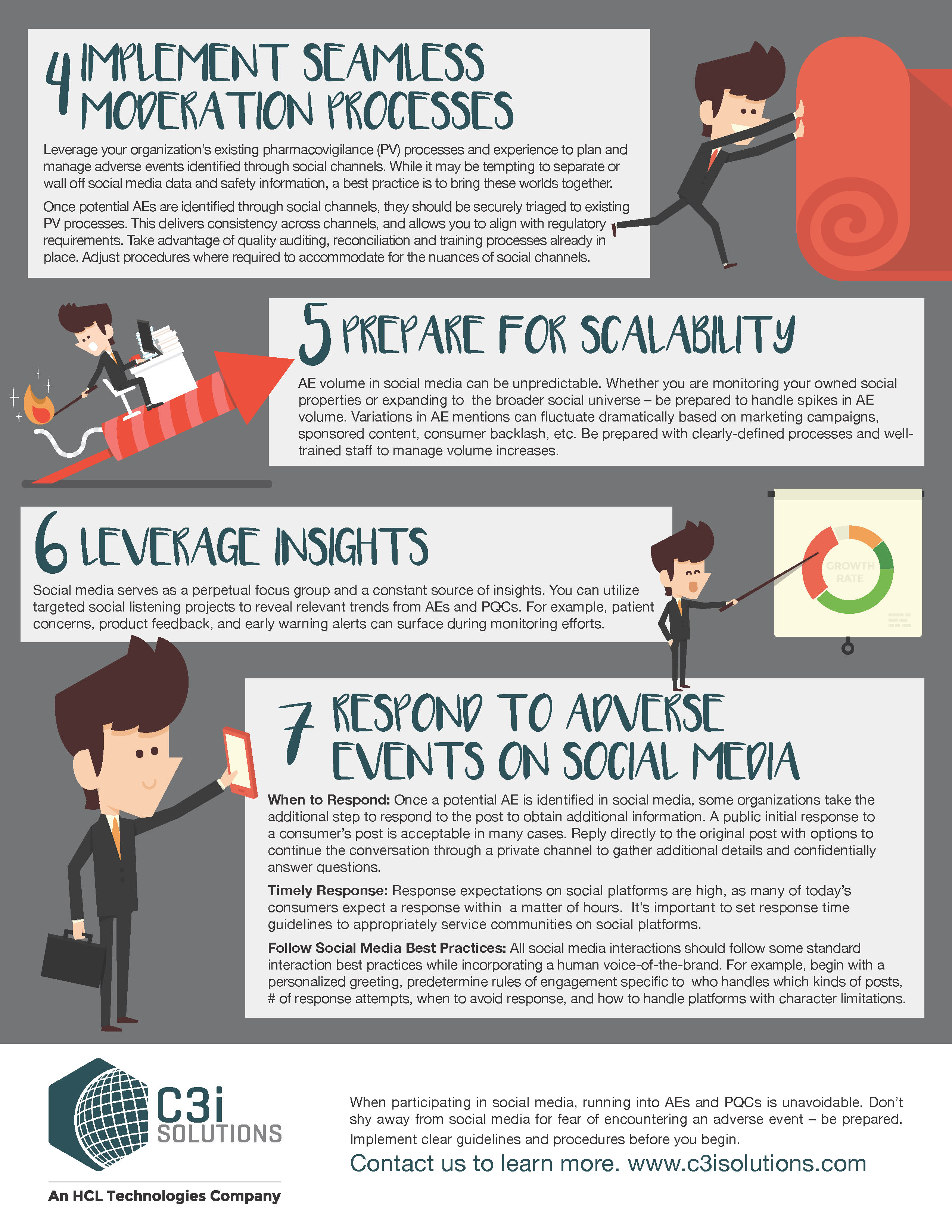
In an ever-changing pharma environment staying connected is vital. Amidst regulatory challenges and uncertainty of new channels, the pharma industry is beginning to embrace social media to empower patients and healthcare providers. Social platforms are uniquely designed to support patient and provider needs perhaps more directly and efficiently than traditional channels. Social technologies can be leveraged to support patient engagement, ultimately leading to healthier patient outcomes.


Karen Weber


May 29, 2018 0

Sponsored Content

PatientPoint had the honor of sponsoring the Top 25 DTC Marketers and Hall of Fame awards at last month’s DTC National. During Hall of Fame inductee Christine Sakdalan’s passionate acceptance speech, one of her quotes really stood out, as it touched on some very relevant topics within our industry. She said: “More than ever, we have the great privilege and responsibility in healthcare to positively impact people’s lives. To make a meaningful difference in patient outcomes, we must purposefully lead with compassion and empathy, engage in relevant dialogue and foster partnership across the healthcare ecosystem.”

These values that Christine noted need to be at the forefront of decision-making during planning season. Lead with empathy. Engage in meaningful dialogue. Foster partnership. If your marketing strategy is built on these foundational tenants, and delivers relevant messaging to the patient at the time he or she needs the information the most, a positive impact is a near guarantee.

I see proof of this daily as I work with our client partners to create plans that enable their brands to be a part of the important discussions between patients and physicians. Sharing compelling testimonials, savings offers, clinical trial results and other similar information in the doctor’s office offers patients the guidance and empowerment they need at this time, making your brand a true partner to not only patients but their healthcare providers as well.

With all the news about consumers losing trust in brands today, it seems now more than ever is the time we collectively focus our efforts on what truly matters the most—the patient. This may involve a change from your tried and true marketing tactics, instead thinking outside the box to focus more on the channels, like point of care, that enable you to truly connect with patients and physicians and, as Christine so well noted in her speech, make a meaningful difference in patients’ lives. PatientPoint can help you do just that.


Linda Ruschau


May 29, 2018 0

The word “cancer” has become a household word, used by cancer centers, drug manufactures and the non-profit community in aggressive and extensive DTC marketing initiatives. But, historically, marketing cancer products directly to consumers rarely (if ever) happened; it was one of those areas that was deemed to be “pushing it too far.” What has contributed to this significant shift? And what role does DTC advertising truly play today? As the cancer conversation continues to grow across national television and other channels, we believe understanding this shift is imperative. As such, we initiated research to uncover insight into the impact and role of today’s DTC efforts in this once taboo category. Our work included a combination of quantitative and ethnographic research with cancer patients and their oncologists.

We recently had the privilege of presenting our findings to an audience of industry peers and colleagues at the 2018 DTC National Conference in Boston and, not surprisingly, our presentation hit a nerve. In fact, during the presentation, one audience member spoke out, sharing his experience with a stage 4 cancer diagnosis and how he could directly relate to the research findings we were presenting. This powerful moment was followed by a few others, including multiple audience members approaching us after our presentation to share their personal cancer anecdotes. We were moved by this level of audience engagement, and, of course, thrilled that our content had transcended professional relevance to make personal connections with people who had themselves experienced cancer. What follows is a summation of some of the more salient points from our presentation.

We are in the age of consumer-driven, patient-centered healthcare. New tools are empowering patients and shifting US consumer expectations. Take the Internet, for example, easily the broadest and most common tool…

  • 70% of people use the Internet to figure out what condition they may have before visiting the doctor1
  • 52% use the Internet to understand what they need to discuss with the doctor1
  • 84% use the Internet to learn about treatment options after receiving an initial diagnosis1
  • 61% use the Internet to learn about treatment choices and side effects1

Information sources proliferate. Think about it: there is so much available, both online and offline, from government agencies, manufacturers, pharmacy services, health plans, hospitals, cancer centers, non-profit organizations, clinical trial recruitment, advocacy groups, support services, and even social media.

As such, healthcare has become an everyday conversation. And this includes the once taboo c-word, cancer. Can you remember a time when you would hear a friend or family member whisper that someone has cancer? Now, you hear people talk about it openly at home, at work, and even at the local market or Starbucks.

The Mighty is a social media platform where consumers create message boards and share content. Within the platform, there are about 40,000 people following the broader topic of cancer today, with about 50 separate cancer communities. This demonstrates exactly what we were saying—people are no longer afraid to talk about cancer. Patients and care partners seek out these communities for emotional support, education, information, and often for some much needed self-expression.

In 1996, when DTC advertising began with blockbuster drugs like Lipitor and Claritin, there was a total spend of $555 million behind prescription medications. It was a market dominated by allergy, cholesterol, migraine, and dermatology treatments. At that time, and even just a few years ago, DTC about cancer treatments wasn’t a thought. However, DTC today reflects a different mix for a different time. Every time you turn on the TV, there’s a good likelihood you’ll see a DTC ad focused on a cancer treatment. This includes some great work from brands like Ibrance, Keytruda, Neulasta, and Opdivo. Not surprisingly, $504 million was spent on oncology DTC in 2017 alone. Yes, that is close to the whole DTC spend across all categories back in 1996. And the cancer conversation is not limited to just advertising. Cancer has become a topic in mass media and news environments as well. From Robin Roberts’ very public cancer journey on TV, Time Magazine’s cover pages on how to cure cancer, and even US News and World Report ranking the top cancer hospitals in 2017-18, there is no shortage of daily headlines about cancer.

So why the shift?

  • Talking about cancer is no longer taboo.
  • Consumer expectations of cancer have changed. For example, there is now an understanding and expectation that—in many cases—you will survive a cancer diagnosis. In addition, treatments can go on for an extended period of time.
  • The information age has helped to drive shared decision making.
  • There’s an increased level of patient involvement in the physical treatment. In fact, from targeted oral therapies to patches, some patients can now engage in chemotherapy at home.
  • There is increased competition and “noise” in the cancer space, from the proliferation of treatment options, to discussions of rising healthcare costs, and the rise in the number of interested and invested parties (i.e., health systems, advocacy, etc.).

Yet, despite all of these changes, people still lack a voice when it comes to cancer conversations with their oncologists. With our 20 years of experience in ethnographic in-office dialogue research, we have recorded well over 4,000 visits, with over 400 in oncology. That, combined with the over 800 post-visit interviews with oncology patients and their oncologists separately, has provided us with a real-world view of these poor communication interactions.

During our presentation, we shared two video clips of interactions between oncology patients and their oncologists. Unfortunately, one can’t really call them conversations, as they are completely dominated by the oncologists. These videos helped to demonstrate some of what the patient has to deal with. The visits are wrought with emotion, and the oncologist not only dominates the interaction, but throws out medical jargon and technical terminology that even the brighter than average patient cannot understand.

Witnessing this, we asked ourselves a couple important questions:

“If today’s patient is more informed about their health overall, and cancer is far less stigmatized in today’s society, why isn’t the cancer patient having more of a voice? And, what does this say about the role of DTC in advancing the cancer conversation?”

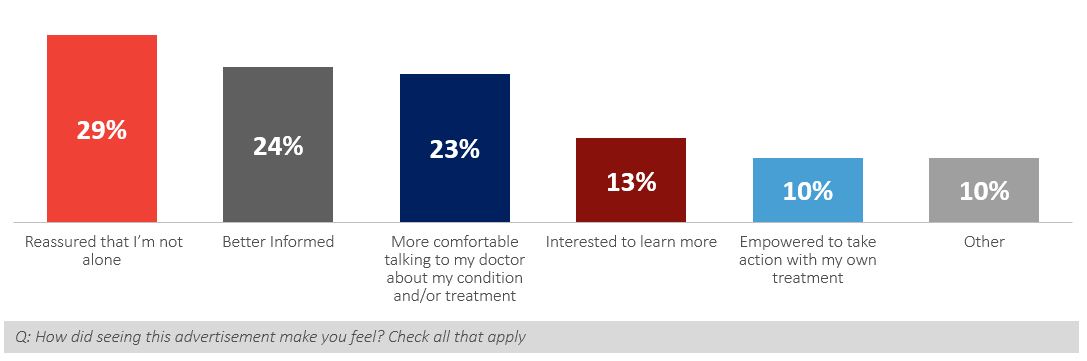
To help us gain a better understanding, we conducted an online survey with our WPP partners at Lightspeed, and reached out to 100 people ages 18-65 who are either going through cancer treatment or have completed cancer treatment. We focused the survey mostly on people who had been diagnosed with breast cancer, lung cancer, or melanoma, as many of the DTC ads out today are focused on these topics; however, other cancer types were also included.

We learned that DTC contributes to a more level playing field. Seeing a DTC ad helps cancer patients become more comfortable and educated. It also supplements the research they are already doing, and provides a comfort level.

Over half of the respondents replied that they agree, or strongly agree that seeing a pharmaceutical ad for a cancer treatment reminds them that they’re not alone.

Our research also demonstrated that DTC supports a more common, better understood language about cancer. It helps provide patients with information in their own language. It also helps to identify that there are choices available so they can balance what they’re being told by their oncologists.

In addition, DTC helps improve overall feelings of trust for cancer patients. Those we surveyed told us they feel more informed, more comfortable with medical conversations, and less alone as a result of exposure to DTC advertising.

Trust is a topic that was of particular interest to us, so we dug deeper into this data. We found 84% of our survey respondents said they are extremely or very likely to trust their oncologist. And while pharmaceutical companies ranked the lowest when patients were asked about trusted sources of cancer treatment information, they did report that DTC advertising itself improves their trust in the specific product or brand that was advertised.

Regardless, it was not a surprise when 93% of patients surveyed said they have not asked for an oncology treatment by name. This is a consistent finding with our ethnographic research experiences across other categories.

In summary, cancer has become “Primetime” for a reason. At a high level,

  • Patients today expect to be informed
  • They demand information at their fingertips
  • They don’t want to be blindly led

What does the future of oncology DTC look like?

  1. We must continue to tap into and align with cultural values.
  2. We should look to be even more informative and balanced, not less.
  3. We need to find ways to connect with patients on their terms.

As DTC marketers, there is an incredible opportunity in front of us to help fuel an evolving and improved two-way conversation.

While patients will continue to look to and trust their oncologists and the cancer community for expertise and guidance, DTC can also continue to stimulate patient awareness and understanding, provide an often needed feeling of inclusion and support, and, thereby, support a more level playing field.

If you have questions or clients who you feel would benefit from knowing more, please reach out to Catherine Goss or Ashli Sherman.


Reference

1 – Manhattan Research, Google Consumer Study 2015 among online patients.


Catherine_Ashli_Ogilvy


May 18, 2018 0

I was watching HHS Secretary Alex Azar during the White House press briefing unveil an idea we have heard pushed before. That is, DTC advertising should disclose the price of the advertised drug. That sounds fair but is a lot more difficult to implement than any other advertised category.

Most advertised retail prices have relevance to consumers. A car advertised at MSRP will sell for somewhere between 85-100% of that price. That is true for most products that disclose prices. Health care prices are wildly variable depending on the payer. Those prices can vary by as much as 50-75%. I understand the goal of HHS. It is to give consumers an idea about how expensive a drug is before they and their physician make the decisions to use it.

Bob Ehrlich
“I doubt a DTC ad is the right place to discuss price.”
-Bob Ehrlich

In my last column on this topic, which was written last July after the American Medical Association recommended that a drug’s price be required in DTC ads, I said prescription drugs are unique in that consumers have no idea what the advertised drug costs based on the ad itself. No other category has ads where its products range from $300 a year to $100,000. Consumers who are interested in an advertised drug may be in for sticker shock and depending on coverage may be paying a high out of pocket cost. Secretary Azar thinks that the consumer deserves to know that price information in advance. The issue is how to do that in the prescription market with its myriad of discounts. What consumers want to know is what they will pay, not what their insurer will pay. Given the numerous payers, all with different formulary coverage and individual discounts, that is hard to communicate.

Clearly drugs can be broadly categorized by cost, so perhaps an ad can say in what pricing category the drug fits. Maybe there are terms HHS can come up with to give consumers an idea in which cost category the drug belongs. Even if they do, consumers care what they pay not the listed retail price. It is possible a $100,000 drug costs them less than the $3000 drug based on reimbursement.

This price disclosure motive seems to be designed to put pressure on drug makers to be embarrassed advertising high priced drugs. That may mean those $100,000 cancer drugs prefer not to advertise if they had to list a high retail price in the ad. My recommendation would be to have ads refer to a link on their website or an HHS website that can discuss price in detail. In a 60 second spot HHS can only expect a super that discloses a list price or a voice over saying what the drug may cost. That would be totally insufficient for consumers and more likely confuse them.

OPDP likely will propose research studies on how best to convey price and we can expect a guidance several years out. I do not agree with the practical value of some of their research studies but this one deserves careful study. I doubt a DTC ad is the right place to discuss price but if it is mandated by FDA then it must be done to help consumers evaluate a drug on the cost/benefit context, and not just to generate public outrage that some drugs are very expensive.

admin


April 25, 2018 0

If you’ve been asking hard questions about the data provided by your DTC and POC campaign partners, you’re not alone. Although the heightened scrutiny is new, the challenges aren’t. The good news is that trustworthy solutions are established, proven, and available.

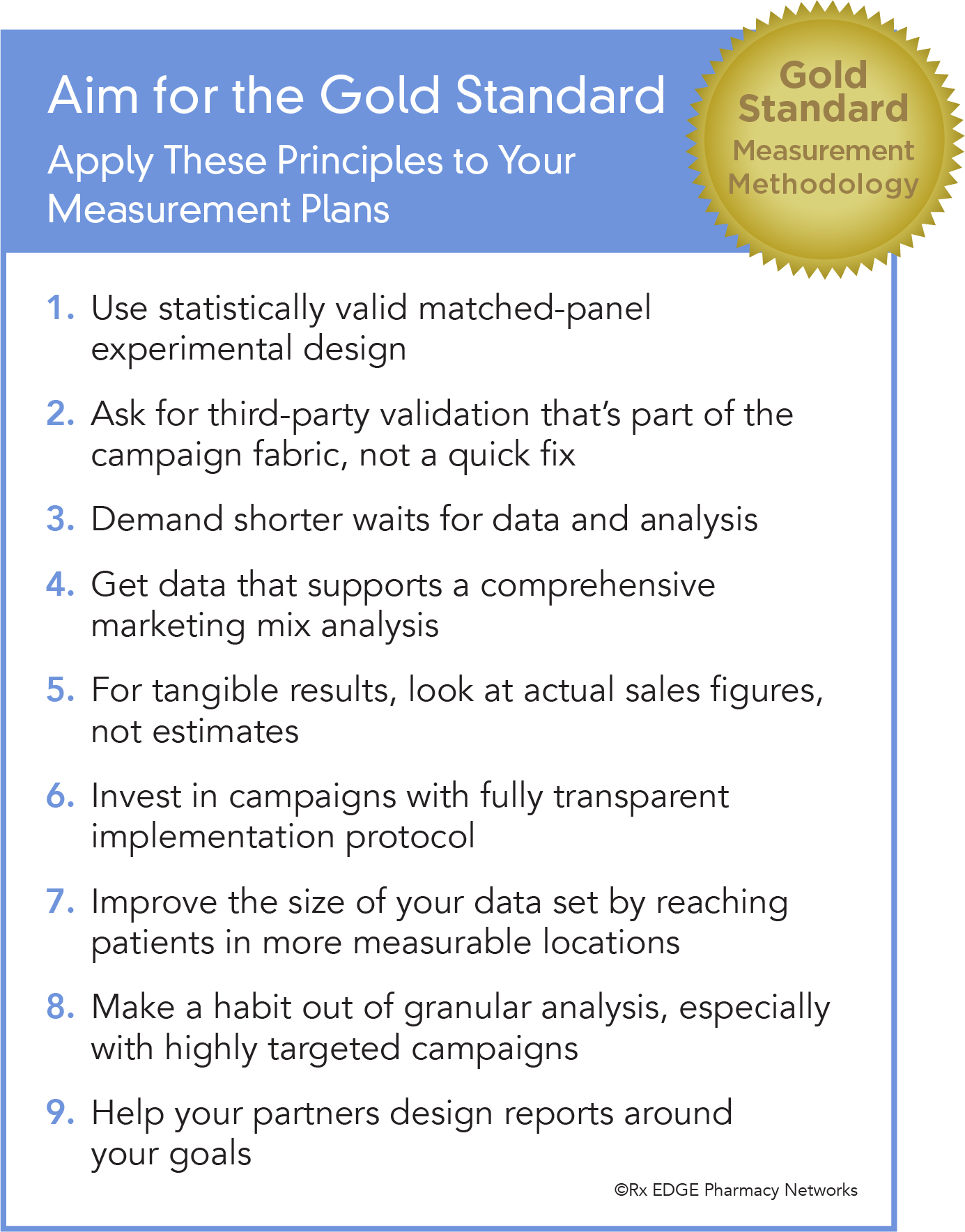
Treatment decisions and research are guided by data that meets exacting standards for quality, reliability, and accuracy. The campaigns you use to reach patients should be no different. Take charge and build confidence in your marketing results by aiming for the gold standard in verifiable, trustworthy performance metrics and applying these standards to your brand messaging.

Use statistically valid matched-panel experimental design. Long before any of us learn the intricacies of marketing disciplines, we learn the fundamentals of any sound experiment: the test and control groups. Yet those principles are often overlooked when budgeting significant sums of money to reach patients with information that can significantly improve their quality of life. Get back to basics by working with partners that can demonstrate that the demographics and media exposure in both test and control groups are the same. Your partner should also isolate for seasonal and market factors, and measure results in weeks both pre- and post-campaign.

Ask for third-party validation that’s part of the campaign fabric, not a quick fix. The widespread industry focus on third-party validation is as welcome as it is overdue. But it should be part of your partner’s business model, not an afterthought, bandage, or public relations move. The independent third-party analyst should be working with timely sales data and presenting reports to clients in a timely manner. That means weeks, not months. And if the independent analyst hasn’t been working with your partner for years, it bears asking why.

Demand shorter waits for data and analysis. Understanding the health and success of your campaigns needs more than just raw data. It needs data in a timely manner, soon enough to be able to make sensible adjustments before seasonal effects and other market forces can overwhelm your ability to act. Yet delays of 45 to 60 days just to get a data snapshot are common among many campaign partners and data providers. The right partners have relationships with POC operators and data aggregators to make delivery a priority.

Get data that supports your comprehensive marketing mix analysis needs. As the range of DTC and POC outreach channels grows, it’s becoming increasingly important to follow the lead of other industries and conduct detailed marketing mix analysis. Ideally, you want to understand just how much each channel’s investment contributes to the overall success of your marketing plan. That’s harder to do if your data partners can’t provide detailed analysis of the periods before and after your campaign or can’t isolate for the effects of your other media investments. Work with your trusted providers to ensure that the proper metrics from their respective campaigns are incorporated into your marketing mix analysis template.

For tangible results, look at actual sales figures, not estimates. Because of concerns ranging from patient confidentiality to a lack of interactivity, many POC and DTC channels only allow results to be measured in broad strokes. Inferences and estimates, not hard conversions and sales, are the best you can get from broadcast or with in-clinic messaging. Invest some of your campaigns in channels that can deliver actual sales figures, not just assumptions and correlations. Partners that can analyze prescription sales data, obtained in cooperation with the largest retail pharmacy chains, can capture actual incremental script volume at the location or market level. It is more straightforward to attribute ROI to actual sales volume changes than to softer measures like ad recall or reach. And when you can isolate results at the individual store level, you get a much clearer picture of campaign lift than regional or nationwide trends can reveal.

Invest in POC campaigns with fully transparent implementation protocol. It’s tough to argue with the old international diplomacy adage “trust, but verify.” Partners should earn and maintain a level of trust that means you, the client, don’t feel the constant need to send secret shoppers to check every last rollout of every single campaign. But when verification is important, you want to be able to get answers as quickly and unobtrusively as possible. POC campaigns that reach into semi-private or off-limits areas, like clinic rooms, are cumbersome and difficult to verify. Campaigns in public spaces with growing importance as a hub for coordinated care, like the retail pharmacy, are much easier to verify. Ideally, your partner will provide signoff from its own field force, so you can confirm the date each new campaign launched at every location.

Improve the size of your data set by reaching more patients in more measurable locations. Studies show that a typical patient visits a pharmacy to purchase self-prescribed OTC products eight times more often than they visit a physician in clinic. And outcomes in the retail pharmacy setting are much easier to measure than in a stand-alone clinic. Increase your exposure there, and you increase the size and robustness of your data.

Make a habit out of granular analysis, especially with highly targeted campaigns. Fine-tuning campaigns down to a region or market lets you reinforce your presence where performance is already strong, and elevate it where your performance is weak. You can also use these campaigns to test how entrenched a dominant competitor is. These focused experiments should be measured as carefully as a national rollout, but the results should be kept in the proper context. A high-performing test can be used to model the rollout and expectations for a broader campaign.

Help your partners design reports around your clear, transparent goals. In the long run, partners gear the depth of their analysis to the demands of clients. Early DTC campaigns focused on recall, so data reflected that. As the demand for clearer ROI and more repeatable results grows, partners will shift to accommodate. The clearer you are about your analytics needs, the more the industry will shift to match.

This is a terrific inflection point for the POC and DTC marketing industry, an essential channel for strong patient communication. But it’s not a doom-and-gloom moment. If anything, the renewed emphasis on verifiable results, validated figures, and trustworthy insights is causing us all to be more mindful of the work we do and the impact it has. And that’s a powerful, tangible result in itself.

Rob Blazek