Latest News


May 31, 2017 0

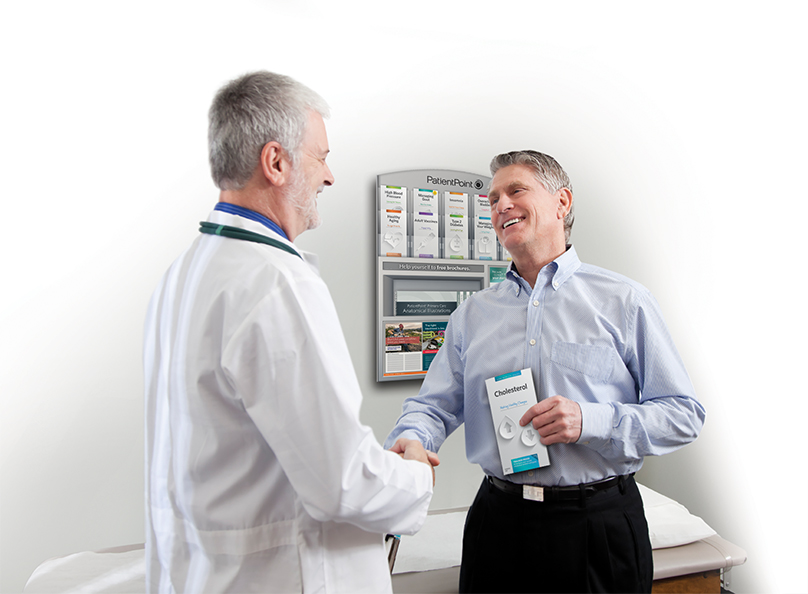
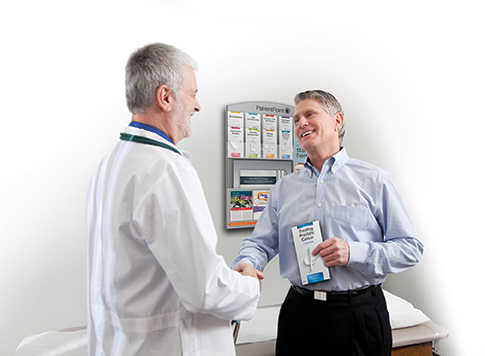
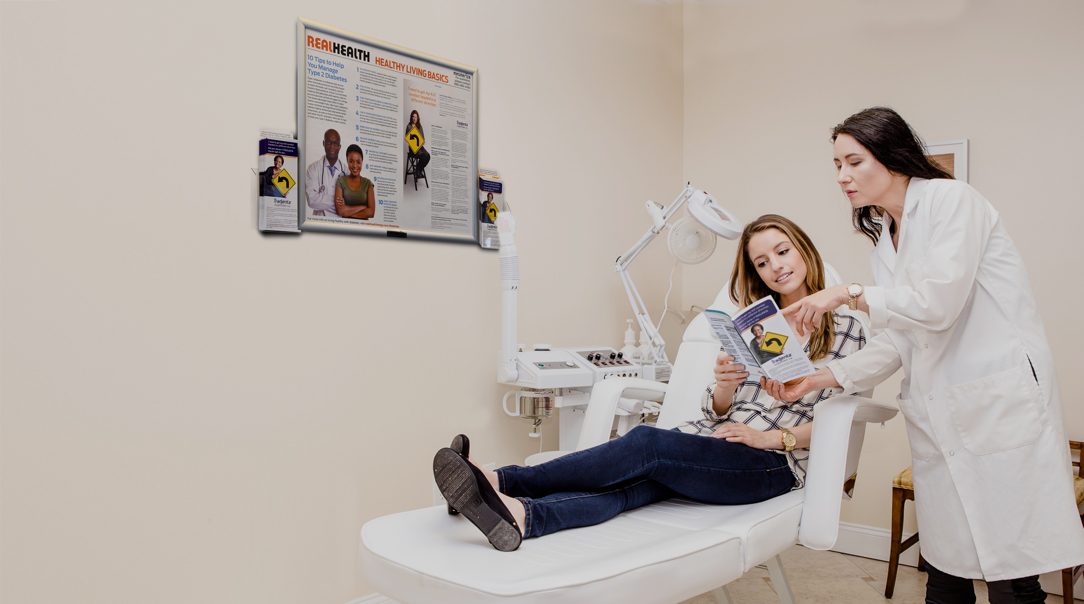
Mesmerize Marketing will increase their Healthy Living Network by more than 70% with the recent acquisition of Elite Sampling & Media Group’s national network of doctors’ office wallboards. The positions Mesmerize Marketing, a leader in patient education at the point of care (POC), as the “largest provider of static media in high prescribing physicians’ offices” reaching more than 50,000 physicians nationwide.

Image c/o Marketwired & Mesmerize Marketing

The Healthy Living Network provides multilingual editorial content in specialty practices, targeting specific patient populations – including diabetes, rheumatoid arthritis, women’s health, pediatrics, mental health, cardiology, oncology, and infectious disease. This also expands upon Mesmerize's current reach with mobile technologies, such as WiFi, geofencing, and NFC beacons.

According to the news release, Mesmerize founder and CEO Gregory Leibert noted that the company is “excited to increase our scale to be able to provide our clients with access to thousands of more high-prescribing physicians and millions of more patients.  Static media remains vital to the point of care landscape.” Nick DeBellis, President of Elite Sampling and Media Group, LLC added that “over the past year Elite and Mesmerize have collaborated on several successful wallboard campaigns. That joint venture lead us to see the strength in the size of a combined wallboard network. Therefore, we decided to leave our wallboard clients in excellent hands with Mesmerize. We know that static media at the point of care has an important role in the patient education process.”

Click here to read the full news release.

admin


May 12, 2017 0

Feel that? That’s the seismic shift happening right now in the healthcare industry. Over the past twenty years, several distinct market trends have emerged across the healthcare landscape. Now, these trends have arrived – and they’re only gaining more traction.

The Affordable Care Act facilitated many of these changes, including an influx of digitally savvy customers hungry for education. And although its survival has recently been called into question by a new administration, the ACA’s impact will undeniably live on.

These conditions point to more than a shift in demographics and behavior. They also indicate a new model of healthcare consumerism: one that pivots away from a broker-driven B2B model and more toward a straight DTC model.[1]

If this seems like déjà vu, it’s because the same shift occurred in the property and casualty (P&C) insurance industry just a few decades ago, with auto insurance sales leading the way.

The consumer largely drives this new dynamic in the healthcare industry. So to understand the DTC shift in the healthcare industry, let’s start by understanding the modern healthcare customer.

What Does the Modern Healthcare Customer Look Like?
To start, they’re technologically savvy.

Healthcare customers don’t just understand technology, they prefer it. This means they tend to have less patience for processes that lack a technological edge. They’re getting more information, from more places, in less time. Are you keeping up?

In a snapshot, today’s healthcare consumer is…[2]

  • Always connected. They’re using multiple devices and channels, often at the same time.
  • Socially minded. They’re using social channels for gleaning insights and reviews from family, friends, and experts.
  • Knowledgeable. They’re independently educated with content available to them 24/7 (and they’re also in-tune with your competitors).
  • Experiential. They’re expecting a personalized experience, and one that will knock their socks off.

The modern consumer is looking for (and finding) content primarily on digital channels. If you want to reach them, you must do so online. In fact, of today’s healthcare consumers…[3]

  • 67% are interested in being offered insurance via mobile.
  • 48% regard product advice on social media as important.
  • 54% use mobile phone apps for the purpose of health monitoring.

As healthcare consumers become more and more technologically savvy, they become more accountable for their healthcare decisions. Consumers are moving beyond “sick care” and toward an overall health and wellness agenda. It’s an opportunity for healthcare organizations to facilitate their goals and establish trust with new and existing customers.

So by using technology to stay connected, simplify healthcare processes, and provide a way to help people monitor their health, healthcare companies can attract and retain this emerging class of healthcare consumers.

After all, this is a familiar trend – one that occurred even earlier in the auto insurance industry.

The Auto & Health Insurance Parallel
In the early 2000s, about 80% of personal automobile insurance policies were placed through a broker.[4] But as consumers shifted toward online shopping and insurance agencies moved toward a DTC sales model, dynamics started to change.

Between 1995 and 2011, the overall number of P&C insurance agents declined by 10%.[5] Even more illuminating, P&C insurance carriers increased their marketing spend from $1.7 billion in 2002 to $5.9 billion in 2011.[6]

These growing investments have moved the focus away from individual agents and toward the carrier brand. So when asked, “Who is your insurance carrier?” a policy holder will now likely respond with a brand name over an agent’s.

Today, auto insurance providers continue to spend more to reach customers through multiple channels. And there’s no better case study to demonstrate this shift than the P&C insurance giant, GEICO.

In 2010, GEICO became the first auto insurance organization to provide mobile users with the ability to quote and buy a policy right on their smartphones.[7] More recently, GEICO was the lead sponsor for Amazon’s new original content streaming service.

Translation: GEICO is evolving to fit their consumer’s lifestyle. And by doing so, the industry pioneer has actually overtaken Allstate in premium sales.[8]

That’s a tremendous shift in the auto insurance industry – one that could soon be replicated in other industries, like health insurance.

Who Will Be the Breakout Player?

While the health insurance industry has yet to match the dramatic transformation seen in the auto insurance space, it’s trending in that direction.

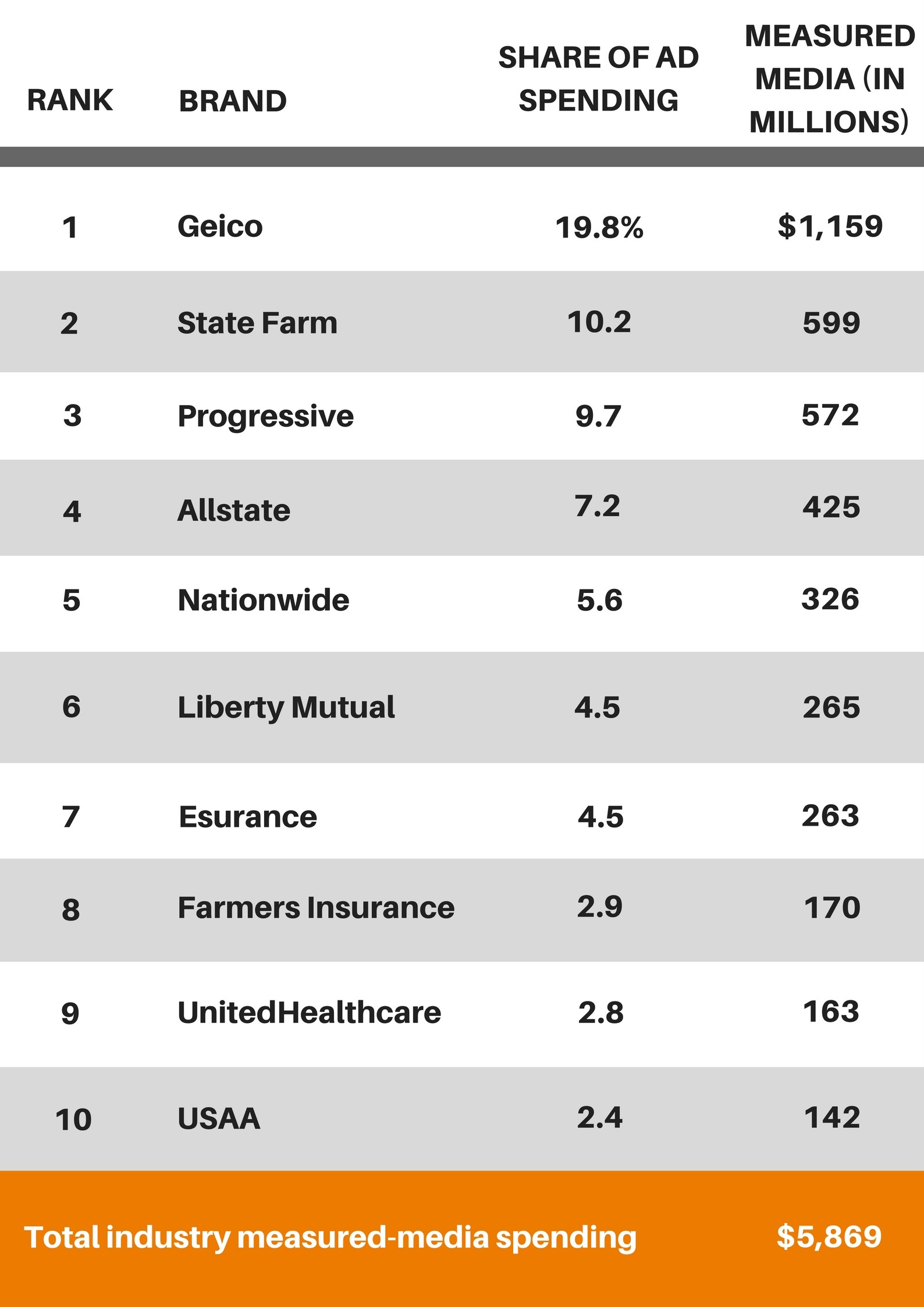
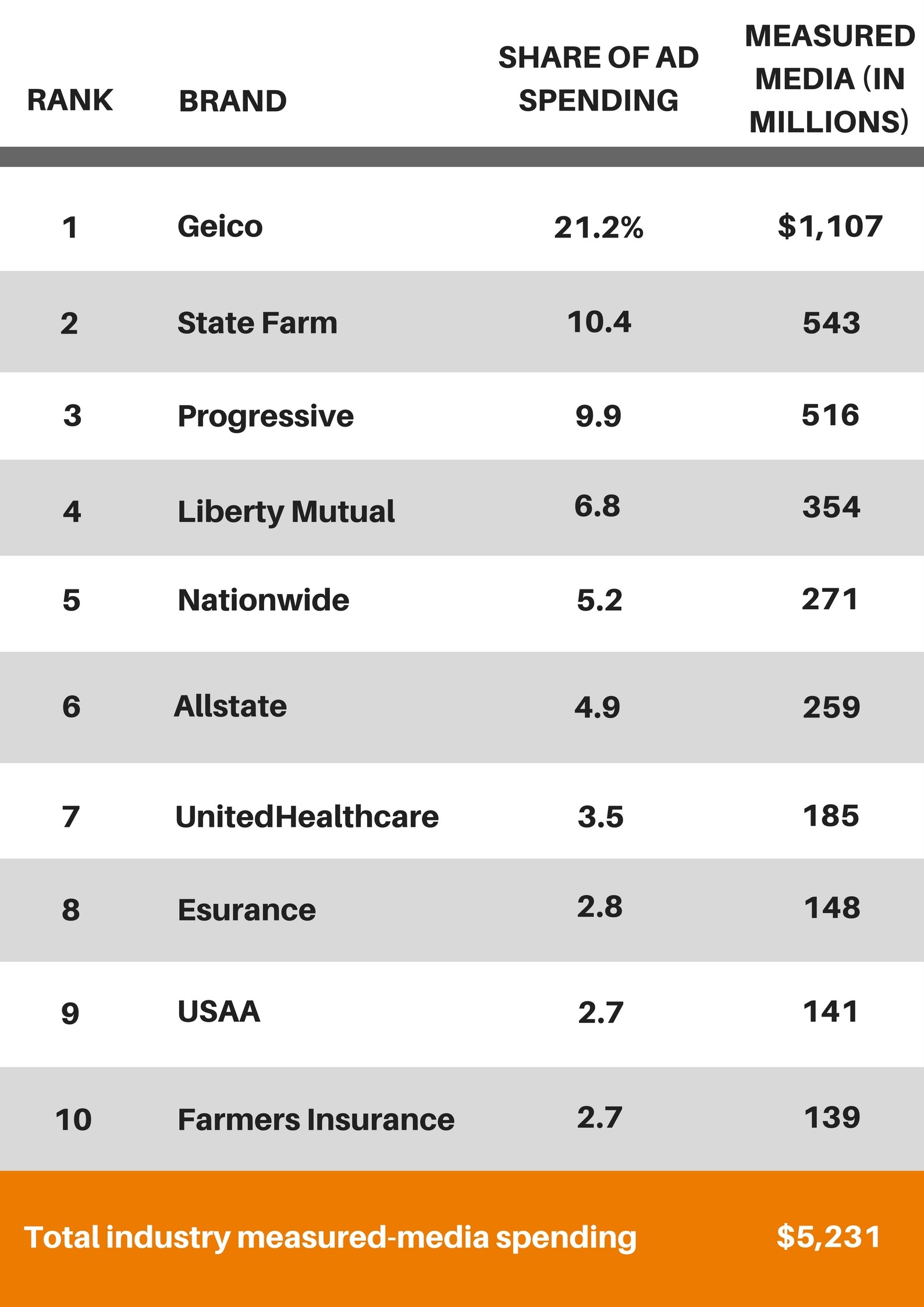
In 2014, only one health insurance provider found its way on the list of insurance companies with the highest share of media spend. Coming in at number nine, UnitedHealthcare was that organization, but it trailed significantly behind top P&C insurance carriers.

Fast-forward one year, and UnitedHealthcare still stood as the lone health insurance industry provider on the list. Yet this time, it had climbed to number seven, increasing its media spend by over $20 million.

Share of insurance industry U.S. measured-media spending

2014

Source 1

2016

Source 2

Will UnitedHealthcare’s spending trigger other health insurance providers to spend more on marketing to the modern consumer? Only time will tell.

There’s ground yet to be covered, but the parallel between the auto and health insurance industries evolutions is undeniable.

Making Up the Gap
As demonstrated, the healthcare industry is not the only industry affected by this fundamental market shift; it’s just one of the slowest to react.

Of all surveyed industries, the following percentage of respondents agreed they are developing new applications, features, and processes to cater to new generations of customers:[11]

  • Healthcare – 61%
  • Travel – 64%
  • Telecom – 74%
  • Retail – 76%
  • Financial Services – 73%

A major gap exists between what consumers want from health insurance providers, and what they can actually offer them.

To reach today’s healthcare audience, companies need to cater their outreach to the digital-savvy consumer who’s searching for tools to interact and educate themselves with.

If the classic mantra “Be Where the Customer Is” holds true, then organizations should expose these tools less to the broker, with whom the emerging consumer may be unfamiliar, and more toward the consumer themselves.

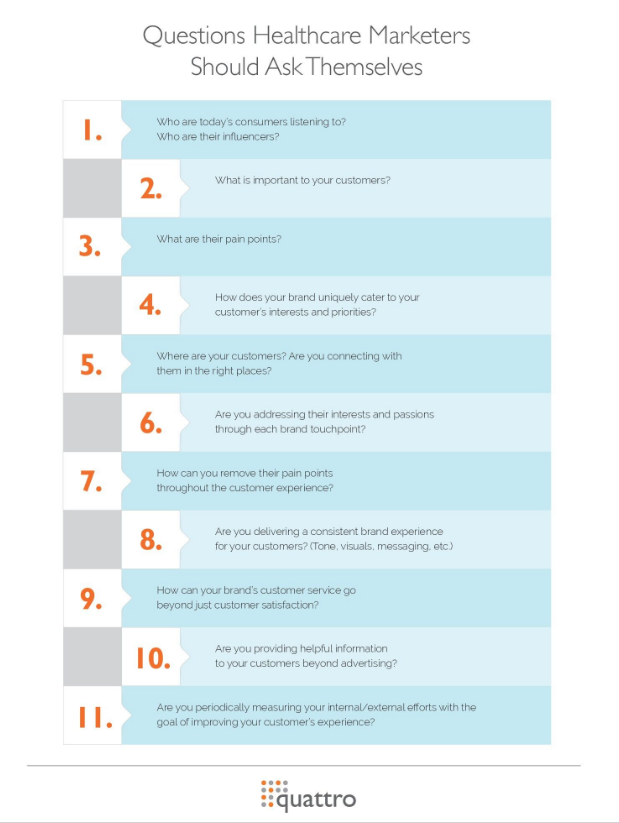
While not every customer will have a linear experience, brands should be prepared at every stage of the buyer’s journey. To help with this, we’ve compiled the questions here that marketers need to continually ask to stay in-tune with this new consumer.

Save this guide (we recommend keeping it right next to your desk) and use it as a self-assessment for your brand. As you navigate the new consumer-focused world of healthcare marketing, every bit of help counts.

References
[1]PwC Health Research Institute, “Healthcare reform: Five trends to watch as the Affordable Care Act turns five,” March 2015. http://pwchealth.com/cgi-local/hregister.cgi/reg/pwc-hri-aca-five-year-anniversary.pdf

[2] Andrea Moneta, “The Digital Insurer: The Customer-centric Insurer in the Digital Era,” Accenture, 2014. https://www.accenture.com/t20150523T033833__w__/sg-en/_acnmedia/Accenture/Conversion-Assets/DotCom/Documents/Global/PDF/Dualpub_9/Accenture-The-Customer-Centric-Insurer-In-The-Digital-Era.p

[3] Ibid

[4] McKinsey&Company, “Agents of the Future:The Evolution of Property and Casualty Insurance Distribution,” June 2013. https://www.iiaofil.org/Portals/0/Documents/FutureAgents_V_FINAL.pdf

[5] Ibid

[6] Ibid

[7] GEICO, “GEICO’s Story from the Beginning,” retrieved February 23, 2017. https://www.geico.com/about/corporate/history-the-full-story/

[8] Steve Daniels, “Geico Overtakes Allstate As No. 2 Auto Insurer,” Advertising Age, March 3, 2014. http://adage.com/article/cmo-strategy/geico-overtakes-allstate-2-auto-insurer/291947/

[9] Advertising Age, “2016 Marketing Fact Pack,” December 21, 2015. http://adage.com/d/resources/resources/whitepaper/2016-edition-marketing-fact-pack

[10] Advertising Age, “2017 Marketing Fact Pack,” December 19, 2016. http://adage.com/d/resources/resources/whitepaper/2017-edition-marketing-fact-pack?utm_source=AA1&utm_medium=AA&utm_campaign=AA

[11] Melanie Matthews, “Infographic: State of the Consumer Healthcare Experience,” Healthcare Intelligence Network, January 27, 2017. http://hin.com/blog/category/customer-service/

Tom Pitcherella


May 12, 2017 0

Sponsored Content

“Don’t get Ubered” is a common phrase uttered in the tech world today. It’s referencing companies who don’t (or won’t) pay attention to the changes happening around them. As a result, they scramble for survival as more attuned companies see success by adapting their entire way of doing business.

Put in that perspective, “Ubered” is now a relevant term for healthcare, too. Our industry has been relatively immune to the disruption tech, finance and nearly all other industries have experienced. Until now.

Consumerism, driven by the likes of Uber, Amazon, PayPal and Airbnb, is greatly affecting how we operate. When it comes to the evolution of our industry today, all signs point directly to the patient, who is demanding the same level of fast, personalized service from healthcare as these aforementioned companies are providing.

The result? Regulators, payers and providers are trying to rapidly transform into systems that focus on experience rather than products and services. Case in point: the rapid rise in the number of insurance companies making on-demand services, such as telehealth RNs, available—and seeing financial rewards because of it.

Pharma must follow suit if they want to see similar success.

Taxis Never Saw It Coming

When Uber first debuted in 2010, taxi companies were focused on all the wrong factors to effectively compete. Their primary concerns, including how to spend less yet earn more, increase passenger rates per driver and lower the cost of vehicle maintenance, focused on improving their bottom line—a company-first, customer-second mindset.

Uber flipped that focus, putting consumers’ needs at the forefront and asking itself: What is the best possible experience we can create for people needing a ride? How can we use technology to streamline service and make it more convenient and user-friendly? What do consumers ultimately need from us? The approach worked: The company says it fulfills over 1 million rides each day.

When it comes to our approach, what type of questions are we asking? Based on recent patient feedback regarding pharma, it seems they may not be the right ones:

  • 55% of patients say pharma isn’t working collaboratively with patients[1]
  • 45% say the industry doesn’t understand their real needs[2]
  • 46% say pharma does understand their needs, yet it’s just not doing enough to address them[3]

These consumer opinions are disappointing, considering that 86% of pharma executives state that patient centricity is key to their profitability.4 Recognition is the first step toward a more patient-centric business model, but there’s more action to take, starting with understanding the patient journey and the numerous opportunities it offers pharma companies to improve patient interactions.


The Point of Point of Care

Broad reach used to be the ultimate goal in the point-of-care industry in the days of blockbuster drugs. Given the new landscape, what matters most now is whether you’re connecting with the right physicians and patients. Based on the following statistics, there’s work still to be done.

  • Nearly 40% of patients don’t know any of the pharma companies behind their treatments[5]
  • Of the 14% of patients who said they felt they had a relationship with their pharma companies, only 40% indicated it was a good relationship[6]

How do we raise awareness of pharma as a true partner in the patient’s desire for better health? Just look to Uber for the answer: cater to a person’s individual preferences and needs. This ability to provide relevant, personalized information and education when and where the patient needs it represents a significant opportunity for pharma companies to engage patients at the moments that matter most.

That is exactly the point of point of care—to educate patients during their healthcare journey to enable them to have more productive interactions with their physicians and make more informed decisions about their health, ultimately leading to better overall outcomes.

This is the point of PatientPoint, too. It’s why we started this business 30 years ago and why we continue to lead its innovation, creating new, integrated solutions across the physician office and hospital that providers and pharma companies can leverage to impact the patient experience at every engagement point.


The Answer Is…

Today, Uber is worth more than $60 billion and has over 8 million users. It is a great example of a company that recognized the importance of putting the consumer experience at the center of its operating model—and is seeing success because of it.

In this new healthcare landscape, pharma companies must ask themselves: Do I want to be a taxi, or do I strive to be Uber?

[1]Sarah Mahoney, “Patient Engagement: All Grown Up—Patient Engagement Comes of Age,” MM&M, June 1, 2015, http://www.mmm-online.com/features/patient-engagement-all-grown-uppatient-engagement-comes-of-age/article/415990/

[2]Ibid

[3]Ibid

[4]Dr. Nicola Davies, “Creating Patient-Centric Growth,” eyeforpharma, Jan. 22, 2016, http://social.eyeforpharma.com/commercial/creating-patient-centric-growth

5]Ed Miseta, “Patient Survey: Technology Use Up, Pharma Disconnect Remains,” Clinical Leader, Jan. 25, 2017, https://www.clinicalleader.com/doc/patient-survey-technology-use-up-pharma-disconnect-remains-0001

[6]Ibid

Linda Ruschau


May 12, 2017 0

Specialty Drug Marketers Can Tap into Patient Stories

Stories are ingrained in us from the time we are infants. The nighttime ritual of parents and children cozying up with a storybook or two is a genuine and enjoyable encounter, one with an underlying message or lesson that is served in a palatable way. Once we begin reading for ourselves, we turn to stories to bring clarity to a topic, brighten an experience, or learn something new.

Patients often have many stories of their own to tell, no book needed. At each story’s core are kernels of information that can help biopharmaceutical marketers, healthcare professionals, and other patients understand an individual’s challenges and triumphs as well as reveal unmet needs and gaps in care.

What can be learned from the tale of an active female patient with rheumatoid arthritis? As it turns out, quite a lot. The story of Lisa Hehn’s journey includes a lot of twists and turns, revelations, and teaching moments relevant to brand marketers. Patient stories resonate. They illustrate real-life experiences, pull at heartstrings, and humanize disease.

Lisa’s Journey

Six months after her second child was born by cesarean section, Lisa woke up with total body pain. As a young mother, she needed to be well in order to care for her children and keep up with the daily demands of an active lifestyle that included walking, dance classes, and regular gym visits.

Lisa set out on an odyssey to discover the root cause of her pain and find a solution, relying primarily on library research and the expertise of numerous physicians and other healthcare professionals. Her pain was managed with anti-inflammatories, steroids, and other medications that left her with serious side effects including stomach bleeds. She wore wrist braces to carry her children, and even added carpet padding to her slippers to soften the pain of each step she took.

Years passed before a specialist diagnosed Lisa with rheumatoid arthritis and ultimately prescribed a TNF inhibitor to manage her disease. The change for Lisa was life-altering, in fact, she’s said that the biologic gave her life.

Drugstore Aisle Opportunities for Specialty Brands

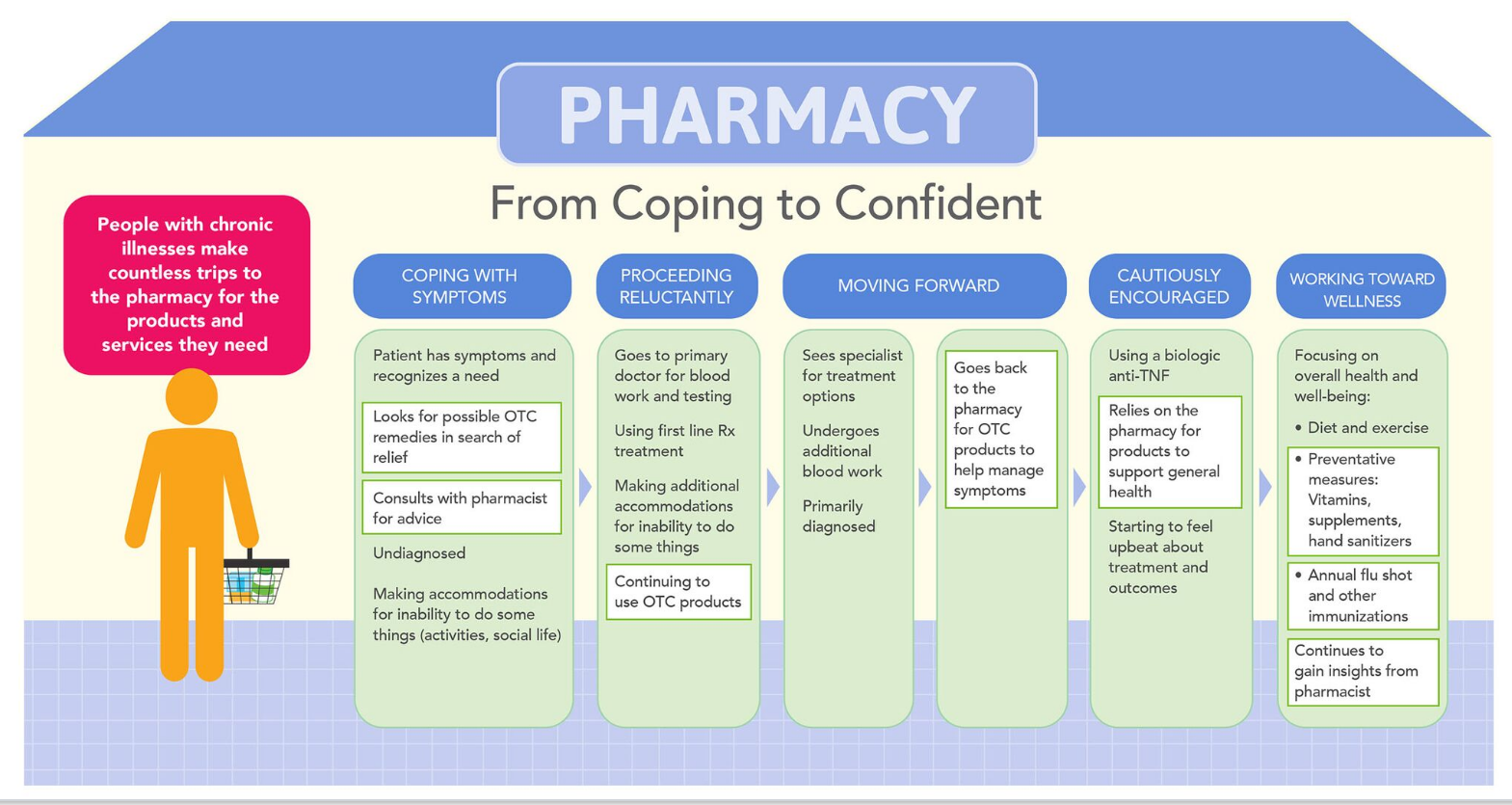
Patient narratives like Lisa’s can help specialty brand marketers pinpoint effective marketing strategies across various channels at every step of the journey. Although Lisa’s disease is now well managed, that was not always the case. Prior to her diagnosis, she frequently shopped at the pharmacy for OTC solutions to address unidentified pain and other ailments related to an unknown disease.

Once diagnosed with an autoimmune disease, prevention became a regular part of Lisa’s day. To minimize exposure to germs and viruses and thereby prevent illnesses, Lisa turned to the pharmacy for products including vitamins, over-the-counter pre-cold remedies, and hand sanitizers. In addition, as a mother, Lisa often shopped for health remedies and other products for her husband and children.

Patients gather information from various touchpoints and needs continue to evolve as a condition unfolds and treatments are prescribed. The pharmacy is a prime touchpoint because it’s a venue patients visit when they’re open to, and often seeking, health-related solutions and education.

At the beginning of the treatment continuum for a chronic disease such as RA, a patient may be most interested in the potential side effects of a particular therapy, whereas over time, concerns shift to more global issues including affordability and adherence.

Even now, Lisa seeks solutions for occasional health needs both related and unrelated to her main diagnosis. Though Lisa’s medication is filled through a specialty pharmacy and shipped to her home, she turns to retail and community pharmacies on a regular basis for a variety of needs.

Weaving the Pharmacy into a DTC Campaign

When handed a new diagnosis, and prescribed a new medication – whether traditional or specialty – patients often hunger for information, feedback, and guidance. Though each individual patient will seek information in different ways, knowledge is often gathered from multiple sources.

So how can the patient perspective help shape a DTC campaign? Listening to the patient experience can help brand marketers identify lingering needs and information gaps. In Lisa’s case, being prescribed a biologic nearly two decades ago left a lot of unanswered questions. She was starved for more information about RA but also how the biologic worked, how it would improve her symptoms, and what she could do to maximize its effect.

Though Lisa feels more medically savvy now out of necessity, at the time she would have liked access to educational content with patient-friendly language. To her, the pharmacy is well suited to disseminate simple messages about particular diseases and conditions.

When Lisa enters a pharmacy, she has health on her mind and she knows the onsite pharmacist is available to address questions and concerns. She finds the setting professional, comforting, and accessible for health-related messaging. In fact, if the option presented itself, she’d jump at the chance to pick up her specialty medication in the neighborhood pharmacy rather than receiving a shipment in her home.

Visiting the pharmacy is not a one-time event. Patients have different needs at each point along the way, affected by medication, age, and a variety of other factors. Patients with chronic diseases often continue to cope with a few minor symptoms, particularly at the beginning of a new treatment option. Therefore, the pharmacy can be a vehicle for driving patients to other resources such as a comprehensive disease website or online tools to help manage the disease burden.

Build Customer Awareness at the Pharmacy Level

With shrinking budgets and increased scrutiny of traditional DTC advertising, marketing tactics need to be more targeted, more effective, and less expensive. Specialty pharma marketers in particular are tasked with learning about the people taking their products, and that includes uncovering their needs. Who can clearly define patient needs and wants better than the patient himself?

Listening to patients can help marketers identify the best messaging approach before creating a branded shelf aid in the pharmacy or creating a magazine advertisement. Targeted products for specific populations, like RA for example, require a targeted marketing plan even though the number of patients affected by the disease is large. In some cases, the patient pool prescribed specialty medications is quite small which requires a more focused messaging approach.

Patients rely on specialty pharmacies to dispense specialty medications; however, the same patients are also regularly stopping by retail pharmacies. In fact, these patients may spend even more time in drugstore aisles than the average consumer. It’s a moment in time when the patients have their own health concerns – and likely that of a child, parent, or spouse as well – top of mind.

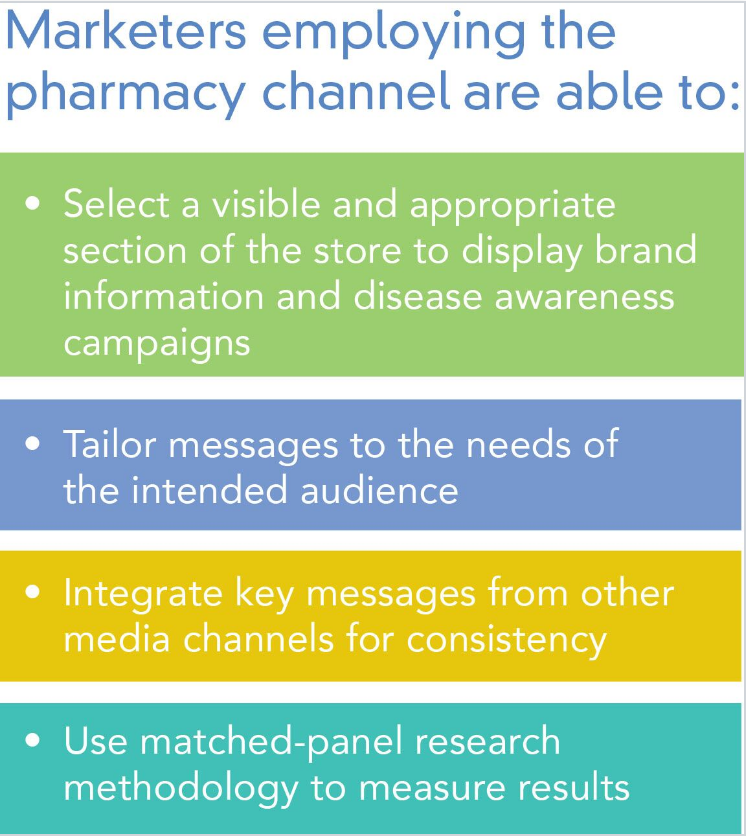
The pharmacy is an appropriate setting to deliver strong messages to patients while they’re looking to improve their health. Drugstore aisles are a proven platform to reach patients with targeted and specific information that helps establish a close link and provide the support needed. In-store campaigns can also open the door to other media channels, driving the patient to continue the brand experience. Integrated programs that include multiple touchpoints such as mobile and internet reinforce messaging found in store aisles.

The Next Powerful Patient Story Awaits

Marketers hope the messages they develop motivate patients to take action. Some patients may respond positively to information about how a newly marketed product differs from those that have been available for years. Another patient type may want to be informed in order to open a conversation with a pharmacist or physician. The communication’s value and credibility increases exponentially by having a healthcare professional available in-store. Patients can easily discuss questions and concerns with a pharmacist and in some cases, a nurse practitioner or physician assistant.

We’ve all heard of the cardiologist who has an epiphany about what a patient truly needs once he himself has had to endure triple bypass surgery. When patients share real-life experiences of their diagnoses, it’s the closet way to feel their pain and see their struggle without actually having the disease ourselves. Keeping real-life patient stories in mind can elevate a marketing campaign’s effectiveness and ensure the product and patient develop a genuine and worthy connection.


Kathleen Bonetti


April 21, 2017 0

No, the above is not a movie title. It is referring to an op-ed in the 4/17 Washington Examiner defending DTC by former FDA official Peter Pitts. The op-ed lays out the case why the attacks on DTC are flat out wrong or fake news as Mr. Pitts calls it in the title. Mr. Pitts correctly debunks the argument that drug companies spend more on marketing than R&D. He points out that the drug industry spent $70 billion on pre-approval R&D versus $5.6 billion on consumer advertising. He says you have to add a lot of detailing, sampling, written communications to physicians, administrative expenses, and other expenses that would not be considered marketing by most of us to exceed R&D spending. Based on several sources I found it is really about $20-25 billion spent on true marketing activities including consumer/physician advertising, physician education and sampling.

Bob Ehrlich
“Thank you Mr. Pitts.”
-Bob Ehrlich

The news media and drug industry critics like to make DTC the fall guy for high prices. Mr. Pitts correctly points out there is no evidence of that. I have said in the past that actual DTC spending is much less than reported spending at about 70% because drug companies pay less as volume buyers of ads. So that $5.6 is really about $3.9. IMS reports U.S. drug spending of $310 after discounts in 2015. How much can $3.9 drive price in a $310 billion market. Very little. While it is true DTC does raise awareness for new branded drugs, DTC is also the raising of awareness of competitive drugs. Payers play one DTC drug against another to get lower prices.

Mr. Pitts reminds critics that DTC has many benefits of raising awareness of diseases, and in 6% of DTC inspired doctor visits a previously undiagnosed condition is found. He also says only 7% of doctors report feeling pressure to prescribe an advertised drug. Mr. Pitts admits drug makers do DTC ads to sell more product. That does not make it bad or hurt public health.

As I have said in many previous columns, the world of prescription drugs has numerous constituencies. There are no truly objective ones despite a widespread belief that the doctor is always prescribing what is best. Doctors prescribe what they are experienced writing, and some are reluctant to adopt newer drugs. They may not be current on the newest treatments because of time constraints. Insurers obviously want to pay as little as possible on their drug bill and resist branded drugs. Government also is not anxious to pay for expensive drugs given the budgetary issues faced. DTC is just one more subjective constituent making a case for patients, doctors, payers, and government to consider a new brand.

So, thanks Mr. Pitts for warning the public not to fall for convenient sound bites against DTC ads.

Bob Ehrlich


April 17, 2017 0

As I sat through the many DTC presentations last week at The DTC National Conference I took note of the people actually creating DTC. They all struck me as passionate about their products and their customers. While it is easy to be cynical about the drug companies as corporate entities it is harder when you see their employees discuss DTC.

I wish Bernie Sanders could have a dialog with these people who actually create DTC ads. It is easier to hate a multibillion dollar corporation than the people who work there. In 17 years of doing these conferences, never once did I hear a drug company delegate publicly or privately state a desire to put profit over patient well being. That does not mean there are no issues on pricing, overuse, safety or effectiveness. What it does mean is the people who work on these drugs really do care deeply about helping patients.

Bob Ehrlich
“Making a profit while doing good…”
-Bob Ehrlich

We heard about the great new PhRMA GoBoldly industry campaign from its agency creators Y&R. What we saw was the use of real researchers who work at the drug companies tell their stories on developing new drugs. We might think from listening to critics that drug researchers are working on “made up” diseases just to hook us on treatment. We see in reality researchers spending their whole careers to cure cancer, Alzheimer's, depression, diabetes, asthma, and many others. They care about patients, not something you hear from our critics, who see conspiracies at every turn.

While it is very clear that our advertising is meant to create awareness and designed to sell more product, that is not a negative. In fact all the competitive DTC leads to better products and more price competition as payers and patients are aware they have choices. True, if every doctor and insurer was totally knowledgeable and acting always in the patient interest, maybe DTC would not be needed. We know, however, that is not the real world. DTC just acts as a catalyst to make all constituencies more aware what is out there. DTC provides a push for insurers to cover new treatments as we know they will hesitate based on cost.

One of the interesting recurring discussions was over how to deal with price. We had several legislative experts tell us what Congress may do to lower drug prices. It is likely something will happen to mandate, encourage, cajole, embarrass, or incentivize drug companies to lower prices. There are a menu of options and none of them great for drug companies. The bottom line is the American consumer does subsidize prices for Canadians and Europeans. That is a very difficult reality with no good solution.

Dr. David Kessler, former FDA Commissioner, said he is not anti DTC, but thinks we must understand that advertising high price drugs may be a step too far. He was against DTC branded ads on television when he left the FDA in 2/97 and after he left we all know in 8/97 it was allowed. He does appear to accept DTC as he says it is the “purest” form of advertising because it follows approved labels. He warns us not to ever do off label DTC, something the courts may eventually allow but no drug company will likely risk doing for DTC. Off label use is something better left for drug company and physician discussions.

The many case studies we heard from drug marketers clearly showed the first priority for them is to educate and help patients. While well aware of the need to get a positive ROI they see that as the end result of helping patients. It was great to spend a few days with this group of dedicated professionals who chose to work in this industry to help people. Profit is what drives the engine for drug makers, but making a profit while doing good is not an inconsistent goal.

Bob Ehrlich


April 11, 2017 0

The leading forum for direct-to-consumer (DTC) advertising thought leaders honored a dynamic group of pharmaceutical companies and brands at the much-anticipated DTC National Advertising Awards. The awards were part of the 17th Annual DTC National Conference held April 5-7 in Boston. Sponsored by Health Monitor Network, the 2017 Advertising Awards showcased the best marketing and advertising across 17 categories.

“The DTC National is exciting each year for us as a celebration of the creativity and effectiveness of DTC consumer promotion,” says Ken Freirich, President of Health Monitor Network. “As an entrepreneurial company developing creative solutions to facilitate patient and HCP dialogue, we are pleased to sponsor the awards and to recognize the many successes in the marketplace.”

The 2017 Ad Awards showcased exemplary work spanning multiple media and strategic categories. During the Advertising Awards Dinner held on April 6, Gold, Silver, and Bronze winners were announced for all 17 categories.

“We are proud to celebrate our 17th Annual DTC Ad Awards ceremony,” says Bob Ehrlich, CEO of DTC Perspectives. “The inclusion of new categories and more awards over the years is a reflection of the success of the industry as a whole. Congratulations to all of the winners and we look forward to recognize innovation for years to come.”

[button link=”https://www.dtcperspectives.com/dtcn/2017-ad-award-finalists” color=”grey”]View Ad Award Winners[/button]

[button link=”https://www.dtcperspectives.com/dtcn/ad-awards-reprint-form/” color=”grey”]Order Ad Award Reprints[/button]

admin


April 3, 2017 0

The basic problem in American politics today is we are asked choose a side. Either we are supposed love Obamacare or hate it depending on our political affiliation. That we somehow must think Obamacare has been either a savior or villain is the fault of our self serving politicians. Both sides are equally to blame. Democrats seem to love government based solutions and Republicans like to think that if we could just get government out of the way all our problems would disappear. The older and hopefully wiser I get the less convinced I am that either side is right espousing ideological purity.

Bob Ehrlich
“Unless we fix the underlying issues deductibles will keep rising.”
-Bob Ehrlich

Here are the problems we face no matter what side you are on. Obamacare greatly expanded coverage but premiums and deductibles rose significantly particularly for those making a middle class salary. While most of us get coverage through employers that doesn't mean we are unaffected by Obamacare. Employers have held premium increases somewhat in check but have done that by increasing deductibles.
Obamacare did not achieve the promise of lowering premiums for the average family. That certainly did not happen for most of us covered by employers. On the other hand it did allow many lower income people to get basic coverage through Medicaid and the exchanges. That is a good outcome for them, but we all subsidize that through higher taxes and increasing costs for our healthcare.
Like it or not we are now a country that has shifted much more of the healthcare cost burden to the consumer. This is mostly through those higher deductibles. They rose 12% in 2016 for the average employer based plan to $1478. That is cheap compared to people buying plans on healthcare exchanges where the family deductible will be over $12,000 in 2017 for the Bronze plan. With that kind of deductible most families are just getting a plan which they can use when serious illness hits.
So why are deductibles so high? First we added a lot of people with pre-existing conditions. Second we capped the cost of coverage to older folks while charging young people more than their fair share. Not enough young people are signing up so we are seeing insurers raising deductibles to lower their exposure.
Republicans and Democrats must get around the war of ideology and actually work the problem. A dose of competition across state lines is an option to consider to increase the number of insurers in the market. So is a reduction in mandated benefits to lower the cost to the younger age population. There are better ways to provide health services at lower cost such as reducing regulation to allow more physician assistants and nurses to do what physicians do.
There is no shortage of good ideas. The barrier is we have this ridiculous idea that you must love Obamacare or think it is the end of civilization. Republicans shout for all out repeal and Democrats blindly call for expansion to single payer. How about we meet in the middle? There is no shame in admitting Obamacare has some good points and bad points. There is also nothing wrong in thinking HHS boss Dr. Tom Price has some solid ideas to lower costs. Instead Nancy Pelosi and Chuck Schumer have continually vilified him as someone who wants to take away your coverage.

President Trump has shown little desire or aptitude for getting into the policy weeds here. He ran on Obamacare being a disaster but beyond a few talking points I doubt he understands the realities of reform. It will take political courage to compromise and blend free market reforms with Obamacare. Right now the war in Washington will prevent that. Dems want to pander to the progressive wing and Republicans are unsure how far right to go trying to appease the Freedom caucus.
Unless we fix the underlying issues deductibles will keep rising and all of us will be essentially self insured except for a catastrophe. That is not all bad since spending our own money will make us more cautious consumers. We will demand less testing and negotiate harder with providers. More services will be developed to help us evaluate price/quality of physicians and hospitals. That will make providers focus on value based marketing.
It is not surprising why Congress’ approval rating is so low. And healthcare is a perfect example of the failure to help the American people because of pig headed ideological positions not based on facts. They deserve the criticism and they are on a path to zero approval. Sad indeed but here we are unless moderates re-emerge on both sides to actually solve problems. That is something that will take guts, and guts are in short supply right now on Capitol Hill.

Bob Ehrlich


March 28, 2017 0


While the primary focus of patient adherence programs today has shifted from the product to the patient, the communication barriers that hinder patient interaction and engagement are still common. Many of these barriers can be overcome by investigating and addressing the root causes of issues, which often occur in either the basic program design and/or within technology systems.

This article looks at three common obstacles and how they can be addressed in order to improve communications, and as a result, improve the adherence rates and outcomes of your programs.

The Obstacle: Patients lack interest in participating, or the program does not allow for patient interaction.
The Solution: Design a program that emphasizes empowerment and two-way communication.

A basic principle to keep in mind when considering the communications modes of your programs is that patients do not want to be “compliant,” they want to be empowered. The more that patients understand why they need to take a specific medication in a timely and consistent manner, or how they will benefit from participating in a treatment regimen, the more likely they will become fully invested in the process to reach a desired end goal. Poor communication often results in patients who don’t feel that they program reflects their needs, concerns, and interests. Enabling for two-way communication is crucial — that means allowing ample opportunities and channels for feedback, and tailored resources to be shared at the right time throughout the entire course of the program.

The Obstacle: Communication with the patient is “one size fits all.”
The Solution: Allow for interactions that are flexible and relevant.

Many factors come into play in the communications of adherence programs: the channel (phone call, text, online chat, etc.), the frequency, the topics discussed. But all too often these communications are designed with solely the general group patient profile in mind. While overarching information about the patient profile is important, it needs to be married with the flexibility of individual experiences and preferences. There are many factors that influence patient behavior — age, gender, family, socio-economic, financial, and logistical — and each of these adapts the patient journey. For example, a more responsive model could mean stratifying patients by level of risk and adjusting the information provided, and the frequency of contact, depending on the needs of the patient at that particular moment. Interactions need to adapt to the patient, not just the patient population.

The Obstacle: Communication systems are siloed — they inaccurately portray a straight narrative, and lack the necessary insight into the entire patient journey.
The Solution: Leverage new technology to assist in program coordination and tracking.

Technology is critical in adopting an adaptive approach to patient communications, but it needs to be orchestrated and adaptive. Taking advantage of a system that synchronizes with the ups and downs of a patient’s journey can help manage variation and provide guidance and insights through intelligence and integrated analytics. Far too long, systems have been focused on single business models or functional areas. This hinders patient communications by creating a fragmented customer journey. As programs become patient-centric and holistic, the technology should follow suit. A platform that allows for evolving interactions with a patient can present a big-picture perspective, and through continuous sensing and orchestration, offer real-time insights and assist with decision-making.

While it’s true that the most effective patient adherence programs keep patient engagement at the heart of their programs, that’s no longer sufficient as a stand-alone element. Considering what patient-centricity really means in terms of communications — and how technology can make a difference — will allow for adherence programs to adapt and improve in real-time, and help further their goal of improving patient outcomes.

Pega Decision Hub Patient and HCP JourneyDiagram, courtesy of Pegasystems, illustrates how patient communications across all channels meet in one hub, combined with the ongoing communications with healthcare providers. In this article, the challenges to patient communications are in focus.


ABOUT THE AUTHORS

Ed_ChaseEd Chase is the director of Life Sciences Solutions at Pegasystems, where he manages the strategy, design, development and marketing of enterprise software products and solutions. He has spent more than 20 years in the software industry, with the majority of those in life sciences, covering both R&D and Commercial solutions. Ed brings a deep technology background that includes product management and development for enterprise applications, business process automation, imaging and electronic documents, and information assurance and authentication. Currently he leads the Patient-Centric strategy, marketing and product development for Pega’s life sciences applications. He can be contacted via email at Ed.Chase@pega.com.

Susan Mattson_BW-webSusan Mattson has more than 25 years of management experience in the pharmaceutical, healthcare and education industries. She has owned her own business development and marketing firm and has served as the director of public relations for a major hospital, with responsibility for marketing, public affairs, community health and development.  She was also previously the assistant vice president of public relations and marketing for a major university. She began her career as a U.S. Naval Officer in public affairs. Susan currently serves as a senior director in account management for programs at C3i Healthcare Connections, with oversight of several patient engagement, access and reimbursement programs and business process outsourcing programs. She can be contacted via email at Susan.Mattson@Telerx.com.


For more about these companies, follow C3i Healthcare Connectionson on Twitter @C3iHC, or follow Pega @pega.

admin


March 24, 2017 0

We all know about patient support forums. I am sure most of us check one forum or another about a condition we or a loved one have. Only recently did I have an occasion to see how powerful patient to patient sites are in influencing treatment and thought about how important it is to integrate DTC strategies with these groups.

My story involves the male nemesis called the prostate. At my advancing age I get tested annually for PSA levels which have been rising the last few years to a borderline level. My internist was reassuring but suggested that I can see a urologist if I felt concerned. I like to be a well versed patient so the research began which led me to read everything on high PSA levels. I found much information on how so many men get unnecessary treatment which starts with high PSA levels to needle biopsy to removal of the gland. Many of those men have lifelong urinary incontinence and erectile dysfunction from treatment for something that would never have killed them had it been left alone.

Bob Ehrlich
“Powerful patient to patient sites are influencing treatment.”
-Bob Ehrlich

I also found new methods to further evaluate high PSA levels without a biopsy. The patient forum approach led me to find these alternatives and the leading edge providers. I discovered that urologists do what they know best and that is recommend an often painful biopsy which is a random sampling of tissue. Armed with alternatives such as a Multiparameter MRI I visited the said urologist. After checking my urine stream with an ultrasound which was fine and had nothing to do with my complaint, he recommended a biopsy. Now this was before he even examined me. No way I replied would I do a blind biopsy without an MRI first. He said those are inaccurate but my research and forum buddies led me to the latest findings which showed they are much more accurate than a blind biopsy.

So I finally cajoled the MRI script from the urologist. I then used these patient forums to find an expert who specializes in reading prostate MRI images. I found one a few hours drive and went. I also saw that insurance would not cover it so I shopped around. The self pay quotes varied from $695 to $2500. Sometimes you get what you pay for but it turned out the lower price provider was the best.

My result was that there was nothing to biopsy and my PSA was rising along with the size of the gland. Long story but the lesson learned is patients talking to patients saved me 12 needle shots to my little walnut sized prostate gland and potential infection. By the way those biopsies miss 30% of actual cancers because they sample only 1% of the tissue. The MRI catches 93% of any significant cancer. Since the percent of men who have microscopic cancer in the prostate is equal to their age, you do not want to find those tiny indolent cancers that will never do you harm.

Doctors probably hate patients like me who read medical journals and discuss options with other patients. Too bad. This is the future of medicine particularly as we self fund our treatments more and more. The idea that doctors and patients have a strong bond of trust is declining. I trust my primary care doctor but have a lot less faith in the specialists who do what they know how to do.

How should drug companies interact with patients on these sites? Given regulatory issues it may be difficult to actively participate. Certainly by monitoring them, however, you learn so much about patient concerns, and how they talk about their issues. At least it gives you a good feel how to develop the right approach to discuss your drug with them. I know providers actively engage and respond to misconceptions about treatments and side effects. So doctors and patients do interact on these sites.

In my case I have become a fan of the patient to patient sites and now help others in my same position. Doctor, get ready for the super patient who takes charge of their care because that is your future.

Bob Ehrlich