Latest News


November 30, 2017 0

Peter J Solomon's Marketing Services Group released a whitepaper recently on the importance of standardization and auditing practices within the point-of-care (POC) space. With POC being such an important piece in educating patients and aiding the HCP-patient conversation, “marketers and healthcare professionals are concerned about the verification, standardization and auditing of network content and scale,” noted Mark Boidman, partner and managing director for the company.

Boidman highlights efforts by the Point-of-Care Communications Council (PoC3) to combat these issues. (PoC3 is working to create verification and audit standards as well as increased transparency.) The POC space, as Boidman mentions, has an advantage in that “various elements of the channel are measureable, including the number of locations in a POC network, as well as the resulting ‘script lift' (increase in number of prescriptions written) or ROI of a particular campaign.” He urges that standardization will be needed for POC to “reach its full potential as an advertising medium.”

PoC3's work on creating an industry set of guidelines is currently underway, with the draft version being reviewed by “client and agency advisors serving on the Verification and Validation Standards committee,” noted the council in a recent industry statement. Boidman advised that these guidelines, once finalized, will then need to gain traction and be universally embraced by the POC industry. “These developments, which are already in motion, will provide a firm framework on verification, standardization, and auditing in order to maximize the value of POC channels and the education that this platform provides for its patients and healthcare providers nationwide.”

Peter J Solomon hosted a PoC3 Town Hall earlier in the fall to discuss the importance of these items. Select members of PoC3 will speak on these issues, as well as share the latest on their developing ethics guidelines and auditing standards, at the 2018 DTC National Conference, held April 18-20 in Boston.

admin


November 30, 2017 0

Susan G. Komen announced this month that it has partnered up with Data Does Good to support breast cancer research via purchases made by holiday shoppers. As outlined in a news release, “for every dollar participating supporters spend on Amazon annually, Data Does Good will donate 1% to Susan G. Komen to fund breakthrough research to prevent and find the cures for breast cancer.” There is no extra cost to the shopper, they simply add the Data Does Good extension to their web browser and answer some basic demographic question. Data is anonymized and automatically capture when the user shops for products on Amazon. This data helps reveal shopping insights as well as identifying any relevant trends, which retailers and brands can receive for market research. Any related proceeds received by Data Does Good are then donated – and matched by an affiliated partner – to Susan G. Komen. Depending on when a user has added this extension, either 1% or 2% of their Amazon spending is donated (up to $3,000 annually); Data Does Good and its matching partner have guaranteed a minimum of $100,000.

Last month, Susan G. Komen took another innovative approach to raising funds – launching its first crowdsourcing effort to support metastatic breast cancer research, BeMoreThanPink.org. This initiative was created to help the organization's Bold Goal, which is to “reduce current breast cancer deaths in the U.S. by 50 percent by 2026.” According to the news release, “[crowdsourcing] donors have the opportunity to contribute directly to the pioneering work of four scientists and their teams who are dedicated to making discoveries that will ultimately improve outcomes for patients suffering from metastatic breast cancer.” These donations will also be matched dollar-for-dollar, by Odonate Therapeutics™, a company dedicated to the development of therapeutics that improve and extend the lives of patients with cancer, and an affiliated partner, up to a maximum of $1.5 million.

A new marketing campaign, created by Dalton Agency, was launched in support of BeMoreThanPink.org. The multichannel PSA launched in October, and features Valynda Planeta, a 38-year old mother of three battling stage IV cancer. One of the TV spots shows Planeta writing letters to her children that are to be opened at special momentous occasions – their graduation days, weddings, and births of their future children – moments she will not be there for. Another TV spot shows her removing her wig, false eyelashes, and eyebrows, as she has lost all of her hair due to chemo. The ads conclude with the donation information.

admin


November 17, 2017 0

ViiV drug Triumeq for HIV just launched a television campaign. HIV drugs have not used television historically choosing instead targeted print as its main media. The number of people who have HIV is about 1.1 million in the United States. HIV can be successfully treated and newer drugs have turned what was once a deadly path to AIDS into a manageable chronic disease.

ViiV is a company formed as a joint venture between Glaxo and Pfizer to specialize in treating HIV. Glaxo owns the majority stake. What is very interesting is ViiV’s decision to use television for a relatively small category. The price of the drug is one reason ViiV can afford to go more broadly in media. The cost is about $2900 a month. Of course, insurance companies negotiate lower prices but assuming ViiV is getting over $20,000 a year per new patient, it makes sense to cast a wide net for new patients.

Bob Ehrlich
“ViiV will know fairly quickly if the ROI is positive.”
-Bob Ehrlich

The Triumeq ad features real patients discussing their moving forward with their lives. They say they decided to use Triumeq to treat their HIV. The benefits cited by the real patients are once a day dosing taken any time of day and that it can be taken with or without food. The fair balance for Triumeq is lengthy starting after the first 25 seconds and lasting about 60 seconds. That makes these ads expensive to run requiring 90 second buys. Most DTC ads use 60 seconds.

The ad is upbeat and well executed. The use of real patients is a good technique. It will be interesting to see how much ViiV invests in television given the fairly limited target audience size. They have taken a category that has kept away from mass media and taken a shot at television. Other specialty category drugs have done this in recent years for cancer and hepatitis. ViiV would need about 50 new patients per million invested in television to break even. That number seems achievable and I am sure ViiV will know fairly quickly if the ROI is positive.

The HIV category is highly competitive with multiple drugs used and promoted. Triumeq has decided to up the media ante by choosing television. We will see if anyone else follows.

Bob Ehrlich


November 3, 2017 0

A week ago, my wife Debra broke her hip in a fall. The experience has given me a better appreciation of our health care system. While not perfect, I am impressed with the speed and quality of the care American style. That is, the for profit hospital was interested in her satisfaction as a customer. They were interested in making her happy, so they can be known as a customer centric facility. In today’s social media world customer ratings matter. They touted their ratings on billboards placed in their lobby from several sources such as Healthgrades and US News and World Report. They were aware that she may go to customer rating sites after her discharge and did whatever they could to ensure good feedback.

Bob Ehrlich
“I am impressed with the…quality of Care American style.”
-Bob Ehrlich

I frankly expected the typical poor hospital experience based on past interactions with emergency rooms and being admitted for surgery. The last time I was hospitalized was about 20 years ago. That experience was characterized by a diffident nursing staff, a cramped double room with a moaning roommate, and of course lousy food. Move ahead 20 years and everyone at this hospital was interested in ensuring a positive experience.

My underlying point in this is that those who advocate the federalization of healthcare may not like the result. I have had few positive experiences with government agencies. It is not that they are staffed by bad people, it is that they do not make customer service a priority. They do not have to. We have one choice for paying our taxes, getting our passport, getting through airports, and that is Uncle Sam. Sometimes he can be slow, unfriendly, rigid, and lacking in empathy.

In the case of my wife’s emergency surgery I had choices and could accept or reject the hospital and surgeon. Admittedly, once my immobile and in agony wife was brought in, we were kind of a captive audience. Still they knew she could request a move to another hospital and went the extra mile to ensure she stayed. My personal physician did not have privileges there so it was a serious consideration to move.

What I noticed most was the staff always asking if she was satisfied. This was from the ER nurses to the aides taking her meal orders. She felt like a valued customer rather than a burdensome patient. While she was anxious to get home she felt comfortable staying there. The lesson I learned was the enormous opportunities that still exist in healthcare to delight the patient. The hospital staff explained that all the rooms in the new wing were now singles because they knew patients valued their privacy. The visitors have free valet parking. Nice touches.

I know Bernie Sanders thinks government would do a better job running the healthcare system. Somehow I doubt single rooms and valet parking would be part of their plan. I also doubt customer satisfaction would be anywhere as a top priority. Yes, I am confident care would be adequate under a government run system. For my wife the stress of breaking her hip and going through emergency surgery was enough, and adequate care was not what we wanted. We wanted customer centric care and the for profit model provided it.

I thought about how much more we can do to unleash free market customer centric care. We can lower costs and improve care just by letting for profit companies compete. Profit and free choice are powerful motivators for innovation. We should encourage more of it rather than hope government is the solution. Just think the post office versus FedEx as the analogy. I know which I would choose.

Bob Ehrlich


October 25, 2017 0

By Aimee Delorey, Ph.D., and Mark Miller of Symphony Health

It comes as no surprise that big data is being used in all aspects of human life, from where we shop, how we listen to music, how we date and more. But in healthcare analytics, it’s more than just collecting data for the sake of marketing, it’s about understanding how we as doctors treat our patients based on their everyday life habits and goals for living a healthy lifestyle.

The problem and the solution

Large scale data systems, like CRMs may not always provide a holistic, 360-degree view of the patient. They provide limited or incomplete databases in which healthcare professionals have to fill in the blanks. Gaps in data provide significant barriers in understanding patient behavior. Thus, patients receive underwhelming care. According to a 2015 study from McKinsey & Company, 95% of patient data resides outside of the care management system.[1]

Doctors need to be merging traditional data with new sources in order to identify behavior, attitudes and life circumstances. Getting to know our patient’s stress levels, job responsibilities, food and exercise routines, hours spent using technology, social lives and more with the data provided to us will help us provide individualized treatment and advice.

A 2016 study by the SAS Institute merged third party consumer data with claims data to predict healthcare utilization risk and costs.[2] As a result, researchers were able to identify TV viewing patterns, mail-order buying habits (including mail-order prescriptions) and investments in stocks and bonds. The culmination of all this information arms doctors with predictive power in helping understand a patient’s risk for particular outcomes and the related cost.

Using data to invoke change

The earlier we can detect and give our patients a diagnosis, the better their outcome will be. With more comprehensive data and information which is critical to the patient’s journey, (family history, lifestyle and comorbid conditions like diabetes or anemia) can lead to earlier detection.

For example, a main symptom of congestive heart failure is fatigue, which is not always a telling symptom to the average patient. Most patients aren’t diagnosed with this disease until the later stages, meaning most have been living with the disease for some time before diagnosis and treatment.

However, with the help of data, a physician can triangulate their historical information with current signs and symptoms to identify heart disease at an earlier time. This is significant to a patient suffering from unrecognized heart disease who can have a materially improved quality of life with the help of early detection and appropriate treatment.

Conclusion

It’s critical that the healthcare industry, from practitioners to pharmaceutical companies, to look to new ways to understand patients that go beyond traditional data sources, (i.e. wearable technology and the cloud). A better understanding of patients through data will vastly improve diagnosis, earlier detection, more effective treatment, aftercare, prevention and quality of care.


References

[1] McKinsey

[2] Statish Garla, Albert Hopping, Rock Moaco, Sarah Rittman. What Do Your Consumer Habits Say About Your Health Risk? Using Third-Party Data to Predict Individual Health Risk and Costs; SAS Institute, 2016


About the Authors

Aimee Delorey, Ph.D., senior director, Strategy & Research at Symphony Health, has spent nearly 20 years in analytics and consulting roles serving biotechnology, pharmaceutical and health plan clients. Her areas of expertise include CRM strategy, marketing effectiveness, predictive modeling, data visualization and customer journeys.

As the leader of Symphony’s Audience and Media practice, Mark Miller's team is responsible for helping clients design, measure and optimize highly complicated media and marketing initiatives. He does this by leveraging Symphony’s unique data and analytic capabilities with an eye towards effective and nimble marketing execution. Mark is widely regarded as one of the foremost thinkers in customer experience design with a focus on groundbreaking solutions in the areas of brand planning, digital media and CRM execution.

Editor's Note: Join Mark as he copresents with Britta Cleveland, SVP of Research with Meredith, at our DTC Forum on TV & Print, discussing the impact print ads have on Rx sales conversions and overall Return On Ad Spend (ROAS). The 2017 DTC Forum on TV & Print will be held Oct 26th in NYC.

admin


October 13, 2017 0

The widely reported story that Amazon is considering entering the prescription drug market has made current drug sellers nervous. Could Amazon revolutionize drug sales? Or, would they just be another mail order supplier in a crowded market? The answer is unclear.

Amazon certainly has the strength to cut deals with drug companies, insurers and major employers to supply drugs. If a major insurance company wanted to work through Amazon to try to cut costs it is likely they could shave some expense. I do not, however, understand yet how Amazon would be able to fundamentally change drug delivery or pricing.

Bob Ehrlich
“…they are thinking of ways to shake up the supply chain…”
-Bob Ehrlich

Drug companies have established a complex supply chain with numerous levels of prices across different customer categories. Drug companies have no problem quickly supplying patients through drug stores, mail order houses, or in store pharmacies at supermarkets/big box chains. While certainly a convenient place to shop its many product categories, are there advantages for customers buying their drugs there?

I have increasingly bought more things on Amazon because I get free delivery through Prime. Their service is reliable. It is nice to be able to buy directly from them or their listed sellers. That being said, Amazon is still just a giant online market. Patients already have a vast array of options filling their prescriptions and I never heard anyone complaining how hard it is to fill a prescription. Unless Amazon can significantly lower consumer price, or save insurers lots of money, then the game changing aspect of their market entry is unclear.

I love Amazon and was lucky enough to hold on to my 200 shares bought at $35 many years ago. As big a fan as I am of their company, to change how drugs are sold is not easy. Maybe all Amazon wants to do is be another online option and grab a share of the huge market. Certainly, they have an enormous customer base who would be happy to add drugs on with other purchases.

Of course, Amazon is an innovator and maybe they will be able to add consumer value to drug purchases. Perhaps they will be able to launch retention and compliance programs using their customer research base. Alternatively, they may be able to innovate in disease and drug education. Their major asset is consumer trust and that should never be underestimated. Amazon has a team evaluating entering the market and my guess is they will enter, even if just as an ordinary supplier at the start. Long term I suspect they are thinking of ways to shake up the supply chain to offer substantial discounts to their customers.

Bob Ehrlich


October 10, 2017 0

In mid-September, DTC Perspectives spoke with Alisa Lask, the VP and General Manager of Aesthetic & Corrective Business Unit from Galderma, about the evolution of their digital marketing. “Digital has had a really powerful impact on the aesthetics brands,” she noted. Galderma’s aesthetics business unit is already seeing a large usage of their various digital assets, from materials at the point of care to their digital-only ASPIRE loyalty program. Another digital victory for the company is their Facebook Restylane® page, which after launching just a few months ago, is already outperforming competitors in the space.

Lask shared that, over the past few years, another evolution they have witnessed is how many Health Care Professionals (HCPs) are now using social media and how much they are using it. Utilizing a variety of platforms, including Facebook, Instagram, and Snapchat, HCPs are interacting both with Galderma and with patients. This uncovered a big opportunity for Galderma to invest in digital to create their own assets for their partnering HCPs, many of whom have around 10,000-15,000 patients in their databases on average. These materials not only educated the HCPs, but allowed those HCPs to share them with their staff and consumers in the office or waiting room as well.

Innovations to set a new standard

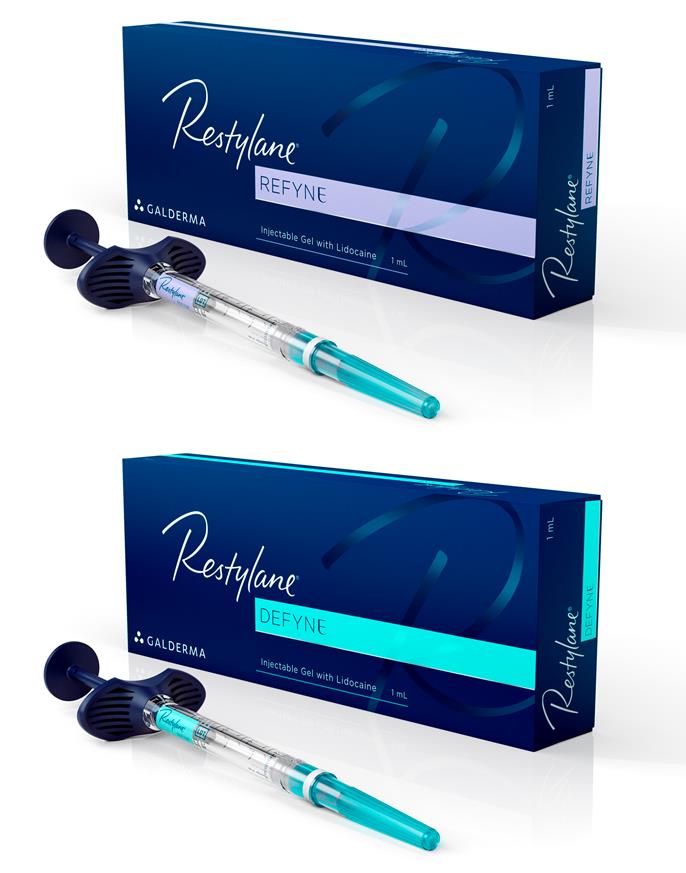
Galderma wanted to make the most of the opportunities digital affords, making one of their approaches an innovative use of video. Aesthetics products, such as Restylane®, lend themselves quite well to digital media. As the industry transitions away from still Before & After photos, Lask explained they created videos that would showcase the natural results of their treatments. “When we launched our two new products, Restylane® Refyne and Restylane® Defyne, earlier this year, the whole philosophy behind those products was that they were designed to be flexible  in animation and in expression in motion for natural-looking results.”

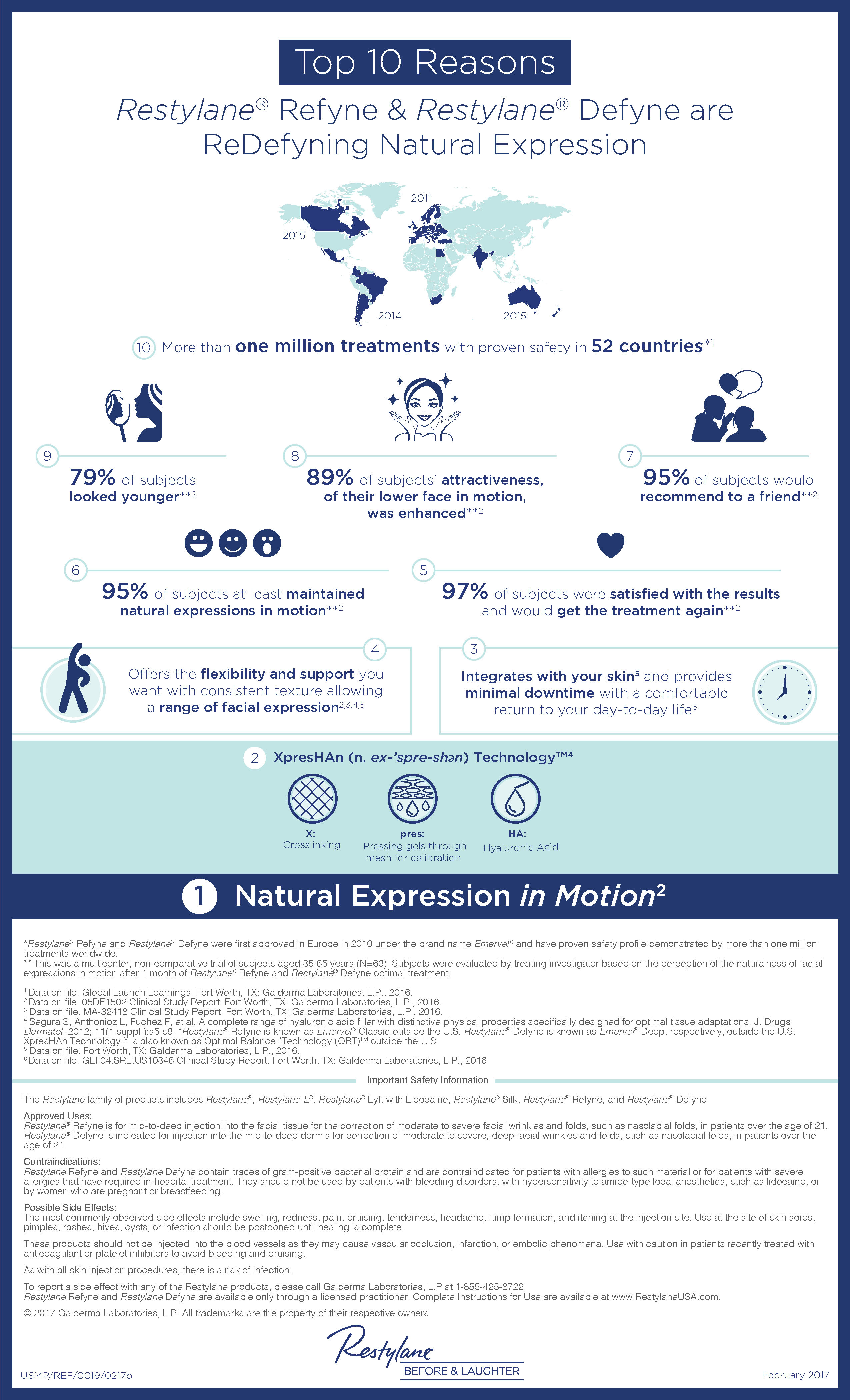
When sending out their first product samples to HCP offices, a video would play when the box was opened, with four different videos being included in each one. With people clamoring to obtain the sample boxes so they could view and share the videos, Galderma took their marketing to another level: text message video. If an individual, HCP or consumer, texted certain phrases to a designated number, they would receive four to five corresponding videos. Of the videos offering through the sample boxes and text message, Galderma developed real Before & After footage, digital animation of the mechanism in action, and the background and science of the XpresHAn™ technology. (XpresHAn™ is derived from the three components it comprises: X = Crosslinking; pres = Pressing gels through mesh for calibration; and HA = Hyaluronic Acid.)

Another innovative approach the aesthetics teams took was through their ASPIRE loyalty program, which is 100% digital communications. Consumers can receive educational emails, digital coupons towards products, and sweepstake offers electronically. Meanwhile, doctors can log onto a special portal within ASPIRE to obtain Galderma assets, find out which of their patients have redeemed Galderma offers or promotions, or track which of their patients may have lapsed in their treatment so they can provide necessary follow ups. Taking a digital only approach has not had a negative impact – Galderma’s response rates are just as good, if not better, according to Lask.

With an obvious expected increase in spending in digital and social media in the future, she said, “Having a social and digital strategy is status quo. I think the real focus is more on how digital and social are going to change, so we have to evolve our spending and budget.” With the challenge being adjusting investments, Lask added, “we all have to learn how to be a lot more nimble so we’re allowed to pivot quickly as the digital and social channels change.”

Ensuring relevance

Infographic shared with consumers, depicting the ‘Natural Expression in Motion’ theme.

Historically, pharma has often lagged behind other industries when incorporating digital or social media into their marketing due to a lack of clear FDA guidance. “There is no doubt that digital is changing faster than any of these regulations can keep up,” Lask noted, so they make sure to partner closely with their legal and regulatory teams from start and every step along the way. Consumers expect brands today to be “honest and candid, but [also] relevant to them.” Balancing such expectations with “the very important fact that we want safe and effective usage of our products … can be challenging and we’re learning as we go in many instances,” she said. Thus, they make sure their assets center on the important safety information, but present it in a consumerized way that people find engaging.

Lask stressed the importance of relevance when developing their educational and branded efforts: “We make sure first that it is relevant for the consumer. There is just so much noise out there, and if we are creating irrelevant material, you can almost guarantee that it is going to be skipped or not used. Then we put our focus on, what is the brand’s essence of our Galderma aesthetic product? It goes back to being honest, candid, and really being true to what we stand for.”

Galderma’s aesthetics brands employ both educational and branded tactics, depending on what is more appropriate at the time. “It’s a combination between education and branded marketing; we feel like you can’t do one without the other,” she said. With these treatments being elective, getting patients to be inspired by outcomes and addressing their primary concern – looking natural – is step one, she explained. Here, educational marketing leads the way. Branded marketing comes into play next to ensure the patient chooses their products, not a competitor’s.

Looking ahead

When preparing future plans, Lask has spotlighted three strategic areas, each one connected in a different way to improving access to education and information. One of the first things Galderma is keeping an eye on are websites such as Yelp or HCP reviews – anywhere that consumers can get engaged with how they find HCPs. She explained that, in the aesthetics market, those are very important to how consumers can figure out where they go for a treatment. Another area of watch for the team is around platforms such as RealSelf.com, which is a community-driven website providing information and research, reviews, and rankings for aesthetic medicines and cosmetic treatments. Lask likened it to the Trip Advisory of aesthetics.

The last key concentration is around retail pop up clinics, she said. It is empowering for consumers to have such access to information and freedom from scheduling appointments. But as a marketer, it provides other challenges – primarily, how do marketers find these places and then also ensure consumers are receiving their materials and relevant messages? Another barrier Lask found is that many of these retail pop up clinics, which are often owned by large corporations now, don’t usually want company branding or materials. She identifies this as a problem that will need to be solved in the future: “how to make sure that we’re able to touch the consumer in those offices as well?”

“The landscape is always changing, but that’s what is fun and exciting about it,” she stated. With more than two million women using aesthetic products currently and another 15 – 20 million more in the US alone who are interested in them, Lask said it is educating and providing them with information so they “really understand outcomes, what they can look like, and what’s possible.”


Jennifer Kovack


October 10, 2017 0

“What’s the ultimate call to action?”

This question was raised in a recent meeting, and I thought it a good one to discuss since we’re in the midst of planning season. Many would say the answer depends on the brand’s end goal. For pharma marketers, however, I say the ultimate action that brands need to focus on is getting patients to ask their doctor for a prescription for their treatment.

Script volume is the be-all and end-all measurement of the effectiveness of pharma marketing. Make no mistake: impressions and click-throughs are important metrics and help drive patients to the doctor’s office. But, ultimately, if those patients aren’t asking their doctors about your brand, your marketing efforts haven’t worked to their full potential.

That’s why Point of Care (POC) is so crucial for brand marketers. It’s the only tactic that puts your brand at the point of script, at the exact moments doctors and patients are thinking about and discussing treatment options. From the waiting room, to the exam room, to the back office, and now to beyond the office, thanks to mobile technologies, POC provides a connection point between your brand, the doctor, and patient. And it’s proven to drive desired behavior (1):
• 84% of patients who saw an ad at the POC are more likely to discuss the ad with their physician
• 77% are more likely to ask their doctor for a sample
• 68% are more likely to ask a doctor to prescribe a specific product

Many brands already realize the value of POC. Reaching $440 million in 2015, POC ad spend is growing faster than overall DTC advertising(2). Zion Market Research’s recent findings indicate that today’s $23 billion POC market will reach $40.5 billion by 2022.

But why do so many brands still find it challenging to choose between their tried-and-true digital tactics and POC? It shouldn’t be one or the other: digital and POC go hand in hand. For you Trekkies out there, I like to make this analogy: POC is the Montgomery Scott to your Captain Kirk. POC takes your digital ad and transports it to the exact locations you want, placing it in front of the exact audience you want, at the exact time they, and you, need them to hear your message—compelling the ultimate action of asking their doctor about your treatment. Then, it gives you clear insight into how that message changed doctors’ prescription-writing behaviors—and how much revenue was generated as a result. It doesn’t get much more impactful than that.

It’s planning season. You’re analyzing the risk versus reward of your tactics to determine a marketing mix that’s going to bring in the biggest buck. Why not include a tactic that delivers direct revenue—guaranteed. Be confident. Invest in POC and know you’re entering 2018 with a clear understanding of the impact your brand will have.


References

(1) Kantar Media for the Point of Care Communications Council, “Point of Care: Why Care?” 2017
(2) ZS Associates, “Right Place, Right Time: How Health and Wellness Companies Are Capitalizing on the Rapidly Growing Point of Care Communication Channel,” 2014

Linda Ruschau


October 6, 2017 0

My question to the DTC community is why can’t we come together with FDA and make DTC advertising more understandable.

I am not talking just about risks but also benefits and indications. We are all letting the approved label dictate how we say what we say. That label information is generally not consumer friendly. Consumers see advertising, not as a whole sales pitch, but merely the start of a buying process. DTC, because of regulations, seems to be treated as requiring an entire pitch where virtually everything must be discussed. Look at cancer advertising for example on non small cell lung cancer. I’ll use Keytruda as an example which is required to say it is indicated if PD-L1 is positive and there are tumors with no abnormal EGFR or ALK gene. Huh? Merck has to say it but does any consumer know what any of that means? I doubt it.

Bob Ehrlich
“Surely there is a better way.”
-Bob Ehrlich

What we have are technically oriented government regulatory bureaucrats in a non-technical DTC world. They should spend their time making sure everything said is true but also understandable. Instead of forcing Merck to discuss abstract qualifications on who might benefit, consumers would be better served knowing more about clinical results. Wouldn’t it be better to say Keytruda only benefits a segment of lung cancer patients and only your doctor can say if you might benefit? After all, patients do not self diagnose PD-L1 or their gene abnormalities.

FDA can make the 60 or 90 second ads much more consumer friendly and increase comprehension if they acted more like common sense regulators. They know many ads are data crammed and difficult to follow but it is their view that the label is like the Ten Commandments. Thou shall not deviate. So we get required language that is just wasting valuable air time that might be redirected towards giving consumers information they need and more importantly understand. I know Merck would probably like to do that. I also think OPDP would like it that way because I know the people there are trying to do right. Do we really think Congress intended consumer confusion in the 1970s when they wrote the regs never contemplating DTC?

Has OPDP pushed back on the Congressional committee regulating drug promotion that we need new promotional regulations? We can recognize that consumers just want mass media advertising to inform them that something might help them. They do not need the whole story rather just enough information to ask their doctor or search the Internet. Using the excuse that the regulations require all this complexity is abdicating the role FDA should have. We want drug DTC claim ads to be accurate and disclose serious risks. Surely, there is a better way. It will take FDA, Congress and drug makers to collaborate to determine how to improve. This is simple really and FDA should lead that effort.

Does anyone feel that we have done the proper job educating consumers when arcane medical terms are dominating DTC? Regulators tick off required boxes on their label checklist for DTC knowing full well consumers are often left clueless. My suggestion is OPDP have hearings on how to completely over haul DTC communication for today’s media environment, instead of using the excuse that they are captive to regulations written almost 50 years ago.

Bob Ehrlich


September 29, 2017 0

With the failure to come up with an alternative to Obamacare, Congress has left drug companies in a more precarious position. The goal was to make health care more free market oriented and less government controlled. That would have created more competition among health care providers and insurance companies. Patients would have more choice and more responsibility to use their health care dollars more wisely.

Bob Ehrlich
“DTC will likely weather the political storm.”
-Bob Ehrlich

Proponents of Obamacare say more free markets would mean less guarantees of coverage. The Congressional Budget Office has said the Republican plans would have led to many millions losing coverage. I do not want to take sides here. I will say that we do need a compromise that gets votes from both sides to have a long term plan that can endure changes in party control. Obamacare is helping many patients with pre-existing conditions, while hurting many others who are paying higher premiums with super high deductibles. This cannot go on as we are all paying too much for coverage. Our plans are increasingly becoming useful only for major illnesses, not covering routine expenses.

How do drug companies fare in this failure to repeal Obamacare? I am afraid they will now be a target for both parties as a driver of increased premiums and higher deductibles. Congress will have to deal with these issues and will look to drug companies to cut costs. Single payer will not pass, but we can expect to see more government involvement in pricing. Bernie wants reimportation from Canada which he says will save consumers $7 billion a year. He and many others want Medicare to have negotiating power with drug companies. Others in Congress want to end DTC or use tax policy to make it a non deductible expense.

California wants to legislate a notice period for drug price increases and mandate insurers tell them what percent of premiums are the result of drug costs. Other states will also try to add measures to embarrass drug makers with marketing disclosures.

Most patients will support measures against drug makers. We all want lower costs. Few patients understand the industry arguments that innovation justifies higher prices. While most Congressmen understand the need for a profitable drug industry, many think that profit is excessive and will be willing to cut that level of profits. Bernie thinks he knows how much is a fair profit and is perfectly willing to risk innovation for Canadian level prices.

DTC will likely weather the political storm because of commercial free speech provisions. The question is will drug companies voluntarily stop DTC if Congress demands it as a price to prevent reimportation or Medicare price negotiations. Drug makers will do what they need to to keep free market pricing. Unfortunately that means DTC is vulnerable to horse trading.

Drug companies like using DTC and its expanding use is proof they get a good ROI. Remember, however, that DTC spending is only about 1% of US Rx sales and might drive about 2% of sales. It is true that some brands are driven heavily by DTC but most establish 90% of their sales through physician promotion. So, can the drug makers stop DTC and still be successful? Most brands can and will adapt to a no DTC world.

My conclusion is the advertising lobby will prevent any punitive provisions affecting DTC. After all, the same media companies who bash drug companies regularly in their news coverage depend on DTC ads for a large portion of revenue. What is clear is the risk of those DTC restrictions are higher than ever before and we in the drug advertising world must stay involved in defending DTC as a positive force for educating consumers.

Bob Ehrlich