
Sponsored Content
Healthline Insider Q and A: A series of conversations with experts from the digital, health and marketing industries. Why? Because different perspectives enrich us and make us smarter, stronger, and more aware.
 Healthline Insider's Ingrid Eberly sat down for a conversation with our SVP of Media Strategy & Revenue, Dante Gaudio, on the topic of narrative and the power of narrative in health. In his role, Dante spends a lot of time thinking about ways he can help health brands build powerful stories to change people’s lives.
1. What do you mean by narrative? How is narrative different from “brand”?
While “brand” refers to how a product is represented in a person’s brain, “narrative” is the series of connected events, experiences, and stories that get it there. If brand is the destination, narrative is the pathway to it. Narratives are usually about the people who use brands and are communicated in spoken or written words or visuals.
An example of a brand with strong narrative is Whole Foods. What’s your experience with Whole Foods? I’m pretty sure you all have consistent responses: “helps me live more naturally,” “brings the local community together,” “happy and helpful employees.” Even your negative responses are likely consistent: “expensive” and probably “crowded parking lot.” It is these experiences that form the Whole Foods narrative, which feeds the Whole Foods brand.
2. Why is narrative important in healthcare?
Healthcare is at its core science, which can be dense, complicated, and full of unfamiliar language. Narrative helps make healthcare more understandable, approachable, and human.
Whenever I speak to someone who is anti-vaccine, instead of talking about the public health benefits of vaccines, I tell them about my grandfather who had polio: how he struggled every day and lived in an almost constant state of pain and discomfort. I may not convince the anti-vaxxer to change their convictions, but through my personal narrative, I’ve probably opened their eyes to the benefits of vaccines and how they can far outweigh the risks.
And I’ve learned a lot from the editorial team at Healthline about using narrative in healthcare. In a world where health is full of misinformation, isolation, and stigma, we stand against needless complexity, approach the whole person using human stories, and empower transparency. So, instead of genericizing parenting advice for new parents, they show a day in the life of a new parent in all its chaos and confusion. And readers “get it” and connect to it.
3. How does narrative drive consumer behavior?
There’s a ton of research that shows that the human brain interacts with the world via narrative. Think about how you dream: Do you envision bullet points? Or statistics? Probably not. When you dream, your subconscious brain creates a narrative… sometimes really weird narratives, but a series of connected events nonetheless! So, I don’t think narrative drives human behavior… I think it IS human behavior. It’s literally our operating system for interacting with the world around us.
“IF YOU DON’T TELL YOUR STORY… THEN SOMEONE ELSE WILL”
4. What’s an example of narrative driving a product or category?
The best examples are brands that build their narrative around a shared purpose with their customers. So, for example, if you’re a pharmaceutical drug, you don’t just talk about the efficacy, safety, duration, speed of onset, etc. of the drug. You also show how the condition doesn’t allow patients to be there for life’s important moments. You compile real-world coping mechanisms and share them with compassion. You facilitate social support, maybe even humor if appropriate. You show people that you are living the same reality as them, a shift from what a product can do FOR someone to what a brand can do WITH someone. That’s the power of narrative.
5. How does one build a narrative around a health topic or a health brand?
First, you have to be grounded in facts: who is affected, what obstacles they face, and how you can be an ally. You need to bring empathy and understanding to this knowledge. And if you can, personalize it. Think about how to adjust or update your narrative based on the experiences and expectations of the different audiences you’re engaging with.
With these insights, be deliberate about developing the narrative with key stakeholders. Commit to what you stand for, how you want people to feel, and what change you want to make (be) in this world. Then train your advocates, partners, employees, and agencies to stay consistent.
Once you’ve created your narrative, you need a plan to disseminate your stories internally and externally. Tell them in many ways — on your website, in your ads, through your brand advocates and partners. Put them out there, and let them build their own momentum.
Pharma marketers probably get nervous when they hear things like “put them out there” and “build their own momentum.” Sure, pharma brands can’t go organic with their brands, but they can around conditions or patient situations. And if they can’t do it themselves, they can rely on partners to build the narrative on their behalf.
6. How do you distinguish good content from not-so-good content?
My criteria are simple. Did it engage or inspire me? Did it surprise me? What did I learn? And what am I going to do after engaging with it? Hint: Content grounded in a really good narrative is likely to hit on all of the above!
I’ll close by stating an old PR and communications adage, “If you don’t tell your story… then someone else will.”
Are you tasked with sparking real conversation and brand stories? Come talk to us about leveraging narratives to build brands. Contact us at corpmarketing@healthline.com.
About Healthline
As the fastest growing health information source, the Healthline property engages 77 million unique visitors per month (comScore, January 2019). We provide real health information with a real human approach.

 Reinforcing your brand message with a dynamic media mix
 What’s the best pharma ad you see running on TV right now? I bet you could sing the jingle, but do you remember the specific brand? I’m the odd one that uses my DVR to skip TO the commercials – but you and I are not the average healthcare consumers. That’s why, despite the strength of TV, when it comes to messaging to patients, you have to pull that message through when they are going to be most receptive – in the doctor’s office.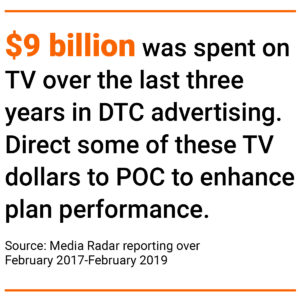
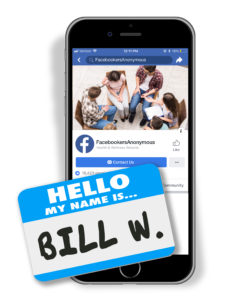
 During a recent dinner among fellow DTC marketers, I asked who believed it was critical for their brand to be on social media. All answered yes. Then I asked how many of the pharma brands they work on have made the leap. Only half answered yes. I turned my attention to the “no” group to dive into their reluctance to take their brands to social media, and their answers surprised me.
 Accommodating pharma
 In today’s world, consumers expect personalized, relevant communications tailored to their specific needs. The consumer goods, retail, fashion, and travel industries all reach these levels of personalization, but how can pharma marketers reach consumers on such an individualized level in such a regulated space? Enter data-driven marketing.
 Looking to the future
 Announced on Diabetes Alert Day, March 26th, PatientPoint and the American Medical Association (AMA) are developing content to educate patients and their HCPs about the risks of type 2 diabetes as well as cardiovascular disease. The collaboration will utilize PatientPoint's in-office technology to encourage patients to have an informed conversation about either condition, with the goal of “reaching and activating patients … to prevent the onset of both diseases,” stated the
  Sharecare recently launched its first-ever
  HCB Health has created three internal business units to “best serve an increasingly diverse set of clients and to help manage the firm's rapid growth,” according to a recently news release. The three units – MedTech, BioPharma, and Health & Wellness – will manage their own P&Ls as well as each having its own dedicated team. All “will report to HCB Partner, Nancy Beesley, who recently became the firm's president.”
 Dan Chichester has re-joined Ogilvy Health, after a five-year hiatus, as Chief Experience Officer (CXO). In this newly-created role, he will be “responsible for driving forward Ogilvy Health’s innovation, digital strategy, and brand engagement,” the
  Stacey Singer, an agency growth specialist of 30 years, recently announced the launch of her own independent agency consultancy. Having left her post with WPP, where she most recently built and managed their global Client Satisfaction Center of Excellence, Singer told DTC Perspectives that she identified a growing need to help better serve agency accounts and thus led to her new venture. Her eponymous