-Bob Ehrlich

The US Department of Health and Human Services (HHS) has awarded nearly $42 million in funding to 49 Health Center Controlled Networks (HCCNs). HCCNs work together to improve access to and quality of care, as well as leverage health information technology to cut costs and improve care coordination. The funding came through the Health Resources and Services Administration (HRSA) as the HCCNs expand their usage of health information technology to empower patients and promote data sharing.


“Health centers play a crucial role in providing their communities with access to high quality, affordable healthcare,” said HHS Secretary Alex Azar in the news announcement. “Investing in more advanced health IT will help put patients at the center and unleash the power of data, helping us get better value from the care delivered by health centers and delivering on President Trump’s vision for healthcare.”
“Improvements in information technology will enhance the patient and provider experience as health centers continue to deliver high quality primary care in underserved communities across the nation,” said HRSA Administrator Dr. George Sigounas. “President Trump is determined to support and improve the ability of health centers to work together and deliver value-based care.”
I sat down with Charlie Greenberg, a respected healthcare industry veteran and an expert in point-of-care (POC) marketing, to discuss current trends in healthcare marketing. It’s a topic Charlie knows well, having worked for more than 30 years in the industry with giants like Saatchi & Saatchi, Wyeth, and Merck. Charlie currently serves as a media and marketing consultant, so he spends a great deal of time thinking about the ways brands can improve their reach and maximize their return on investment.
Q: How has healthcare marketing changed during your time in the industry?
A: Market research on patient population profiles and their attitudes toward treatment options has become increasingly more sophisticated. We no longer focus only on demographics and affinity interests, but now incorporate attitudes toward treatment options, healthcare status, and relevant multicultural distinctions within an overall target universe.
Paid media in the marketing mix has embraced this more sophisticated market research by employing greater targeted media tactics. This is not only a function of the evolution of digital media but greater opportunities within the point-of-care arena and the availability to refine how mass media can reach a target audience.
Q: What's the biggest thing healthcare marketers aren't doing that they should, or that they should be doing more of?
A: Good marketers set themselves apart from the pack when they are willing to make bold decisions and address the marketplace by shaping customer thinking. Adopting a mindset of “test and learn” around how marketing dollars are spent needs to be better embraced. Short-term thinking often leads to stagnation and missed opportunities.
Secondly, marketers should also be investing more in communication which has the goal of building health literacy. This will not only support the ability to shape consumer thinking, but health literacy campaigns have been shown to lift the efforts of branded commercial campaigns when the two messages are running together.
Q: What effect can point of care (POC) have on the overall media plan? What benefits can brand managers and media planners realize from adding this channel to their mix?
A: Adding POC to a plan will increase the ability to laser target reaching prospects and patients. This complements the efforts of other tactics within the plan. Secondly, POC offers a guaranteed ROI, which also enriches the promotional effectiveness of the overall marketing plan.
Q: Why is healthcare personal to you?
A: It is rewarding to be able to feel a sense of achievement from launching that new snack food item on shelf, introducing a new car model or driving purchases of yet another shade of red lipstick. However, healthcare marketing offers a benefit of knowing that you are helping people understand health conditions and offering treatment to increase their quality of life.
Q: What’s your favorite thing about being a New Yorker?
A: New York City offers real mobility since it is one of few places in America where you have the option to walk to get to your destination rather than being tied to your car.
In early June, PhRMA released its first-ever television ad as part of its Let's Talk About Cost campaign, which has previously released print, digital, and radio ads. The ad aims to “reaffirm our commitment and generate more conversation about solutions to the challenges patients face affording their medicines.”
With heightened discussion in recent times surrounding drug prices – including the US District Court's ruling on price disclosure in DTC ads and pricing trends data from Rx Savings Solutions – PhRMA's Let Talk About Cost campaign helps create transparency and encourages open “dialogue on how we can make medicines more affordable for patients,” stated their news release. According to the trade association, the campaign helps “put a spotlight on the role insurers and middlemen like pharmacy benefit managers play in determining what a patient pays out of pocket for their medicine.
“Research shows that on average, 40% of the list price of medicines is given as rebates or discounts to insurance companies, the government, pharmacy benefit managers and other entities in the supply chain. These rebates and discounts exceeded $166 billion in 2018 alone and are growing every year.”
The article's author, Priscilla VanderVeer, Vice President, Public Affairs with PhRMA, stressed the importance of focusing on “changes, like reforming the rebate system in Medicare Part D, that can lower patients’ out-of-pocket costs, improve access to cutting-edge treatments and cures, and drive competition to help bring down costs.”
Earlier this month, US District Judge Amit Mehta ruled that the US Department of Health and Human Services (HHS) “lacked authority from the US Congress to compel drug manufacturers to disclose list prices,” as per reports. In mid-June, Merck & Co., Eli Lilly & Co, and Amgen, along with the Association of National Advertisers, filed a lawsuit on the grounds that requiring pricing information in ads would confuse consumers as that pricing would not accurately reflect actual out-of-pocket costs for consumers due to different insurance plans and coverage, as well as further discounts and rebates. Mehta's 27-page ruling, which sided with this group, came out one day before the disclosure rule was to go into effect.

Mehta wrote in his decision: “The court finds that HHS lacks the statutory authority under the Social Security Act to adopt the WAC [wholesale acquisition cost] Disclosure Rule. Neither the Act’s text, structure, nor context evince an intent by Congress to empower HHS to issue a rule that compels drug manufacturers to disclose list prices. The Rule is therefore invalid. In view of this holding, the court does not reach Plaintiffs’ First Amendment challenge.
“To be clear, the court does not question HHS’s motives in adopting the WAC Disclosure Rule. Nor does it take any view on the wisdom of requiring drug companies to disclose prices. That policy very well could be an effective tool in halting the rising cost of prescription drugs. But no matter how vexing the problem of spiraling drug costs may be, HHS cannot do more than what Congress has authorized. The responsibility rests with Congress to act in the first instance. ”
Several outlets – including HHS, the White House, and AARP – released statements expressing their disappointment with the court's ruling.
The last decade has witnessed the astounding growth and scale of Facebook and Google. Together these two power players command the majority of digital ad spend, and Amazon is increasingly making gains. While compelling targeting and efficiency benefits have led to a collective surge in brand spend with these major digital and social players, publishers repeatedly demonstrate that they can’t fully control where brand campaigns appear across their platforms.
Brands are routinely finding themselves appearing adjacent to content violating taste and tone guidelines or worse, on blacklisted sites. And despite publishers putting thousands of employees and AI support safeguards in place to weed out so-called “problem adjacencies,” this keeps happening.
The latest example of this unsafe brand environment was just weeks ago, when an active shooter in New Zealand took to Facebook Live to broadcast his 17-minute shooting spree. Footage remained on Facebook for an hour, with Facebook citing a failure of their AI capabilities leading to the accidental airing of the gruesome footage.
It’s no mystery that these publishers are playing catch-up and can’t guarantee brand-safe environments, and the same issue has been on the table for years.
And it’s becoming increasingly clear that brands have had enough.

Earlier this month, P&G Chief Brand Officer Marc Pritchard blasted the digital media industry for lack of transparency, fraud, privacy breaches, and a proliferation of violent and harmful content placed next to ads.
“We’ve been tolerant for too long,” Pritchard said in remarks to the Association of National Advertisers’ annual media conference. “It’s not acceptable to have brands showing up where opioids are being offered, where illegal drugs are promoted, where abhorrent behavior is present, or where violence is seen. The apologies are heartfelt and appreciated, but that’s not good enough.”
Prichard’s comments beg the question: With brand equity and corporate reputation at risk, are these platforms worthy of the major investments they enjoy?
How valuable is a media buy that promises hyper targeting, yet carries a tremendous risk of deviations from brand advertiser content guidelines and subsequent public relations efforts to correct and repair a maligned reputation?
At the end of the day, every dollar spent in the digital and social sector represents a dollar that isn’t going to “traditional” media. And yet traditional media channels such as TV, print, and point of care (POC) guarantee brand-safe ad placement and have a solid track record of delivering on agreed-to adjacencies.
POC media in particular allows brands to enjoy the halo effect of an implied endorsement of a healthcare professional. Offering custom, curated content alongside prestigious medical and patient advocacy organizations and award-winning education also presents an important opportunity.
Simply put, POC media plans can be targeted without the risk.
Time is running out for digital and social publishers to make amends, and advertisers are beginning to put their money where their mouth is. In 2017, P&G ceased all YouTube ad spending until the publisher could guarantee safe adjacency for P&G brands. Perhaps this time marketers will join to pull back their marketing spends to demand safe adjacencies.
In the meantime, “traditional” media such as POC will continue to deliver the right adjacency at the right time with definable results. Shifting the media channel allocation mix to include POC for health brand marketing spend is an easy case to make.
See the value that POC can bring to your channel mix in our new whitepaper.
Every year, events like South By Southwest and Mobile World Congress bring us new technology innovations that have the potential to fundamentally reshape a marketers’ playbook. This year was no different, as pharma marketers in attendance in Austin and Barcelona saw a range of technologies from brands like AT&T and Google.


But what technologies from these conferences are likely to have the most impact on pharma marketing in 2019 and beyond? There are four, in particular, that stood out to me.
Every telco is promoting the arrival of 5G, which promises to give consumers speedier data connections up to 100 times faster than 4G. (Even the President seems excited about the potential here.) This was on display at MWC and SXSW, with companies like Samsung and Huawei making 5G the centerpiece of their presentations and exhibits.
For pharma marketers, 5G has incredible potential. Digital video marketing is a nascent and growing channel for pharma advertisers. As the smartphone has now become the first screen for consumers, 5G data speeds can deliver higher definition video content more effortlessly, enabling a more consistent and better quality experience. Faster speeds also means marketers will be able to leverage more creative video formats, like AR and VR, without worrying about buffering or load times affecting the end-user. In fact, a study by Verizon Media found that one-third of advertisers believe 5G’s top benefits will be “better consumer experiences” and the opportunity to “use new or additional creative formats.”
At this year’s MWC and SXSW, robots was one of the most-discussed topics. This is unsurprising, since — over the past couple of years — they’ve become a focal point across so many industries. There are countless ways they can make a wide range of daily tasks more seamless. And pharma is no exception.
Most important for pharma marketers is how robots can help them interpret relevant consumer data, allowing them to develop stronger and more effective marketing campaigns. A study by Econsultancy and IBM found that 33% of top marketers believe that having the right data collection technologies is the best way to help understand customers. So once marketers have the data they need, they can create the right messaging and figure out the best ways to reach their target audience.
Another way robots can be beneficial for pharma marketers is by boosting inventory. And as demand grows for pharmaceuticals, robots will take on a more prominent role in the space. According to Grand View Research, global pharma robot market growth will reach $430 million by 2025. So if robots can produce pharmaceuticals more quickly, there will ultimately be less downtime in factories. This means lower lead times, happier customers and — most importantly — more marketing opportunity.

We’ve seen an evolution in the number of health-tracking devices over the past decade or so. This has positioned them as something worth paying close attention to. And if this year’s SXSW and MWC conferences are any indication, they’ve already made the jump to the next level. BCC Research found that health self-monitoring technologies — such as Fitbit and Apple Watch — will reach almost $72 billion by 2022. This growth is huge. But for pharma marketers, why does it matter?
This boom actually opens up a whole world of marketing potential. Most health-tracking devices are connected to apps on personal mobile devices. And as you likely know, where there’s mobile, there’s data. So marketers can actually use any of this data to target consumers on a personal level. From there, they can share articles and offers based on their health and habits. It’s important to make sure marketers aren’t violating any privacy laws — like last year’s newly-implemented GDPR restrictions. In addition, marketers have the opportunity to advertise directly on health-tracking devices. If people are using them all the time, consumers are likely to see any ads that show up on their device. And if they’re relevant to them, there’s a good chance they will interact with them, as well.
AI is here to stay. And it’s having much more far-reaching consequences than creating driverless cars or worker-free convenience stores. AI is disrupting the way we view creativity, solve problems, and fabricate and test marketing strategies and materials.
The adoption of AI will have a major impact on the organizational structure of marketers, as well as how they go about getting their jobs done. And while AI has been on the radar for a while now, MWC and SXSW really illuminated the need for marketers to become more savvy on the AI front. This includes training teams, adopting solutions, and becoming more comfortable with what an AI-powered marketing industry will look like. When it comes to pharma marketing specifically, the possibilities are endless. AI will continue to influence medical and pharma research — including diagnoses and treatments. Moving forward, it’ll play an increasing, unique role in the way pharma marketers conduct their business.
There are plenty of trends that pharma marketers can take away from these two events. Among the many topics at them, I found 5G, robotics, health-tracking technology, and AI to be most important for pharma. It’ll be fascinating to see how these four areas grow and become embedded into pharma marketing campaigns moving forward.

Health and wellness, pharmaceutical, and medical-device providers must navigate an ever-evolving and consistently complicated healthcare landscape. Agencies (and corporate marketers) serve a key role in helping their clients problem solve, understand their challenges, and identify critical success factors.
How is this best accomplished? Through the power of thorough, intuitive and intentional listening, and strong engagement – with both the client and consumer.
It’s critical to tap into that certain something that bridges the gap between what agencies (and corporate marketers) think they know and what a client (or brand manager) needs to understand. The reverse is equally true. What does the client (or brand manager) and consumer know and what do we as agencies need to understand? It can only be arrived at through intentional, deep listening. And from that, valuable insights result. Answers rise to the top. Incredible ideas and campaigns are born. If you're an in-house marketer, this means listening to your team and to your end consumers.
I’d argue that much of the best creative work and constituent engagement is accomplished by listening to, understanding, addressing, and integrating human emotion. You need to know what consumers feel to know how to reach them. It’s critical in today’s competitive marketing landscape, a chilly land of technology and data.
Listening Builds Communication
Communication builds patient, caregiver, and healthcare professional engagement. Engagement is the new currency for building sustainable brands.
Good communication, brought by attuned engagement, is a giant step away from frequently asked questions and data-driven answers. It is not time-consuming, but rather a deal closer. It is what sets you apart from the competition and, ultimately, what builds the bottom line.
Listening Builds Trust
Trust is as important as price for today’s patients. When we understand that today’s patient is motivated by trust and that it is just as important as price, we see a level playing field. We understand that, when all things are equal, the deal breaker could be due to a lack of trust resulting from our own inability to effectively tune in.
“The Art and Value of Good Listening” – an article published in Psychology Today – declares that listening is an art, but that good listening also depends on gauging the mood (and mindset) of your audience. Is the patient / caregiver upset? Are they fearful? If tapping into human emotion requires listening, it also requires compassion and understanding.
Beyond Listening: Emotional Branding
Effectively listening to our audiences on an emotional level involves knowing what to listen to. We need to identify the aspect of the consumer's life that requires a solution. Then we need to understand the emotion behind this and link the product or service in a way that is emotionally relatable.
Emotional branding insists on forging an emotional connection between products or services and the consumer. Those connections can create brand loyalty among consumers. The emotional connection has to be positive and it always has to be relevant. It is either identifiable to consumers or represents something they believe in.
A medical device may keep a patient out of the hospital, which falls in line with the new, value-based care initiatives and the merit-based incentive payment system. And a physician or medical office manager may have an emotional response to this type of marketing – better patient care and adhering to government regulations in a single move.
Branding: What Science Says About Engaging People

According to research and information gathered by The New York Times and Content Marketing Institute, 92% of consumers respond to advertising that feels like a story. Additionally, the human brain can process images or graphics 60 times faster than words. Taken together, this information suggests that a story with disruptive images is our best bet when marketing to potential customers. If we can tap into human emotion using these two mechanisms, we have an excellent starting point.
We gain trust by listening and good communication. We learn where consumers are on their respective journeys, and we deliver what they have asked for or what they need to go forward.
We learn to bring consumers in by allowing our brand to tap into human emotion.
Businesses that effectively engage also do so through value creation, rather than revenue extraction. They provide their audience with something meaningful beyond a sales pitch – an emotional appeal, a smart end-to-end experience, great content that is relatable on an emotional or real-time support level.
Six Strategies to Help Build Trust & Engagement
Relating to your audience begins with understanding them and how they differ from each other. Take the time to see the differences in your audiences, segment them, consider what drives each of them to “raise their hand,” customize your message, and take action. Then engage with them. Our marketing must be organic and customizable to reflect a personalized approach.
Remember, we no longer live in a business-to-consumer world. Given today’s digital landscape, it is a consumers’ market, and they hold all the power through engagement.
Here are six basic strategies to help you improve engagement:
Through surveys and tuning in, we may discover that a service or product is confusing or that our campaign's messaging is lost. When we are very close to an idea – from the drawing board on – we may think that our understanding is translating well to the audience when it is not. By asking, learning, and adjusting our communications, we also improve our consumer relationships.
The Bottom Line
Everything comes back to listening, understanding, and effective communications. To discover what consumers need most, you must fire up your listening skills and pay attention to their requests and concerns. Understand where they are on their journey and what is preventing them from reaching the next level.
Through attuned engagement and understanding, we can address consumers’ needs in more effective ways and bring our brands greater success. By carefully listening, we can tap into human emotion and imbue our marketing solutions with a greater chance of penetrating.
It is incumbent on us as marketers to help each healthcare practitioner, patient, or caregiver feel like we are speaking directly to them. Through smart segmentation and marketing customization, we can improve our ability to establish emotional connections and drive engagement.

Personalized Smart Recommendations in social networks
What if Amazon was in charge of patient activation? Personalized, data-driven healthcare solutions would up-end patient activation as we know it. Some biopharma marketers are already doing this today, leveraging social networks to anticipate and address patient needs proactively. Here’s the formula for how they are doing it.
First, think about what Amazon does right after you’ve put something in your cart — like, for instance, band-aids. You see this message: “Customers who bought this item also bought… Neosporin, Children’s Tylenol” etc.. We at MyHealthTeams do something similar in chronic health.
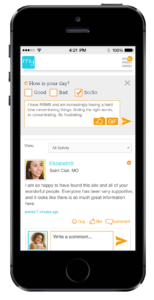
For example, when one of our MyMSTeam members posts about her frustration with memory loss and concentration problems, we automatically surface relevant information that has proven popular among other members facing similar challenges.

First, a member — “SuzanneM from San Jose” — posts about the fact that she’s having a hard time remembering things, finding the right words or concentrating.

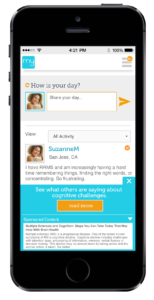
We then automatically surface for her relevant information that other members facing similar cognitive challenges have found useful. We call this a “Smart Recommendation.”

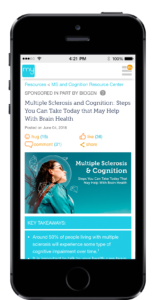
Which makes it easy for her to quickly get to content that addresses her concern and is likely to inspire action. In this example, that content is from the “MS & Cognition” Resource Center we created in partnership with Biogen after research among MyMSTeam members revealed that cognitive dysfunction is a top symptom impacting quality of life and often starts early in the progression of the disease.
We introduced Smart Recommendations with select partners in our social networks earlier this year to personalize patient education and inspire action. They are “smart” in that they are served up contextually based on what a member shares in her post or profile. They are “recommendations” in that we are surfacing information (not medical advice) that others going through the same thing have found helpful. It’s the power of community at work. This is a new way to drive activation.
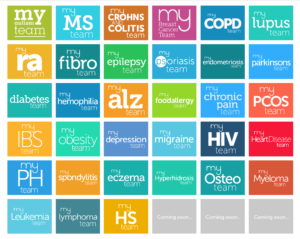
Fueled by natural language processing and machine learning, Smart Recommendations are possible because our members share information, resources and support every day — for 7 years now. With millions of members, 90% of whom are diagnosed patients, across our 32 growing social networks, we see both the challenges people living with a chronic condition face and the information that proves most useful to them — at a personal level and at scale.

This enables our pharma partners to approach Patient Activation differently and truly empower diagnosed patients with timely and useful information.
The click-through rates on Smart Recommendations are through the roof — north of 20%! This shows how hungry patients are for directly relevant, objective information to help them manage their condition. Today’s healthcare consumer is empowered and motivated to play an active role in managing her health. Pharma companies looking to activate patients don’t have to rely on just the doctor channel anymore — in fact, they can’t. By engaging patients where they are in social networks, these companies have started to deliver more of an Amazon-like consumer experience.
![]()