Latest News


June 25, 2015
DTC Perspectives | DTC in Focus
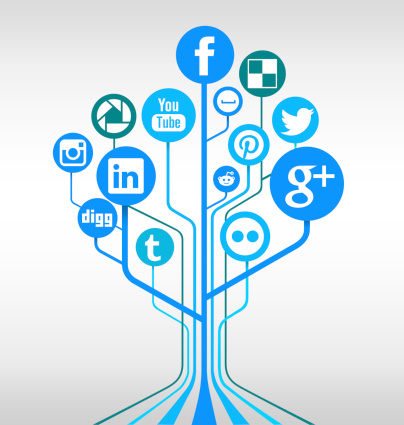
Social media networks tree

Now that the majority of brands have established a social media presence, they’ve shifted from developing social media strategies to asking how they can use them to maximize patient engagement. But in order to identify the value of their efforts, marketers must gain an understanding of who they’re reaching, the social channels consumers prefer and most importantly, what content will strengthen patient relationships.

Who are the BFFs of Healthcare Social Media?

So who are the BFFs (Best Friends Forever) of healthcare social media marketing? Or in other words, which healthcare consumers are most receptive to social media campaigns? To find out, adults 18+ who consider social networking sites to be a valuable source of healthcare information were profiled. According to the Nielsen Scarborough MARS Healthcare Study, BFFs tend to be young, as almost half are 25-44 years old. They tend to skew slightly female, predominantly white, with moderate education (high school or some college) and an average annual household income of about $69,000.

While half of BFFs consider themselves to be in excellent or very good health, 75% have had a family member hospitalized during the past three years. Additionally, they’re influencing the choices of those family members, as 73% say that friends and family come to them for advice about healthcare and medications. So while BFFs of healthcare social media account for only about 8% of the US adult population, their influence is much farther reaching when it comes to healthcare decision making.

Preferred Social Media Outlets

Facebook is the primary social media outlet for BFFs of healthcare social media marketing, with 68% saying they have visited the site during the past 30 days. YouTube comes in at a close second, with a little over half (53%) visiting that site during the past month. Instagram ranks third at 18%.

While there are many similarities among BFFs that frequent each social media outlet, there are some unique aspects that marketers should consider. Facebook and YouTube reach a slightly older audience, average age 38 and 37 respectively, while, not surprisingly, Instagram BFFs skew younger, with an average age of 32. In addition to Instagram’s more youthful audience, these BFFs are also more likely to belong to an ethnic group, with almost half identifying themselves as African-American or Hispanic. YouTube offers the best opportunity to reach male BFFs, as 42% of its audience is male, compared with 36% for Facebook and 25% for Instagram. This highlights how important it is that marketers use a variety of social media outlets and accommodate each audience as they develop their content strategies.

Content to Drive Action and Engagement

Examining the lifestyles, attitudes and healthcare behaviors of social media audiences provides great insights into the types of content that will resonate with patients. The more closely the content matches the patients’ interests, the more engaged your audiences will become with your social media outreach.

So which topics should marketers leverage most? When it comes to health, stress is a subject that just about everyone can relate to. In fact, two out of three BFFs consider themselves to be very or somewhat stressed, and about one-third say their stress level is much or somewhat higher than it was a year ago. Weight management, exercise tips and healthy eating are other topics that will resonate with BFFs, as three out of five believe they are overweight or obese, while half say they’re currently dieting or have been on a diet plan. Parenting, maternity care and pediatrics are also hot topics. BFFs are 48% more likely to be planning the birth of a child during the next 12 months, and 44% already have a child under 18. Additional interests include alternative and holistic approaches to medical practice and emerging healthcare treatments.

It’s also important to understand how BFFs will respond to your social media content, specifically what actions are they likely to take as a result of the exposure. When asked what actions they have taken during the past year as a result of exposure to healthcare advertising, BFFs of social media marketing reported being 128% more likely to discuss a healthcare ad with a friend or relative and 102% more likely to conduct an additional online search for information. These percentages indicate that BFFs are hungry for valuable healthcare content and further emphasizes the influential impact that BFFs of social media marketing can have in building awareness of your services.

Increasing the value of your social media presence takes planning and patience, but the payoff can be substantial as it reaches a highly influential group of healthcare consumers. Your social media BFFs are your brand ambassadors, and they have the power to propel a single post through their channels and reach thousands of potential consumers. Understanding who they are, their interests, and preferred social media outlets will allow you to build a successful social media strategy where the recommendations of BFFs build significant and far-reaching marketing momentum.

Karla Horton


June 25, 2015

Senator Edward M. Kennedy’s landmark speech at the 1978 Democratic National Convention in Memphis, Tennessee emphatically brought attention to our nation’s health care dilemma, establishing his stance on health care as a matter of right and not of privilege. The human right to health care means that “services must be accessible, available, acceptable, and of good quality for everyone, on an equitable basis, where and when needed.” Supported by approaches and behavioral science theories, including the Health Belief Model and the Theory of Planned Behavior, mHealth and telemedicine embody the ideals of the right to appropriate care at a suitable time in the correct place.

Decreased Time and Cost of Health Care +
Increased Health of Population and Quality of Care =
High Return on Investments in mHealth and Telemedicine

By incorporating the following five approaches of mHealth and telemedicine into our health care system, lower cost and higher quality care for all becomes a clear reality.

  1. Remote analysis services. Highly trained professionals work as a pooled resource with fractional employment providing 24/7 coverage with services such as telepathology and teleradiology.
  2. Remote monitoring technologies. Patients switch from serviced on an inpatient basis to monitored on an ambulatory system.
  3. mHealth monitoring technologies. Disease managers prevent hospitalization for conditions such as heart failure by accessing daily weight information and proactively assisting patients with fluid retention before a crisis occurs.
  4. At-home triage services. Televisits from nurses and PCPs decrease emergency room visits.
  5. Telemedicine appointments. Providers accept patients upon their current availability and
    reduce the amount of wasted underutilization.

Applying the Health Belief Model to mHealth

Benefits
In a study comparing traditional to mobile app self-monitoring of physical activity (PA), the Health Belief Model (HBM) concept of perceived benefit showed that app users self-monitored exercise more often than non-app users (2.5 days vs 1.25 days per week) and reported greater intentional PA than non app users (150 kcal vs 50 kcal per day).

Barriers
The concept of perceived barrier to wearables involves difficulty with location tracking using Bluetooth (narrowband) and measurable issues in accuracy, time latency, and consistency. Signal strength is an unreliable indicator of distance considering wireless network effects such as obstructions, reflections, refractions, multipath and reception. One innovative solution is ultra wideband (UWB) radio which enables resilient location and distance measurements.

Efficiency of Narrowband vs Ultra Wideband
with Time Latency and Visual Effects

Cues to Action
The concept of cues to action comes to the forefront through instant feedback from such wearables as pedometers or activity monitors. The data acts as a reward when results are high and as a challenging motivator when results are low. Forty percent of trackers indicate that feedback prompts them to ask a doctor new questions or seek a second opinion. Trackers share their results with others in common language in online support groups either to receive and give encouragement or take part in competitions.

Applying the Theory of Planned Behavior (TPB) to Telemedicine

Subjective Norm
In a study to determine patient use of walk-in clinic telemedicine services for minor ailments compared to emergency room visits, 73% of respondents mentioned that the opinions of their family members would be important considerations. Normative interpersonal channels more strongly influence their decision making than mass media channels which solely gather information.

Perceived Behavioral Control
Perceived e-consultation diagnosticity occurs when the patient believes that images and sounds transmitted through technology are under their control. As remote patients, they perceive that enough accurate information is relayed electronically to allow physicians to understand and evaluate their symptoms and health conditions without being present to “touch and feel” them.

Attitudes
The attitude of the patient surfaces with increasingly knowing their rights to quality care and believing that telemedicine improves access to quality care. Patients suffering from chronic illnesses that live in rural areas and have limited access to doctors due to disability or age have virtual visits with PCPs or specialists not always available to them.

In conclusion, most Americans are not “at the tip of the iceberg way up high in the health care services” as Senator Kennedy stated in his 1978 convention speech. The road to managing our health care crisis is paved with a golden opportunity. The HBM and TPB behavioral models show that quality care offered universally and equitably at a lower cost is a reality with the growing use of mHealth and telemedicine. Now is the time to allow digital health to propel our nation’s health care system forward to realize our desired outcome.

References:

Darmon, Luc. “Wireless for Wearables.” Embedded Computing Design. (2014)

Newell, Derek. “5 Ways Mobile Apps Will Transform Healthcare.” Forbes. (2012)

Paddock, Catharine, Ph.D. “How Self-Monitoring Is Transforming Health.” Medicine News Today (2013)

Serrano, C. I. and Karahanna, E. “An Exploratory Study of Patient Acceptance of Walk-In Telemedicine Services for Minor Conditions.” International Journal of Healthcare Information Systems and Informatics (IJHISI), 4(4), 37-56. (2009)

Turner-McGrievy G.M., Beets M.W., Moore J.B., Kaczynski A.T., Barr-Anderson D.J. and Tate D.F. “Comparison of Traditional Versus Mobile App Self-Monitoring of Physical Activity and Dietary Intake among Overweight Adults Participating in an mHealth Weight Loss Program.” Journal of American Medical Informatics Association, 20(3), 513–8. (2013)

West, Darrell. “How Mobile Devices are Transforming Healthcare.” Issues in Technology Innovation. Center for Technology Innovation at Brookings. (2012)

admin


June 25, 2015

Pharma insiders sometimes dismiss the marketing campaigns of consumer-packaged goods (CPG) as being too far removed from our work to be relevant. “They have such big budgets! They don’t have our restrictions! What can we learn from them?” A lot, we think.

Group Account Director David Barwig, who is new to Intouch Solutions’ New York office, has a background in the CPG industry. From SC Johnson to “Got Milk,” his multichannel experience has developed the digital side of many household brand names, and his expertise is now coming into play for several of our pharmaceutical clients. We talked to David about the biggest things he believes pharma can learn from CPG marketing. Here’s what he had to say:

Stop Creating Hubs

It’s a common strategy in pharma digital marketing to create a hub and drive people to it from all of your other efforts. A lot of brands spend a lot of money doing just this. That model is where CPG was three years ago – but that’s not what they do anymore. Today, they simply put content right where people will see it, without paying a ton to drive traffic or connect with the right partner. They deliver content that people care about, out in the world where people see it naturally.

And it’s saving them money. Sure, you may spend more time and money on approvals for the different versions of content necessary, but when you look at “cost per eyeball,” it’s far more cost-effective. The model is changing, and pharma brands that can catch up will save a great deal on media costs.

Plan to Feel Safe

It pays to learn where on social media your brands are being discussed because it may not be where you expect. For example, one of my Rx brands is often discussed on Pinterest, with infographics and recipes. Based on the patient profile, that wasn’t what we expected, but it turns out that the caregivers and family members are the more active ones on social media in this case, and that’s where they are. It’s a little more effort, but when you do some investigation and planning and map out a workflow, you can feel far more secure that your social efforts will pay dividends. That means even people who are less than familiar with social channels can feel more secure. And it means that you can minimize risk and know where you can afford to be more inventive and creative.

Maximize Tech

Something that I notice more often with my pharma clients than I saw with my CPG clients is that they often have very robust, enterprise-wide solutions for content management and analytics. I find that pharma invests in global tools that can do a great deal, whereas, in my experience, consumers often had outdated technology. However, the downside of this is that there is often inconsistency in the expertise that different brands have in using those tools. Like that common quote about humans only using 10% of our brains, some pharma brands have great tools but just don’t have the specific expertise to get the most out of them and make them work together.

Be More Dynamic With Bigger Data

Pharma works with target demographics, but they miss out on the CPG focus on personas and context. I may know that my brand’s target is a 55-year-old male with a 50-year-old female caregiver. But often I don’t know what their mindset is at each step in their day, at each phase of the disease. In the consumer world, they invest in that, and that’s what they target, with much more complex and precise messaging. It was often a budget issue for pharma in the past, but today, phenomenal data capabilities and dynamic targeting are more accessible and affordable than ever. We can change messaging and creative for different seasons – or even different times of day or locations. We can help caregivers prepare against common problems or help patients stay on track and accountable. Dynamic, responsive, data-driven customization makes sure that what shows up for the customer – patient, caregiver, or healthcare professional – is perfect.

Keeping a Sharper Competitive Edge

I know that pharma sometimes thinks CPG work is an easier playing field, but it’s important to remember that the average consumer product has incredibly narrow margins and extremely high competition. They may have simpler rules and bigger budgets, but they also have a harder fight. That’s why they invest in such planning and detailed research. The smallest edge can be hugely important. They stay on top of developments in market-research technology and marketing breakthroughs because they have no other choice. Necessity can keep you sharp, and I think that’s a lesson we know in pharma as well.

David Barwig


March 11, 2015

Since 2009, the nascent medium called social media has blossomed into something that is now entwined into the very fabric of our personal lives. Billions of people flock to Facebook daily. Some 90% of journalists now get their news and news ideas from Twitter. LinkedIn has dramatically altered how we find and recruit talent, and YouTube has completely changed how we watch videos. Newcomers like Instagram and Pinterest are also garnering hundreds of millions of users.

Social media outlets have revolutionized the healthcare industry and are quickly becoming the preferred resource for individuals seeking healthcare information. Patients turn to social networking groups to find others who are battling the same diseases (for patients preparing for the same type of surgery, following tweets helps demystify the process, and ideally reduces anxiety about upcoming operations), share advice, recommend doctors, even send other members a virtual hug. Clinicians connect to share information and learn from each other.

Through it all, the pharmaceutical industry continues to either ignore this medium or dabble in it in a way that feels like an afterthought. There is still a fundamental misunderstanding of this medium and how it could be applied. While patients, advocacy groups, and the likes of the Mayo Clinic have flocked to social media, most of the pharmaceutical industry has largely ignored it.

It’s not to say nothing is being done – some major companies have established centers of excellence (created to understand this medium), hire agencies to help them and manage the process, and educate internal stakeholders. Some have dabbled with a single platform, like Twitter (corporate communications) or YouTube. But most have continued to say “No social media” in relation to the promotion or marketing of their products. When people have dabbled, it has mainly been around paid media on social channels – that is, advertising.

Brands have limited roles in our actual social life. We just have to understand how and where we can be part of the conversation. In our regulated industry, we’re limited in what we say, so we say very little. Once we’ve recited our label, we’re going to repeat what’s on it (and maybe offer a coupon). So, absent any true guidelines from the FDA, what can the industry do? Particularly now that most every manufacturer is looking at ways to “go beyond the pill” and promote more of a patient-centric approach to their business.

Social media should be viewed more as a way of doing business and less as a means of promotion. While promotion is a component, there are now aspects of social that can be applied to a number of areas, in a compliant way.


Socializing customer service

Industry leaders all provide programs for customer service that are manned by call centers all across the US. There are SOPs that are 10 years old that these centers abide by. These same SOPs could be applied to providing service via social channels, particularly Twitter or Facebook. Banks and financial services companies, who have a similar (but not the same) regulatory environment, have figured out how to do this. Combining social listening and customer service could enhance the patient experience and help with the patient-centric positioning most companies are striving to achieve.

Twitter has been embraced by the corporate communications function to blast out press releases, socially responsible acts committed by the firm, and medical meeting information. However, there is little engagement. This should change now that the FDA has provided guidance on the use of limited-character platforms.

Paid social will grow as more and more media planners come to grips with this medium, especially at drug launch. Planned and managed properly, paid social can be a great vehicle for targeting patients with an unbranded message for disease awareness campaigns. There will still be challenges in using this medium for branded media, primarily due to Important Safety Information (ISI) requirements.

The use of YouTube is a requisite now in most marketing plans. However, it is tied mainly to MOA or KOL videos. Tools such as http://www.storyvine.com/ are now enabling the capture of true patient/user-generated content that can be moderated and put through the same legal and regulatory framework that exists for other content.

From a patient perspective, the biggest opportunity for pharma will be with Facebook as it begins to hone its healthcare strategy. Even though pharma already has a presence on Facebook, pharma is all over the map with regard to Facebook communities. There are unbranded and branded communities, as well as communities based on partnerships with third parties.

Pharma has created product pages, such as https://www.facebook.com/Podhaler and https://www.facebook.com/GilenyaGO, disease awareness campaigns like https://www.facebook.com/DRIVE4COPD, and unbranded presences such as https://www.facebook.com/merckengage.

Pharma should look to truly engage the patient on these communities. By partnering with Facebook, pharma companies could:

  • Provide better, up-to-date product and scientific information in patient-centric language
  • Work with advocacy communities on Facebook to raise awareness of a disease
  • Expand the use of Facebook to reach specific audiences, such as rare-disease communities who are very active on Facebook


In summary

The marketing function of the pharmaceutical industry needs to begin focusing on changing its thinking around social media, to more of an engagement-oriented model and less around advertising and promotion. Social should be viewed as an integral part of the overall marketing mix and not something that is siloed or the domain of corporate communications.

Granted, this relegates the use of social media to a couple of areas, such as those outlined above. But that is much better than doing nothing at all, or doing it badly.

Ritesh Patel


February 18, 2015
Bob Ehrlich, CEO, DTC Perspectives
"Consumers.. remember very little…so less is more." -Bob Ehrlich

FDA is proposing a study which I call “less is more.” The study is long overdue. They are concerned that too many risks are being presented in television ads and perhaps this confuses consumers. The basic lesson of advertising is to focus on the main point or compelling benefit if you want people to remember it. That lesson also applies to risk.

Consumers deserve to know about any significant risk of a drug they are taking or may take. Current DTC ads are risk heavy and loading ads with the many potential risks and side effects obscure what really are the most important. So if something minor happens to one in ten thousand people, is that worthy of being mentioned?

I have always been an advocate of presenting the odds of serious risk. FDA needs to provide guidance in consumer terms. If I have several friends who got a side effect, then that is worth mentioning. If I have to dig in the medical literature to find the one person having a side effect it is not. FDA is considering doing what any reasonable person would do. That is, discuss risk in the context of its frequency and seriousness.

We do not require auto makers to say you may die driving their car. We do not require airlines to discuss the risk of a crash. Yet drugs seem to be treated as something deserving of the mention of anything that may happen if taken. It is about time consumers were given some better information. If it kills one in a five hundred thousand do I really need to be told that in an ad?

I hope this study can provide some data that will help. This falls in the category of better late than never. There is, of course, a lot of general literature on advertising recall, and perhaps FDA could make sensible conclusions based on the existing vast history on advertising concepts. That would say consumers watching ads can remember very little, so less is more.

I know FDA is filled with bright people so I assume they know this concept. What is frustrating is their pace in advancing sensible regulation. By the time they finish this study it will be twenty years since television ads were presented to consumers. If consumers are risk confused now, they were in 1997 as well. FDA has told me numerous times how busy they are, so it is no surprise they are just getting to this study. It is a sad commentary, however, on their staffing and/or their priorities.

I guess we must be thankful FDA took some regulatory liberties and allowed the 60 second ad in 1997. So despite the nearly two decades it took to get here, the study is important for industry and its customers.
Bob Ehrlich, CEO, DTC Perspectives

Bob Ehrlich


February 18, 2015

Programmatic advertising, the automation of media buying and selling using technology and data for hyper-targeting, is one of the ad worlds’ hottest trends. Research firm eMarketer recently estimated that digital display ads bought programmatically in the US grew 137% to more than $10 billion in 2014, and now account for 45% of all display ad sales. eMarketer expects programmatic spending to increase another 47.9% this year and by 2016 to reach $20.41 billion, or 63% of U.S. digital display ad spending.

Why the tremendous growth in programmatic? With the rapid increase in digital media over the past decade, there was simply too much inventory for humans, both buyers and sellers, to keep track of. Previously, the inventory that was hardest to monetize was aggregated into popular exchanges, bought and sold through real-time-bidding (RTB).

Buyers were purchasing “remnant” inventory via RTB. Premium inventory on premium sites was still limited. Enter “programmatic direct” or “automated guaranteed” – as the Interactive Advertising Bureau calls it – which allows advertisers to buy guaranteed premium inventory in advance from desired publishers. While programmatic direct made up only 8% of all programmatic sales in 2014, according to eMarketer, it’s expected to reach 42% by 2016.

And that’s where pharma advertisers should take notice. While RTB-based programmatic buying focuses on audiences, usually through some kind of cookie-based tracking, often behavioral in nature, programmatic direct brings the focus back to the editorial environment of context and content where pharma brands like to be.

DTC advertising, after all, has lagged behind every other category, as per Nielson reports citing a 22% decline in display ad spending from 2012 to 2014. For an industry specifically dubbed “direct-to-consumer,” DTC has often appeared to be neglectful of where consumers are actually looking for product information – online! eMarketer, after all, noted that since 2013, consumer digital use has even surpassed TV viewing.

The situation is compounded when you consider how quickly consumer mobile use is growing. comScore reportedin August that mobile use had overtaken desktop use. And while 44% of programmatic spending in 2014 was already on mobile, eMarketer projects that number will also surpass desktop this year.

DTC, alas, is also lagging in mobile. Funmobility’s Mobile Advertising Trends Report 2014 found pharma dead last in mobile spending amongst nine categories, and concluded: “This provides a gap in marketplace saturation that savvy advertisers can capitalize on.” The solution? “Preferentially target mobile ads to tablets, not smartphones. Tablet owners tend to have more disposable income, are 3x more likely to make a purchase based on a mobile ad, and use their devices primarily for web browsing – which is the behavior that health and pharmaceutical ads need to encourage, in order to educate users about their product.”

Of course, most pharma marketers are already vying for standard destinations and portals. But they can add programmatic strategically to improve the efficiency of their media plans, find relevant patients with larger reach, and get access to targeted consumers at lower cost. Here are some possibilities:

  • Contextual – Target via contextual analysis at the page level to reach patients in relevant environments along the patient pathway.
  • Overlaying first and third party data sources – IMS, Crossix and Symphony, to name a few, offer different products to better target relevant patients across the exchanges.
    • For Example, look-alike segments…cookie-based, without following patients
  • Geo-targeting – Use prevalence of a condition, script-level physician data, or patient data to improve campaign performance.

With safety being paramount to the placement of any campaign, the proliferation of brand protection services offiers pharma marketers the ability to verify context, block non-human traffic, optimize for viewability, and more.

So, for pharma media planners feeling the pressure from increased CPMs caused by lack of quality inventory and too much competition for premium inventory, adding programmatic placements to the media plan may well be the perfect prescription.

Bill Jennings


February 18, 2015
Why innovate? It’s a question frequently asked by many pharmaceutical marketers. From a campaign development perspective, innovation is seen as a way to break through the clutter in order to set new benchmarks for success. Unfortunately, in the process, it’s easy to just innovate for innovation sake, and implement the latest thing without regard to how it will accomplish brand objectives or scale in a meaningful way. Measurement is also often an afterthought that mitigates the cultivation of valuable insights and leads to irrelevant KPIs.

Widespread conservatism within the industry, due to regulatory burden, compounds the issue. Unorthodox innovation initiates a waterfall of time-consuming MLR reviews, which can lead to the dilution of the concept itself in order to gain approval. That new thing you were so excited about? Not only has it lost some of its luster, but the window for launch has been delayed to the point that it is no longer considered breakthrough. To make matters worse, the annual planning cycle compresses your once innovative idea to a four-month flight.

Marketers should never veer from paving new ground. It is essential that we identify and execute new marketing strategies that best align to our brands, can be effectively measured, and also meet the restrictions unique to our industry. In a time where technology, platform and content evolution is happening faster than ever in leading consumer and HCP channels such as mobile, social and point-of-care, it’s critical that marketers understand the challenges of adopting new strategies and utilize a tactful, big-swing approach to overcome each of them. That said, a methodical approach to prioritizing should be considered so that the new path leads to meaningful success.

Herein lies the innovator’s dilemma. How do pharmaceutical marketers embrace innovation successfully while adhering to the constraints unique to our industry?

For all of us, a brand’s life cycle is finite. FDA approval process and patent law has given us a clear start and end point. We’re all under pressure to use this time and our yearly budgets as efficiently as possible. Unfortunately, the default is to reinvest in tactics that have worked well in the past. While this is not 100% unwise, there are steps to be taken to reset our baseline for success.

  1. Be Selective: Pursue innovative tactics that are conducive to meeting your objectives. Just because everyone is talking about the next big thing doesn’t mean it is right for you. It’s critical we take aggressive bets on the right innovation, as that is how we can raise the bar.
  2. Think Big: Rather than pursuing many ideas at once, focus on a couple ideas that can make a meaningful difference.
  3. Think Long-Term: Twelve month media planning cycles aren’t going to change anytime soon. What can change is the way we think about our most strategic programs. Rather than approaching impact from an annual perspective, you can focus on ideas that you incrementally improve over time. While you may not be committing to a multiple-year program, empower your partners to ideate with you on what a long-term vision could look like.
  4. Consider Immediacy: Immediacy comes in two flavors – launch timing and time to impact. Innovation doesn’t have to mean creating new assets. It could be deploying them in new ways. Giving legs to proven assets not only squeezes more out of your creative budget, but it also allows for a more timely review so that you can move the needle for your brand faster.

As new technologies, channels and strategies surface in our industry, all marketers will inevitably face the innovator’s dilemma. Take confidence in knowing that innovation can truly change the success of your brand. If we as an industry can take an approach to adoption that is thoughtful, sustainable, and scalable, the pay-off will be tremendous for all groups involved.

Ashik Desai


February 18, 2015
The strategic role of content marketing in DTC campaigns is a hotly debated topic. While many industries have shifted their focus to building content that is authentic, educational and even whimsical in the hopes of building a rapport with patients, the healthcare industry is still finding its voice. Brands leading discussions can be perceived as self-serving, and creating authority in a world where brand communications are rarely heard is a challenge.

When determining the role of content marketing for Rx brands in the healthcare industry, our hands may be tied a bit, but it can still be a valuable tool when used correctly. The greatest opportunity for Rx brands is in content with broad appeal, because content has to compete for attention on a level playing field with everything from information to community to entertainment. This means that therapies addressing conditions with larger patient populations are most likely to have success with content marketing.

Given that content can travel across the Internet, many pharmaceutical marketers aren’t comfortable with models that distribute branded content into places their legal teams aren’t able to approve ahead of time. For many, this will mean that initial content marketing tests are best conducted with unbranded communications. Before you start producing content though, developing and agreeing upon a sound strategy is key.

It is important to focus on information patients, KOLs and caregivers want from you. Not trying to be everything for everyone is difficult to accept, but having focus can still allow your voice to be heard.

The recent campaign by Shire Pharmaceuticals does just this. The campaign focuses on driving education and awareness around Binge Eating Disorder (B.E.D.), a condition officially recognized in 2014 by the American Psychiatric Association. When treated, Shire benefits with approval of their drug Vyvanse being the only medication approved to treat moderate to severe B.E.D. in adults in the US. Because of this unique situation, they are in a position to drive the conversation around B.E.D. among patients in a landscape where they are one of the few voices.

When you are in a position to drive a conversation it is easy to be heavy-handed and talk only about your company or brand. This is one of the biggest mistakes Rx brands can make in this area. Eisai Pharmaceuticals developed a content and social campaign around their weight-loss drug Belviq. They have developed a social strategy under their corporate name, which is a step in the right direction, but it is clearly focused only on their own agenda.

It is no surprise that the above message has very little engagement as the entire program is focused on promoting their support and savings programs. Consumers can sense when they are being sold to versus having a conversation with, and will act accordingly.

While consumers hate being sold to, they do appreciate and trust authorities. Focusing your information to the right audience is important, but proving to be the authority on that information is what will gain traction and trust with your audience. Biogen Idec recently announced a partnership with two athletes who will act as patient advocates for the company’s multiple sclerosis campaign, MSInspiration.com. Both Tyler Campbell (former NFL prospect) and Chris Wright (former NBA player) suffer from the disease and take Biogen’s MS infusion treatment, Tysabri. The goal of MSInspiration.com is to drive MS sufferers to submit their own inspirational stories just as both Tyler and Chris have. Chris Wright (@self_madeest89) is regularly promoting the site as well as his own foundation while Tyler Campbell’s Hall of Fame father Earl (@earlccampbell) also actively promotes the effort.

This is a great example of a brand knowing they cannot always be the face of a content campaign and get the results they want. Instead they align themselves with an authority figure that can help get the message out.

A common hurdle most pharma content marketing campaigns face is keeping content fresh. A large part of this can be attributed to the seemingly insurmountable challenge that regulatory bodies can present in approving content at a pace that will keep patients engaged. With legal reviews, what goes in is not always what comes out, and unique and creative content is usually the first thing to hit the cutting room floor. Knowing this variable isn’t going away, it stresses the importance of thinking strategically about what role content marketing plays for your brand and if it is a channel worth pursuing. If you are not able to produce the content that is truly meaningful to your target audience, an alternative channel or platform may be a better option.

While there is no doubt that content marketing can have a large impact for Rx brands when done right, it is not always a feasible option for everyone. Before content development begins, it is important that the appropriate marketing teams think strategically about the role it plays and quantify the value to determine its worth.

Chris Tuleya


February 18, 2015
Direct-to-consumer marketing efforts for many prescription drug brands rely not just on appropriate clinical targeting but on creative executions that are emotionally relevant and resonate deeply with appropriate patients. That creative, whether it’s a television or a print ad or a website or a brochure, needs to be grounded in a big creative idea that breaks through in a world crowded with health messages and experiences clamoring for patients’ attention.

We’ve been expanding our discovery of the target patient beyond their clinical profiles, disease conditions and standard demographics, and digging into the attitudes and behaviors of the target as a member of a generation. Baby Boomers (and Generation Xers and Millennials, and every other generation as well) have shared the same formative experiences, historical events and life stage milestones, developing generational attitudes and behaviors to culture, consumption, life, work, love – and health. We take these generational mindsets and apply them to the health and wellness experience of the target audience, especially when our Strategic Planners brief our creative teams on DTC television and digital marketing projects.

In one recent briefing on a specific disease condition, Tonic’s strategists ensured that the creative teams were steeped in Gen X’s favorite TV shows and music, their undeserved reputation as directionless slackers, their focus on family, as well as a typical day-in-the-life of a busy Gen X working mom. Our creative teams learned that the Gen X woman is a fan of the TV show “Parenthood”, is sentimental about Bon Jovi’s “Livin’ on a Prayer”, doesn’t think her post-college job at the thrift store meant she didn’t have a plan, has her work-life balance planned down to the minute, and puts her family first. All of this helped build a textured portrait of a very demanding patient who needs a treatment solution that meets their clinical needs and is easy to take, as well as one that doesn’t interfere with the hard-won and finely calibrated lifestyle and family life that Gen X values so greatly

Whether the brief is for Baby Boomers with diabetes or COPD, or Millennials or Gen Xers with allergies or HIV, Tonic strategists ground the creative teams in the experience of the generation with pop cultural references like hit songs and popular movies as well as news events and historical timelines. These shared experiences have shaped the values and beliefs of the generation and when these are extended to, say, how a person with allergies feels about their medicine or someone with HIV feels about talking to their physician, the stage is set for powerful insights that can inspire vibrant and resonant creative ideas.

“The more detailed the picture of the target is, the more the content we make for them will get their attention,” says Tonic’s Chief Creative Officer, Phil Silvestri. “Knowing the target is a Boomer or a Millennial helps us bring their broader lives into the creative, making it mean more to them.”

The creative teams have been reinvigorated and inspired, producing fresh creative ideas that are resonating with target audiences from all generations.

Katie Rogin