By Gregg Fisher & Anthony Alvarez of The Stem
“We must deepen a case history to a narrative or tale;
only then do we have a ‘who’ as well as a ‘what,’
a real person, a patient, in relation to disease.”
— Oliver Sacks in “The Man Who Mistook His Wife for a Hat”
Dr. Oliver Sacks was a great proponent of taking a humanistic and holistic approach to understanding patients and their afflictions. While he was specifically addressing neurology and the practice of medicine generally, Life Sciences companies can learn much from his emphasis on patient-centric inquiry – viewing patients from within the context of their personal lived experiences, delving into patient stories to understand how they got to be where they are and how they plan to move forward into the future.
Such understanding requires an intimate picture of the “patient journey,” and must encompass the physical, emotional and social course people take through “time” and “place”, including a patient's experience at different touch-points in the healthcare system. Only this robust level understanding will shed light on “why” patients behave as they do, “where” they need the greatest help, and “how” to offer that help in ways that will connect and overcome the barriers that exist.
While patient-centricity is at the top of the agenda of most Life Science organizations, there is an urgent need for commercial teams to evolve their market research practices to cultivate a richer understanding of patients. But how do we cultivate this depth of insight?
Deepening patient understanding
There is room for a variety of insight techniques to understand the patient journey. But one of the most powerful, yet under-used, is ethnography. Contrary to the way some people think about it, ethnography is not just interviewing patients at home (or doctors in their offices). Ethnography is a way of observing people and understanding them using a holistic perspective.
Ethnography helps us study how people experience their lives. Unlike traditional market researchers, who ask specific, highly practical questions, ethnographic researchers visit people in their homes or offices to observe and listen in a non-directed way. The goal is to see people’s behavior in highly personal and perhaps idiosyncratic terms. The act of observing helps us discover the complex, subtle, often unconscious ways that people make decisions, even when they cannot tell you themselves.
Unlike most consumer brands, pharmaceuticals have historically been insulated from the need to have a rich, immersive dialogue with their “consumers”– i.e., a patient in the care of a prescribing doctor, or a caregiver. Instead, pharmaceutical brands, and even much of the healthcare system, have treated the patient as more or less an object, labeled as “noncompliant” when not behaving in ways that others see as best for them.
A vital step in using ethnography is to rethink the business problem as a question about the patient, with the patient at the center. This requires us to stop looking at the market, the product, and the consumer from the company’s perspective and examine the patient’s perspective instead. For example, brands need to explore how patients feel living with their disease day to day, how it affects their self-image, their social lives, and their experiences of the health system. An ethnographic approach sees the choices people make as grounded in a coherent cultural context, not as rational or illogical.
Once you know more about how a patient experiences the world, you can start to diagnose the factors that undermine their relationship with your brand. For example, how does using your product affect them physically, emotionally and socially? How do they experience their relationship with prescribers and other healthcare providers? What barriers exist? What support services work for them or do not work for them? How do they like to engage? How do they interpret information that is being presented to them? How does your brand resonate with their goals, dreams and aspirations?
Ethnography in action
Here are two real-life examples of ethnography in action, one informing a go/no-go launch decision for a brand and a second driving a significant change in patient messaging and support initiatives.
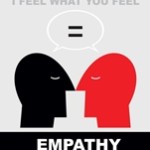
- Patients Experience Empathy. One of our clients was concerned about the commercial viability of their new osteoporosis medication that was about to hit the market. Taking the drug by infusion meant that patients would have to think about treatment only once a year. But marketers worried that the target audience would balk at the idea of spending any time at all in an infusion center. After all, this would mean rubbing shoulders with patients with serious diseases like rheumatoid arthritis and cancer. But spending time with these women to understand their life stories revealed that many had themselves experienced bouts of hardship and illness. When we accompanied them to hospitals and clinics to test the waters at the infusion center, rather than being repelled by what they saw, they empathized and even identified with the other patients. They felt lucky to have such a mild condition that required so little of them, and saw their ability to overcome their own squeamishness as evidence of personal strength and resilience. They viewed the experience within the context of a life narrative that included the ability to survive difficulty. Therefore, we advised the company to alter their approach to the brand. We urged them to portray infusion therapy as a confident choice, in line with a sense of resilience rather than a desire for convenience. The executives in the company were convinced of the evidence and brought the drug to market.
- Quality vs. Quantity of Life. The maker of an orphan drug for a childhood genetic disease wanted to understand why some patients were quitting their treatment, despite gaining years of longevity and quality of life over previous generations. We got connected with some of these “lapsed” patients, as well as those who were generally adherent. We observed the dynamic between patients and caregivers as they explained the stringent disease management regimen that dominated and disrupted their lives. We saw their thoughts and feelings unfold though diaries and photo essays. What emerged was a view into a crisis of dramatic proportions. Like many teens and young adults, these patients longed to feel normal and unconstricted by the fears and expectations of the authority figures in their lives. But their crisis was compounded by a profound alienation that had always isolated them from their peers and from society at large. When they quit treatment, they quit alltheir treatment and left behind an identity as diseased, defective and limited. Deep in denial, they could experience, even if only for a short time, that sense of being unaware of their own mortality. With this understanding, we encouraged the company to see their mission differently. They should focus not just on messages about hope and longevity. They would need to build bridges back to the disease community. They would need to promote an inclusive identity that gave patients a sense of belonging within a context of self-care. They would need to help prepare caregivers to hand-off, and for patients to accept, the responsibility of managing their own disease. This would position the company as life-long partners in the patient journey, rather than promoters of good behavior. These insights informed the design of an overhauled patient support program, consisting of content, tools and services that support the patient throughout their lifetime with the disease.
Conclusion
Patients are people first, and their decision to maintain (or abandon) a relationship with your company or brand is motivated by the many facets of human experience, not simply functional/medical needs. They are influenced by a wide array of emotions, social anxieties, relationship issues and even aesthetic considerations.
When patient behavior is unexpected or confounding, that is often a clue that there is a disconnect between the consumer and the brand – at the level of product experience or brand proposition. While market data is vital to enabling brands to function, it cannot provide an explanation for why people do things in the ways they do them. Using ethnography, we can shed light on the context in which patients use a product as well as the meaning that product has in their lives to create the most compelling patient experiences.
About The Stem
The Stem is a global management consulting firm specializing in customer strategy and experience solutions. We provide Health brands with specialized expertise in strategy and innovation, insights + analytics, digital operations and execution support through a “networked consulting” model that draws on the industry's leading talent. Please visit The Stem at http://www.thestem.com/.
About the Author
Anthony Alvarez currently serves as Research Director with The Stem. He brings more than a dozen years of experience to his work as a user researcher, ethnographer and research moderator. He has a passion for understanding how people experience health and illness and developing actionable insights to support brand strategy, marketing communications and design. Anthony combines in-depth research expertise with digital communications expertise. Previously he worked as an independent consultant, at Hall and Partners and Sapient. Anthony has worked across a wide spectrum of Health clients including Novartis, Baxter, Ortho-McNeill, Questcor, Pfizer, Merck, Sanofi-Aventis, Novo Nordisk, Johnson & Johnson, and Eisai.


As we look back over the past year for lessons learned that we will take into the New Year, there are many we could choose: from celebrities on social media to controversial pricing. But based on our work with thousands of patients, helping to connect them with biopharma companies large and small, one of the top areas of concern right now is protecting their personal information.

It’s taken a while, but the pharmaceutical industry has slowly realized the value of social media to reach caregivers, health care professionals, and patients to raise awareness and even track adverse events. According to the IMS Institute for Healthcare Informatics, only half of the 50 largest pharmaceutical companies worldwide use social media, and only 10 are on the Big Three: Facebook, Twitter, and YouTube.

Getting the consumers’ attention is not all that different than children. People react to what is of interest to them, in psychology the term for this is salience.[i] As suggested by Max Sutherland & Alice K. Sylvester in Advertising and the Mind of the Consumer, one way advertisers can gain prominence in the minds of consumers is through repetition. The issue here is there is a difference between reach and frequency, and salience.
Editor’s Note: DTC Perspectives asked a leading creative expert to review current DTC ads for our Creative Assessment issue of DTC in Focus. OPDIVO and BELSOMRA were her standouts. Read what Brenda Molloy has to say about why these ads made her take special notice.

mproving core competencies, emphasizing cost control, focusing on comparative effectiveness, and elevating market access are part of a new strategic planning process. Payers, such as private insurance plans, pharmacy benefits managers, governments, and employers, have moved to the forefront of the pharma industry. They now strongly desire information about drug safety and efficacy to compare drug cost effectiveness to alternative treatments. In the past, determining how much payers would pay for drugs was a major challenge for marketers. However, most recently economically justifying and identifying the intrinsic value of a certain drug is a more important challenge.
Creative ways are now engaged to capture treatment benefit through subjective research. These practices demonstrate full product value to patients, regulators, and payers. Patients visually express disease experience with mood boards using a collage of images and/or text that represents their emotions and thoughts with drawings or online platforms such as Pinterest. People receiving medical care also utilize body mapping to indicate the location on their body where they experience signs of disease and pain. Patients tell their story in video diaries, often times using smart phones to point out their disease experience in real time. In prior years, face-to-face interviews and focus groups were sufficient, and drug developers relied on merely clinical outcomes. Nevertheless, currently patients recognize the significance of comprehending and collecting subjective research about patient attitudes, preferences, and experiences.
Six Sigma and Lean Manufacturing allow pharma to predict and eradicate errors which boost operational efficiency and increase the chance of quality products and compliance, as opposed to relying on end-process testing. These techniques also optimize resources, control inventory, reduce waste and errors, improve customer service and change the market entirely. They identify and remove the causes of defects while minimizing variability in manufacturing and business methods. These tools employ empirical, statistical methods so that a certain group of people materialize as experts in these methods and become an integral part of the infrastructure of the organization. Presently, profits are declining due to greater competition emanating from generic brands and an increase in errors within the manufacturing process. On the other hand, Six Sigma and Lean Manufacturing offer the possibility of saving pharma an estimated $90 billion dollars internationally.