
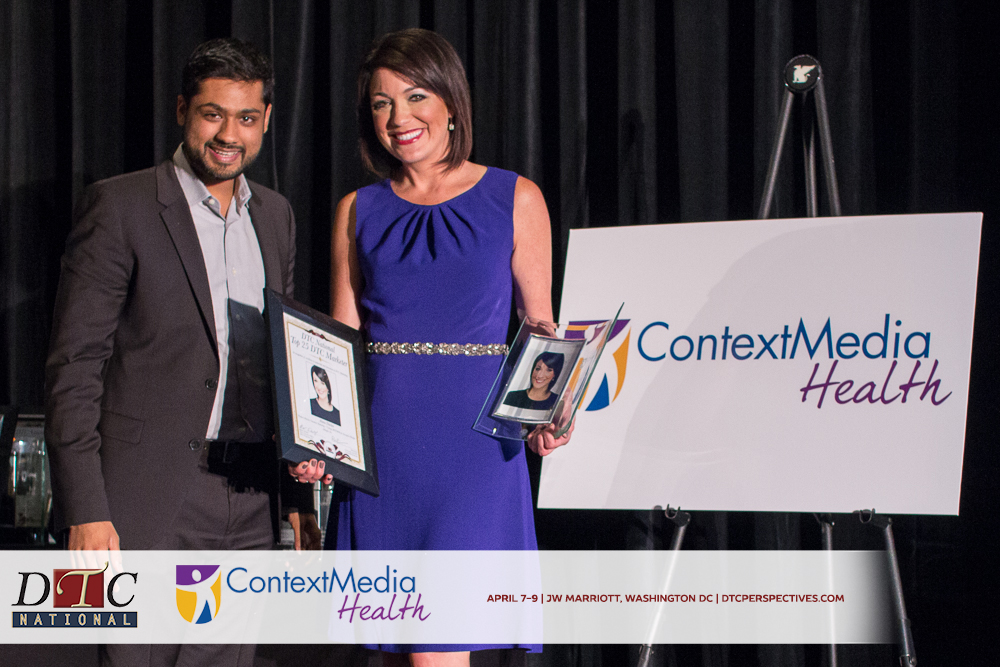
DTC Perspectives, the leading forum for direct-to-consumer (DTC) advertising thought leaders names its 15th Annual list of the “Top 25 DTC Marketers of the Year.”
This year’s class will be honored during a joint ceremony dinner recognizing the 2016 Top 25 DTC Marketers and Hall of Fame class on the evening of April 19 sponsored byContextMedia:Health at the 2016 DTC National taking place in Boston. It includes representatives from more than 15 different manufacturing companies, with each marketer championing both the interests of the patient and brand.
“I am excited to congratulate the 2016 Top 25 DTC Marketers on behalf of the ContextMedia:Health team! It is these individuals who continue to pursue our always changing industry and wholly embrace the best technology and innovation available. We look forward to celebrating their achievements and impact on patient marketing at the upcoming DTC National Conference,” says Ashik Desai, EVP of Business Growth and Analytics, ContextMedia:Health.
The Top 25 DTC Marketers of the Year for 2016 are…
James Berger, Senior Product Manager, Entyvio, Takeda Pharmaceuticals USA, Inc.
Brittany Blair, Product Manager, Primary Care Consumer Marketing, BREO, GSK
Shawn Booth, Director, US Xeljanz Marketing, Pfizer
Jeffrey Cohen, Senior Director / Team Lead, US Vaccines, Pfizer
Elisabeth Dalton, Associate Director, Oncology Marketing, XTANDI, Astellas
Alex Dyer, Senior Marketing Director, Crestor, AstraZeneca
Brian Gartside, Sr Manager Patient Marketing, Novo Nordisk
Congratulations, Brian, from:

Lorine Harr, Head US Reporting & Analytics, US General Medicines & Established Products, Sanofi US
Ginna Holsinger, Associate Director, Marketing Communications, Belsomra, Merck & Co.
Angela Horstmann, Marketing Director, Tanzeum, GSK
Michael Jafar, Senior Director Strategic Marketing & Communications, Allergan
Terri-Lynne Jones, Senior Product Manager, Psychiatry Marketing, Lundbeck
Nicole Kloevekorn, Director, Chantix US Marketing, Pfizer
Debra Marchese, Executive Director, Marketing, Linzess, Actavis
Allyson McMillan-Youngblood, Director of Immuno-Oncology Franchise, Bristol-Myers Squibb
Ryan Mihalik, Associate Director, Urology Consumer Marketing, Astellas
Megan Morrison, Senior Product Manager, Amitiza, Takeda Pharmaceuticals USA, Inc.
Dan Pinto, Associate Brand Director, Novo Nordisk, Inc.
Andrea Porzio, Director, HCV Marketing, Gilead Sciences
Vasanthi Ratnathicam, Group Product Manager, Tamiflu, Genentech
Carey Reynolds, Product Director, US Eye Care – RESTASIS Consumer Marketing, Allergan
Holly Rosenthal, Senior Director Marketing, Jublia, Valeant
Tatyana Tsinberg, Senior Director & Team Leader, VIAGRA, Pfizer
Aylin Utke, Product Director, Diabetes Alliance, Eli Lilly
Libby Wlochowicz, Director, Consumer & Multi-Channel Marketing, Amgen
“These elite pharmaceutical marketing professionals are this year’s top contributors to the advancement of patient outcomes via direct-to-consumer pharmaceutical education and marketing,” added DTC Perspectives Chairman and CEO Robert Ehrlich. “We would like to recognize the faces behind prominent DTC campaigns, because their hard work and dedication to fostering the industry is often not recognized. The awardees were selected from many worthy candidates.”
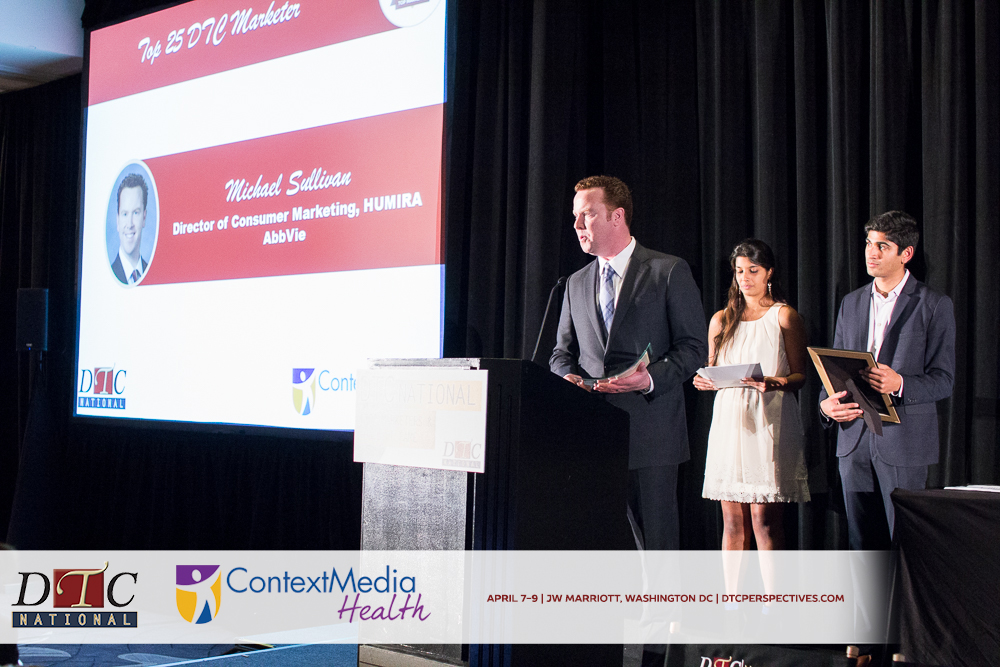
Select honorees will also participate in a panel discussion on current DTC marketing issues at the DTC National Conference, held April 19-21 at Sheraton Boston.
Click here to register for the DTC National Conference or contact the DTC Perspectives office at 770-302-6273.
Celebrate with the Industry’s Best
Congratulate the Top 25 Marketers and Hall of Fame inductees in-person and in our publications! DTC Perspectives offers reserved tables with seating for 10 at the Top 25/Hall of Fame and Advertising Awards ceremonies as well as congrats ads opportunities in our DTC Perspectives Magazine/DTC National Conference Guide, on our website, and in Email announcements. Click here to view awards packages and congratulate a Top Marketer/DTC Hall of Fame inductee today.
[button link=”https://form.jotform.com/60534052495959″ color=”red”]Purchase Congrats Ads and Reserve Dinner Tables[/button]