Latest News


October 7, 2021 0

By Mike Brune of Ogilvy Health

I’m pretty sure we can all agree, it’s been a year. A year when so many unbelievable, unprecedented, and unwelcomed events have taken their toll on family and friends, our work, our institutions, our sense of personal safety, in short, our lives. As I reviewed some of the most celebrated campaigns produced over this past year, it occurred to me that these four featured here cover a breadth of human concerns. From the personal challenges that living with a rare disease presents to the afflicted, to the societal issues that can leave us all with an unsettling feeling of vulnerability.

Each of these campaigns captured my attention (and to some extent, envy) by taking advantage of evolving digital capabilities to set their creative ambitions free and allow their respective missions to be brought quite literally to life. A pretty stunning feat that these four campaigns collectively accomplished was to add to the lives of the living and breathe life into the dead.

Enough with the preamble, here they are:

Sick Beats, Woojer

The concept of the SICK BEATS Vest just blew me away. An audacious undertaking, the convergence of technologies employed here completely transforms a treatment for people with cystic fibrosis from something that verges on the torturous into an experience that actually looks to be “fun”. Retro-fitting the established tech of the oscillating vest and linking it to a Spotify playlist to produce a therapeutic effect is proof that it “hasn’t all been done before”. Beyond that, introducing such a dramatic experiential shift for people who truly suffer with a disease as difficult as cystic fibrosis seems to be one of the best reasons to do what we do.

https://www.youtube.com/watch?v=S6BtMs_H2fk

Bloodless Battles, Genentech

Know your audience. That tenet of marketing savvy was clearly honored in a campaign that reflects a thorough understanding of the challenges that men with hemophilia face and the channels through which they could be reached. Genentech discovered that online gaming provided access to this audience and cleverly spoke to them in a manner that was respectful of their condition and fit their interest in social engagement. Knowing their audience interests and need for social connections delivered impressive results. Well done.

https://clios.com/health/winner/creative-effectiveness-pharmaceutical/genentech/bloodless-battle-96103

Mozart 80, Pfizer

I have from time to time pondered the “what if?”. For example, what if some of my favorite musicians had lived to a ripe old age? I imagine most people wonder the same thing about artists or anyone who may have influenced their life. That’s why I was intrigued by the concept behind Mozart 80. While their use of AI to “compose” works that Mozart would have created had he not died at 35 requires some suspension of reality (at least for me), the program proved a success in Pfizer’s efforts to recruit medical talent and promote the value of vaccines while they tackled the global pandemic.

https://www.youtube.com/watch?v=ll1HU0mw_Mc

The Unfinished Votes, Change the Ref

I suppose the message behind this campaign will not be for everyone. Accepting that I believe it is (or should be) for everyone, the concept itself is brilliant, the execution respectful and powerful. It takes imagination, courage, and an unwavering commitment to a cause to be so bold as to even propose the use of AI technology to reanimate a murder victim who will encourage people to vote. Even if that vote is in the interest of preserving the life of others. Very well done. 

https://clios.com/health/winner/branded-entertainment-content-health-wellness/change-the-ref/the-unfinished-votes-96328

Mike Brune


August 27, 2021 0

Right now, the U.S public health officials, vaccine makers and other groups are striving to educate the public – and combat misinformation – about COVID-19 vaccines in a drive to improve vaccination rates and end the pandemic. But as new data show, it’s not just COVID-19 shots that patients need to learn more about.

A pair of recent Phreesia surveys, given to a combined total of nearly 345,000 patients when they checked in for doctors’ appointments, found that although patients largely recognize the importance of vaccines, many have concerns around safety and side effects -even when it comes to older, more established products. And that’s where pharma marketers need to step in.

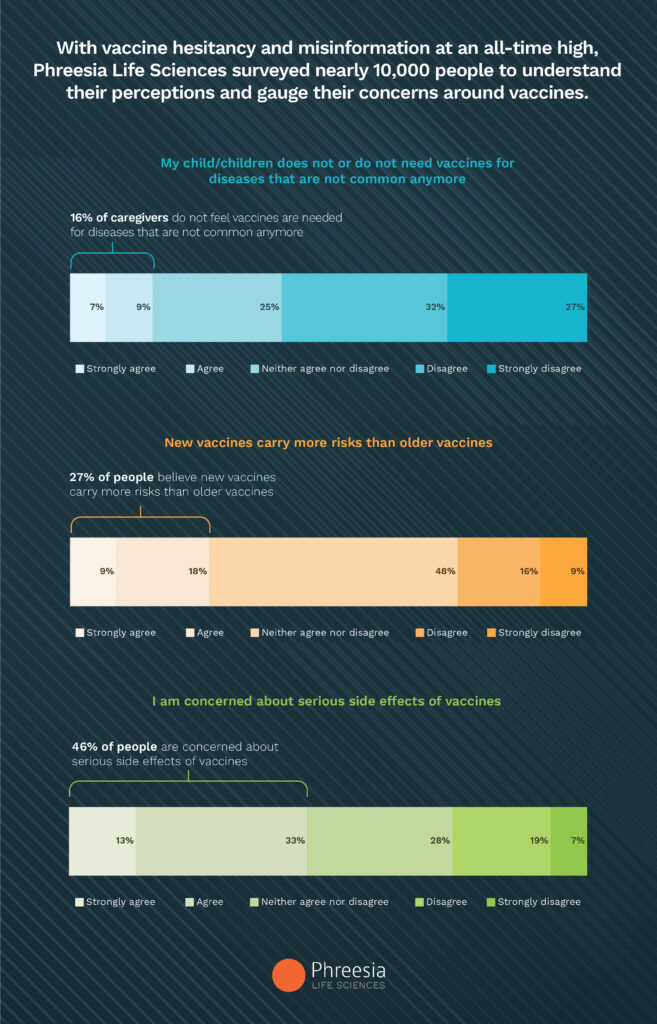
In the first of the two surveys, taken by nearly 10,000 parents of adolescents between Nov. 30 and Dec. 10, 2020, respondents generally believed that childhood vaccines were effective, with 62.5% strongly agreeing and 28.6% agreeing. Caregivers concurred in similar percentages that childhood vaccines were important for their children’s health and that getting vaccines was a good way to protect children from disease.

But the survey also yielded worrying results for vaccine makers and public health officials. Close to 16% of parents either agreed or strongly agreed that their children didn’t need vaccines for diseases that are no longer common, and 25% didn’t have an opinion either way about such vaccinations.

Combined, those figures indicate that more than 40% of parents aren’t sure they need to vaccinate their children for diseases that aren’t currently prevalent – even though the rarity of those diseases hinges on vaccines and the herd immunity they confer. In recent years, outbreaks of vaccine-preventable diseases such as measles and mumps have shown that even small pockets of unvaccinated people can drive significant spread of contagious disease among both vaccinated and unvaccinated populations. That’s why it’s critical that healthcare professionals and vaccine makers continue to stress the importance of childhood vaccination.

Another troubling statistic in an era of unparalleled vaccine hesitancy: Nearly 46% of surveyed parents said they were concerned about vaccines’ side effects, with another 28.2% expressing no opinion about side effects either way. Together, those figures showed that 74% of parents were either worried or uncertain about the side effects of vaccines – despite an overabundance of evidence that vaccines are safe and rarely cause serious adverse reactions.

Finally, perhaps in reference to the Pfizer and Moderna mRNA COVID-19 vaccines that were making their way toward widespread adoption at the time, 27.1% of surveyed parents either agreed or strongly agreed that new vaccines carried more risks than older vaccines – and a whopping 47.6% neither agreed nor disagreed with that statement.

Those stats mirror results from a second, ongoing Phreesia survey, which has been taken by more than 335,000 adult patients since March 2021. Among those who answered, slightly more than half of polled patients (51%) said they were concerned about the safety and long-term side effects of COVID-19 vaccines, and 23.5% did not agree that it was important to receive all recommended vaccines.

The results clearly illustrate that pharma marketers have their work cut out for them, not only to convince patients to receive the COVID-19 vaccine, but also to make sure the vaccine hesitancy the country is currently seeing doesn’t spill over further to impact the rate of childhood vaccinations. While patients may be generally aware of vaccines’ role in staving off disease, it’s up to marketers to ease patients’ fears about vaccine safety and side effects and to highlight the continued importance of vaccination, no matter the disease area.

Carly Helfand


August 27, 2021 0

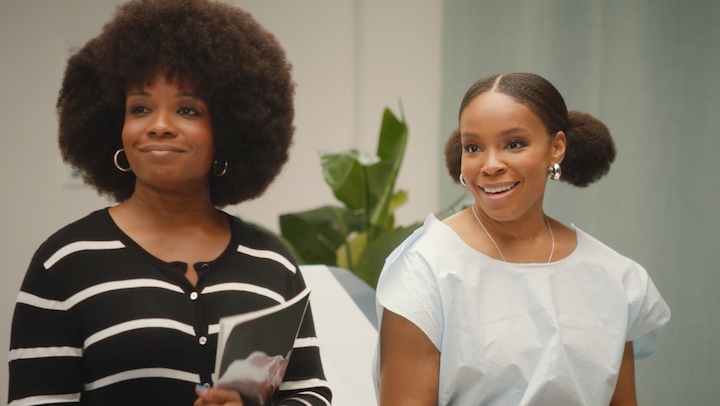
To encourage women to take an active role and have more open conversations with their gynecologists, the Centers for Disease Control and Prevention (CDC) launched a new web series, Under the Paper Gown. The six episode series will feature comedian Amber Ruffin and her sister Lacey Lamar, showcasing Amber’s growth “as she gains the knowledge and confidence to speak openly with her OBGYN,” as per the news announcement.

Leveraging Ruffin's relatability and comedic star power, the campaign uses levity to help women overcome the awkwardness many may feel when it comes to gynecological health. The agency behind the work, Ogilvy DC, transforms the paper gown into a “symbol of strength and confidence” for women everywhere.

As stated in the news release, “Libby Dwyer, Group Strategy Director for Ogilvy DC, said: ‘Feeling awkward and uncomfortable, even at the best of OGBYN checkups, keeps women from speaking openly about their health.  We found that if we can lean into laughter as an antidote to awkwardness, and put more women at ease about understanding their health, we can unlock more positivity and conversations about gynecological health.'”

Click here to view the full web series, Under the Paper Gown.

Amber Ruffin (right) with her sister Lacey Lamar as seen in a still from the web series.

admin


August 27, 2021 0

To address issues of health disparities and advance health equity, the CDC Foundation and its partners pledged over $30 million in support to more than 150 community-based organizations (CBOs) “to promote COVID-19 vaccinations and reduce the disease’s burden.” As noted in the news release, “CBOs are uniquely positioned to provide culturally appropriate and community-tailored information about mitigation measures, including the importance of vaccination.”

“This funding will support CBOs across the country to engage with local partners, including their state and local health departments, to address vaccine-related concerns, develop innovative and culturally appropriate communications strategies, and promote timely vaccination both for the COVID-19 vaccine and the seasonal influenza vaccine. The work of CBOs receiving support may include developing vaccine resources, hosting community events, engaging in neighborhood-level outreach and managing local communication campaigns, among other activities,” shared the press announcement.

admin


August 27, 2021 0

The Asian American Advertising Federation (3AF) has partnered with the Ad Council and the COVID Collaborative to create an innovative, new campaign aimed at educating Asian Americans with “information and resources they need to make informed decisions about getting vaccinated against COVID-19,” stated the news release. Launching this week exclusively on Asian media in the US will develop and produce “culturally relevant, in-language” content.

As part of the Ad Council and COVID Collaborative's COVID-19 Vaccine Education Initiative and the “It's Up to You” campaign, :30 and :60 second spots have been created in multiple languages (English, Korean, Filipino/Tagalog, Hindi, Hmong, Vietnamese, Cantonese, and Mandarin) to provide information on vaccine eligibility and availability, efficacy, and safety.

As stated in the news release, “Indrajit Majumdar, 3AF President, said, ‘At 3AF, we believe in the power of Asian American media. They are a critical conduit to our Asian American community. [After all], they know best how to reach their viewers, listeners, subscribers, and readers. What better way to produce targeted campaigns to reach the various Asian segments on this incredibly important vaccine initiative than using the expertise and the voice of Asian media? It was a great, strategic collaboration with our friends at the Ad Council, COVID Collaborative and our media members, and we look forward to future efforts.'”

admin


August 27, 2021 0

The first vaccine for COVID-19 was approved by the FDA on Aug 23, 2021. The Pfizer-BioNTech vaccine will now be marketed as Comirnaty for those aged 16 and older. For those aged 12-15 years as well as immunocompromised individuals needing a third dose, the vaccine is still available under emergency use authorization (EUA).

Click here to read the full FDA press release.

admin


July 29, 2021 0

IQVIA analyzed four key areas in regards to digital health trends: innovation, evidence, regulation, and adoption. The report, by the IQVIA Institute for Human Data Science, found that “more than 90,000 digital health apps [were] added [to app stores worldwide] in 2020”, bringing the total apps available to consumers to over 350,000. Apps can be typically split into two categories: health condition management, which now account for 47% of the market, and wellness management. “Mental health (22% of apps), diabetes (15%), and cardiovascular disease-related (10%) apps [account] for almost half of disease-specific apps.”

Yet, “while software developers of digital health apps initially commercialized through public app stores under a direct-to-consumer business model, apps providing the most significant health benefits focus increasingly on payers and employers.” The US market, in particular, is starting to see increased reimbursement by payers and employers as they are often looking to offset health costs and ensure health and wellness among its users. This may further entice software developers to focus more on this sector, rather than consumers directly, when it comes to their commercialization pathways.

Additionally, in the US, nearly half of physicians (44%) are interested in prescribing medical apps for patients as are more than two-thirds (70%) “of formulary decision-makers within hospitals, IDNs, MCOs and PBMs — who either currently provide coverage for [digital therapeutics] (25%) or have expressed interest in providing coverage (45%).” Major barriers prevent more widespread adoption though, including a lack of criteria standardization for app evaluation by governing bodies as well as a clear reimbursement process yet to be established by Congress and the Centers for Medicare & Medicaid Services.

Click here to read Digital Health Trends 2021: Innovation, Evidence, Regulation, and Adoption.

admin


July 29, 2021 0

UnidosUS and AARP have teamed up to educate hard-to-reach Latinos on the benefits of COVID-19 vaccines through a mobile tour. As a part of UnidosUS' Esperanza Hope for All campaign, this tour will provide attendees with answers to their questions and distribute bilingual educational materials at their various stops, which will also be held in “rural and socially vulnerable areas,” according to the news announcement.

“It’s a somber fact that older Hispanics are more likely to suffer health complications or die from COVID-19 than their white peers,” said Julie Marte, AARP New Jersey Associate State Director of Community Outreach in the news announcement. “By working with UnidosUS, we are helping to ensure the Hispanic community is included equitably in vaccine education and helping the community get the information they can trust.” The New Jersey tour stops will run every Saturday and Sunday through August 8th.

The Esperanza Hope for All campaign has reached more than 25,000 people nationwide with its mobile tour, “helping build trust in the COVID-19 vaccines and ensure that the older Hispanic adult community is included equitably in vaccine distribution efforts across the country.” As Rita Carreón, Vice President of Health at UnidosUS further explained, “Latinos are disproportionally concentrated in ‘essential' occupations where they face higher risk of exposure to the coronavirus—exposure that often results in their hospitalization or death when unvaccinated. That is why fostering trust in the safety and efficacy of the COVID-19 vaccines and combating vaccine misinformation and disinformation is paramount. Only by reaching out to Latinos where they live and engaging trusted community leaders to deliver this important information, can we meaningfully advance our community and country’s recovery.” For more details about the mobile tour, click here.

admin


July 29, 2021 0

Five months after opening a special enrollment period for via HealthCare.gov, two million more Americans signed up for health insurance. In mid-July, The Biden-Harris Administration launched “Summer Sprint to Coverage” for the final 30 days before special enrollment closes. The Centers for Medicare & Medicaid Services (CMS) will run a series of testimonial ads during prime-time television, featuring real individuals (Dorothy from Charlotte, NC; Darrell & Erica from Duluth, GA; and Jeremy from Houston, TX) who were able to sign up for zero-cost or low-cost health insurance. Television commercials, in both English and Spanish, will air during high-profile sporting events, such as the Olympics. Digital and social media ads, and other educational materials available in multiple languages, were created to “[increase] outreach directed to underserved and minority populations” and populations with high uninsured rates, stated the news release on U.S. Department of Health & Human Services' website. Community outreaches are being employed, too, by partnering “with Navigators, licensed agents and trusted messengers. Additionally, CMS has created a 30-day toolkit for partners to amplify the message of coverage options available during the SEP and the importance of signing up before the August 15 deadline.”

admin


July 21, 2021 0

Sponsored Content

Pharmaceutical companies pour billions of dollars each year into patient support programs, aiming to provide patients with drug information, financial assistance and other resources.

But those resources aren’t actually reaching patients, new data say. Phreesia, which surveyed nearly 5,000 patients checking in for doctors’ appointments this past February and March, found that just 3% were using patient support programs (PSPs).

That’s a pretty low figure, considering pharma’s annual investment tops $5.7 billion. And it wasn’t much higher when accounting for patients’ lifetime use of support programs, either: Only 8% had ever used a PSP before, Phreesia found.

Why the low usage? The problem isn’t so much that patients aren’t interested in what PSPs have to offer. Sixty-three percent of surveyed patients said support programs would be at least a little bit helpful for them, with 14% answering that they’d find PSPs very or extremely helpful.

Instead, the issue seems to be a lack of awareness. Fifty-nine percent of patients said they had little to no knowledge of PSPs—a gap companies are going to have to close if they want to successfully drive patients to their resources.

So what can drugmakers do to get the word out? Step one is creating marketing campaigns to increase awareness among qualified, targeted patients and to educate them on specific program offerings. An omnichannel approach that can reach target patients on the online platforms they’re already using should also be part of the plan.

Case in point: A life sciences company partnered with Phreesia to boost awareness around its savings program, and initially, 90% of patients were not using the company’s copay card. But after receiving information about the offer during check-in for doctors’ appointments, 53% said they were very likely to use a card if they had one.

Another option? Bringing pharmacies on board to help educate patients, whether that’s verbally or through brochures and other distributed materials. Only 14% of patients said they had learned about support programs from pharmacies, versus 32% who said they’d like to learn about support programs from pharmacies.

By far, though, the biggest disconnect Phreesia found was that just 10% of patients had learned about PSPs online—and 44% wanted to. For drugmakers, that chasm may be a signal that it’s time to revisit where and how support information is housed online and make it more prominent and easier to locate for patients surfing branded sites.

Of course, at the end of the day, healthcare providers will still be a major part of the equation. They’re currently the primary way patients are learning about PSPs, with 53% of patients getting their support info from doctors, and the way most patients (55%) would like to hear about support programs, too.

But as this new research shows, if companies really want to ensure an optimal medication experience for patients—not to mention, maximize their hefty investments—it’s going to take some additional strategizing to make sure patient support program information gets to patients in a clear, digestible way.

Connect with Phreesia:

LinkedIn: https://www.linkedin.com/company/phreesia-life-sciences/

Twitter: https://twitter.com/PhreesiaLifeSci

David Linetsky