Latest News


June 24, 2021 0

Health Union has acquired WEGO Health, now making the company “the largest team of experts, patient advocates and healthcare leaders, reaching scale that has never before been achieved in social health,” stated the press announcement. The combined forces allows them to connect with all patients, covering the spectrum from those “who passively seek information to patient advocates and influencers who actively share health information on multiple social media platforms.” This move also will allow for cohesive, expanded opportunities among online health communities.

Olivier Chateau, co-founder and CEO of Health Union, noted how the two companies' “have been committed to advocating for patients, in complementary ways.” Jack Barrette, CEO and founder of WEGO Health, echoed that sentiment in a web video featuring the two team leads, commenting how “both of our companies have been about patient empowerment and activation – the same mission, coming at it from different angles with different, complementary ideas of how to get there.”

Barrette will serve on Health Union's executive leadership team, while the rest of the WEGO Health team joins Health Union as well. WEGO Health's offerings will be known as Health Union WEGO. Health Union creates condition-specific online communities for chronic health conditions, currently running 33 of them with more launching in the near future. WEGO Health is the largest network of patient leaders, including advocates, community leaders, creators, and influencers.

admin


June 24, 2021 0

A claims-based analysis found that 26 million doses of CDC-recommended vaccines were missed in 2020. The report, commissioned by GSK and conducted by Avalere Health, an Inovalon Company, investigated claims from commercial, managed Medicaid, Medicare Advantage, and Medicare fee-for-service Part B from January through November 2020. When compared to the same time frame for 2019, results revealed that 8.8 million vaccines for teenagers and 17.2 million for adults were missed.

Non-influenza vaccines in 2020 tracked at 13-35% lower for adolescents and 17-40% lower for adults when comparing against 2019 data. Influenza vaccines, which were analyzed independent of other vaccines due to the seasonality of the influenza virus, initially showed some “early gains” but “lagged as the season progressed” in 2020. According to the news release, “Influenza vaccination claims from August-September of the 2020-21 season exceeded the same months of the 2019-20 season, suggesting early heightened awareness of respiratory disease in 2020; however, those surges levelled off by October and then fell in November.”

The report does not that while the pandemic “compounded this problem”, vaccinations were “under-utilized for adults and in underserved populations” before COVID-19 emerged. An insight from the report also predicts that “this vaccination deficit is likely to continue to grow, particularly as the US saw a significant rise of COVID-19 cases after November 2020.” On May 12, 2021, the CDC's Advisory Committee on Immunization Practices (ACIP) updated previous guidance, issuing a recommendation to allow coadministration of COVID-19 vaccines with other vaccines; the previous recommendation was a 14-day waiting period between the vaccinations.

Vaccines analyzed in this research were: Influenza; Haemophilus influenzae (Hib); Hepatitis A; Hepatitis B; Human Papillomavirus (HPV); Meningococcal ACWY; Meningococcal B; Measles, Mumps, and Rubella (MMR); Pneumococcal; Tetanus, Diphtheria, and Pertussis (Tdap); Varicella Zoster (Chickenpox); and Herpes Zoster (Shingles). Avalere Health is an Inovalon company, a leading provider of cloud-based platforms empowering data-driven healthcare.

admin


June 23, 2021 0

The term “healthcare” used to be reserved for working with the professionals: doctors, nurses, pharmacists, and others with the training to potentially deliver vital treatments and help improve patients’ lives. In quick fashion, several headlines during the COVID-19 pandemic have affected how we define what healthcare really means. Companies like Amazon, Microsoft, and even Uber and Lyft have carved out their own healthcare divisions with promises to deliver innovative new solutions to support efforts across the country. With billions invested in traditional healthcare marketing channels annually, what does this mean for the way the industry approaches reach and executes campaigns for target audiences?[1]

Vendors are continually looking for a way to gain an edge in the space. The need to reach targets has become more dire in the face of a global health crisis, not only due to the urgency of delivering information about COVID-19, but also due to the lowered share of voice non-COVID brands have access to. In recognition of message fatigue and understanding that patients of all other disease states haven’t stopped suffering over the last two years, vendors are looking to innovation in the space to help keep the paths of communication between pharma brands and target audiences open while remaining both appropriate and effective.

The digitization of healthcare that emerged along with the pandemic served as a start to a unique transformative period, opening doors for digital communication experts, the tech giants, to make an impact. In turn, telehealth and point of care services are becoming more mainstream, such as Microsoft’s developing full suite of virtual health solutions, highlighted in their dedicated “Digital Healthcare Playbook.” [2] As a result of these shifts, healthcare vendors and agency partners alike are feeling the pressure to adapt or risk falling behind the competition. A partnership between EHR company Cerner and ride-sharing behemoth Uber provides non-emergency transportation to patients and draws a new standard of integration. Most importantly, it serves as a prime example of how vendors can evolve to avoid competing directly with big tech, thriving instead by pursuing a collaborative solution.[3] An almost identical partnership between Epic and Lyft further emphasizes the rapid adoption rate of this form of innovation.[4] In sum, partnerships like this are note only business-savvy, but also help vendors maintain relevance within a growing need for functional integration; reaching the right people at the right time with a seamless user flow is exactly what audiences are looking for today.[5]

Similarly, agencies seek innovative tactics to bring the best solutions to their clients but may be failing to evaluate whether these new opportunities are compatible with the integrated campaign approaches today’s audiences require. For example, voice assistant Amazon Alexa is already being used to flag appropriate individuals for marketing. Despite the multitude of case studies speaking to the relevance of this type of household reach however, agency processes for building campaigns rarely consider the ways in which this type of “big name” tactic can be used holistically with other, more established channels in the way the tech giants are considering applying their capabilities to traditional services like 24/7 telehealth sessions, on-demand healthcare visits, and prescription deliveries.[6] For this reason, agencies should consider pivoting from thinking about new and innovative tactics as isolated opportunities that add star power to their campaigns to leveraging an omnichannel lens to see how these tactics fit into their larger campaigns as a whole.

Without evolving the current, conventional approach toward healthcare marketing, both vendors and agencies risk positioning themselves far behind the curve of adoption as solutions rapidly evolve among major players in the space with equally major resources at their disposal. It’s likely, with a small degree of speculation, that these types of solutions will eventually open the doors for more advanced technology, like blockchain, to play a big role in the industry as well. In any case, as healthcare becomes more integrated in everyday life, pharma as a whole will certainly need to adapt its understanding of when, where, and how to reach target audiences going forward in order to set the stage for a significantly more digitized future.


[1] “Healthcare & Pharma See Big Uptick In Digital Advertising Spend,” https://insights.digitalmediasolutions.com/articles/pharma-healthcare-digital-advertising, October 2020

[2] “Microsoft Cloud for Healthcare,” https://www.microsoft.com/en-us/industry/health/microsoft-cloud-for-healthcare

[3] “An integration that lowers the barrier to care” https://businesses.uber.com/cerner.html?_ga=2.22989371.1264410594.1623422092-1045984492.1623422092

[4] “Lyft is Integrating with Epic, a Leading Electronic Health Record,” https://www.lyft.com/blog/posts/lyft-for-epic-healthcare-integration-launch

[5] “User Flows and Their Importance to the Digital Experience,” https://www.tpgi.com/user-flows-and-their-importance-to-the-digital-experience/

[6] “Healthcare made easy,” https://amazon.care/

Nadia Khatri


May 27, 2021 1

Sponsored Content

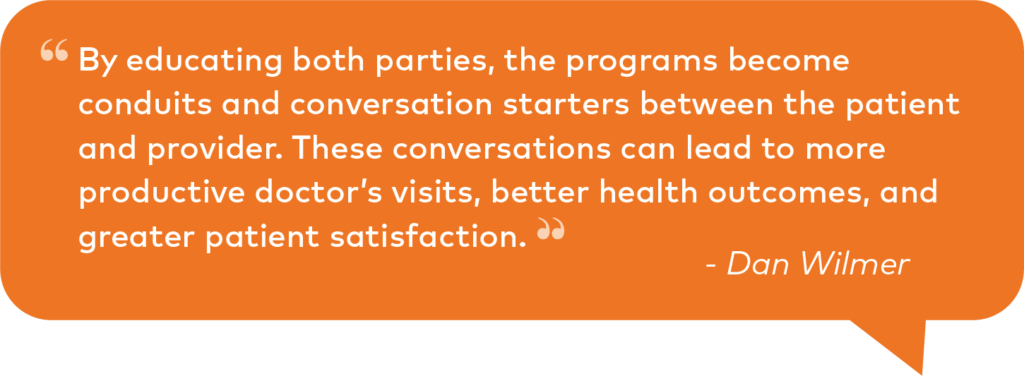
Today, digital marketing has carved out a place for itself in virtually every business sector, including healthcare. This omnipresent technology is constantly evolving and presenting users with new capabilities through improved reach and retargeting capabilities. It’s a technology with countless proven uses, yet it still leaves many people wondering—what will be next? Over the past six months, InStep Health’s Chief Product Officer, Dan Wilmer, sat down with a handful of the healthcare’s top media marketing publications to discuss reaching patients, influencing HCPs, and maximizing client ROI. Here are the key takeaways:

..

Reaching Patients and Consumers

Digital media can bring meaningful and measurable experiences to patients and consumers at various touchpoints. Getting them educational information about health products and therapies makes patients more knowledgeable about the conditions they are facing. Messaging doesn’t need to be intrusive or immoderate; it simply needs to be helpful, timely, and appropriate to the audience it serves. This is the kind of digital messaging that InStep Health delivers — education, offers, and reminders to help patients make the best decisions for their health.

..

Influencing the Influencers

In addition to reaching patients directly, brands must deliver relevant information to doctors, pharmacists, and medical staff where patients are being treated and seeking healthcare advice.

..

Mixing Tactile and Digital Exposure for Maximum ROI

InStep Health has seen inordinate results when traditional tactics such as at-shelf displays and physician office table tents are integrated with digital targeting tools. For example, InStep Health frequently creates custom digital targeting audience models for a particular patient sub-population. Then these patients are reached with a client’s brand message throughout an InStep Health program using various digital media outlets aligned to the in-office and in-pharmacy impressions. By putting these messages in different venues and types of media, the audience gets repeated exposure to the education or offer. Seeing customized messages, strategically placed, and shown multiple times, makes people more likely to act.


These are just a few of the concepts from Dan’s recent discussions. And while we cannot say precisely what’s next for digital marketing, when methods are applied strategically and ethically, the benefits are infinite. To get the full interviews, use these direct links:

PharmaVOICE Digital Edition

Beet.TV Data-Driven Marketing Boosts ROI

PharmaVOICE 1-1 with Taren Grom

Sarah Chidalek


May 27, 2021 0

In June 2018, the American Medical Association's Annual House of Delegates meeting set out to devise a strategic plan that would “progress toward health equity.” The AMA Center for Health Equity was launched in April 2019, helmed by its first Chief Health Equity Officer, Aletha Maybank, M.D., M.P.H.. It was announced in May 2021 that a “three-year roadmap to plant the initial seeds for action and accountability to embed racial justice and advance health equity for years to come” would be put into action. The endeavor is structured by five strategic approaches: Embed equity and social justice; Build alliances and share power with historically marginalized and minoritized stakeholders; Ensure equity in innovation; Push upstream to address all determinants of health and root causes of inequities; and Foster truth, reconciliation, racial healing, and transformation.

As noted in the report, the AMA “seeks to pivot from ambivalence to urgent action”, acknowledging that “[t]o move forward, we must prioritize and integrate the voices and ideas of people and communities experiencing great injustice and historically excluded, exploited, and deprived of needed resources such as people of color, women, people with disabilities, LGBTQ+, and those in rural and urban communities alike.” The report begins by addressing the background and history of inequalities and injustices in healthcare, including a non-exhaustive list of those conducted by the AMA, as well as creating a starting point of “definitions, concepts, and frameworks.” The next section of the report shifts to how the organization plans to change and evolve moving forward by recommending specific “theories, levers, and logic for change”, including countering the harmful and negative narratives in health, employing anti-racist work, and implementing intersectional approaches (race AND __). The report then details each of the five strategic approaches to embed racial and social justice in healthcare, before concluding with the AMA's commitment to ensure accountability and effectiveness.

The AMA recognizes its role as a “national leader” should be leveraged “to lean into its influence and play a more prominent role in the current national reckoning on equity and justice both by using existing assets—relationships, training platforms, programs, advocacy, communication and marketing infrastructure—and creating new assets as levers for change.”

Click here to read full details and download the AMA's Organizational Strategic Plan to Embed Racial Justice and Advance Health Equity: 2021-2023.

admin


May 27, 2021 0

It was announced recently that Vaccinate Your Family and Merck would be teaming up to launch a new public health campaign, Don't Skip, to encourage people to keep up-to-date on all recommended vaccines. According to Merck's news release, the PSA features actress, activist, and author Gabrielle Union-Wade alongside her husband, retired NBA all-star champion Dwyane Wade, and their family “during moments that reflect some of the realities of life during the pandemic, along with an important message: it’s okay to skip some things right now, but a visit to the doctor isn’t one of them.” With many patients postponing healthcare visits during the pandemic, the campaign seeks to bring awareness to the “potentially serious implications to national public health” and the importance of keeping up with vaccinations.

“The health and wellness of my family is my number one priority. Like so many other families, we’ve had to make some adjustments over the past year. But for us, we did not skip our kids’ well-visits and recommended vaccines,” said Union-Wade [in the news release]. “If there’s one thing the pandemic has taught us, it’s that public health matters and we all can do our part to help protect our families and each other. That’s why I’m encouraging parents to talk to their kid’s doctors now about getting back into the office to stay up to date with their kid’s recommended vaccinations.”

The timing of the campaign plans to take advantage of the reopening of many venues in time for summer as well as the return of doctor's office visits, before the return to the school year in the fall. Don't Skip features a 30-second spot and website, which focus on catching up on any missed visits or vaccinations during the pandemic, staying current on recommend vaccinations, as well as an overall return to routine healthcare and wellness visits.

admin


April 30, 2021 0

As medications target more niche audiences, it can be difficult for pharmaceutical marketers to reach their sought-after sub-populations from the greater patient pool. Dan Wilmer, Chief Product Officer of InStep Health, detailed in an interview, shared yesterday, how partnering with DeepIntent allowed them to utilize cutting-edge data-driven capabilities for a multichannel brand campaign: “What [our industry is] doing as healthcare marketers is we're finding the right patients that are appropriate for these very specific treatments. So I think that the exciting part is that the medicine is getting better than its ever been. The challenge is that those medications are for a narrower and narrower group of people. And that's where healthcare marketers … are coming into the equation because we're bringing … this education, this message of hope.”

Sharing a real-world example, Wilmer explained that when crafting a client's campaign, InStep Health added a digital overlay component to their in-pharmacy and in-physician-office programs. That, coupled with DeepIntent's HIPAA-compliant patient-modeled technology which looked at ICD 10 codes and NDC numbers, helped generate even greater lift for the brand. This model developed “very specific audiences based on that anonymized and tokenized data,” Wilmer explained in the video interview. When compared against the control group, metrics from third party research studies showed a “9:1 ROI” and “2x the average of all other digital media properties” when measuring audience quality related to digital targeting, he added.

Wilmer's interview was featured in “Embracing the Future of Healthcare Marketing“, a thought leadership video series from DeepIntent and Beet.TV. DeepIntent, which celebrates its five-year anniversary today, launched the series in November 2020.

admin


April 30, 2021 0

The Ad Council's continued awareness campaign with the Alzheimer's Association is being brought directly to patients and caregivers via a campaign extension partnership with Phreesia. According to the news release, in the 10 weeks post-campaign launch, “over half the people who engaged with the campaign as they checked in for a healthcare visit on Phreesia’s digital platform were likely to talk to a doctor about Alzheimer’s disease.” The campaign is scheduled to run through the end of 2021.

Patients can view a PSA – designed by Phreesia's in-house creative team to highlight distinctions between “typical signs of aging and early symptoms of Alzheimer's” – and then complete an optional survey about their knowledge of the disease as well as the campaign's impact. “While more than two in three patients surveyed were aware that forgetting new information and becoming confused are symptoms associated with Alzheimer’s disease, patients were less familiar with other symptoms, such as challenges in completing tasks and naming objects or changes in judgement,” stated the news release. Additional resources can be emailed as a follow up to those interested, including “conversation starters for those wanting to address worries with family members and a 10-step action plan for concerned caregivers.”

(Images courtesy of Phreesia.)

admin


April 30, 2021 0

A multidimensional COVID-19 awareness and education campaign was unveiled this month by PatientPoint, the first project under the newly-merged PatientPoint and Outcome Health. In addition to educating about the COVID-19 vaccines, the campaign will also target vaccine-hesitant groups, including Black and Hispanic communities. According to the news release, “[t]he campaign’s marquee segment, What Happens Next?represents a collaboration between PatientPoint and the Ad Council and COVID Collaborative’s national ‘It’s Up To You’ COVID-19 Vaccine Education Initiative.”

The PatientPoint campaign, which will also include ‘It's Up To You' assets, utilizes video and original educational content via waiting room screens and exam room touchscreens. To help engage with vaccine-hesitant populations, the news announcement shared that “[c]ampaign content was informed by the research and creative strategy behind ‘It’s Up To You’ and conversations with Black and Hispanic healthcare leaders including James Thompson, MD; Raymond G. Jacinto, PA-C; and Suzette McKinney, DrPH,MPH, all of whom are featured voices across campaign content appearing in doctor’s offices nationwide.”

admin


March 31, 2021 0

In January, President Biden aimed to administer 100 million COVID-19 vaccination shots to Americans in the first 100 days that his administration had taken office. Initially seen as aggressive, that objective was met only 58 days in. In a recent speech, the president explained how this was achieved: “Using the power given to a President under the Defense Production Act, we expedited critical materials in vaccine production, such as equipment, machinery, and supplies.  We worked with vaccine manufacturers to speed up the delivery of millions more doses and brokered a historic manufacturing partnership between competing companies who put patriotism and public health first.” Last week in a press conference, President Biden doubled his goal to 200 million shots in 100 days.

Additionally, the Biden-Harris Administration announced a nearly $10 billion investment by the U.S. Department of Health and Human Services, with significant funding from the American Rescue Plan, “to expand access to vaccines and better serve communities of color, rural areas, low-income populations, and other underserved communities in the COVID-19 response. This funding will expand access to vaccines for vulnerable populations and increase vaccine confidence across the country.”

With a pledge of seeing 90% of U.S. adults eligible by April 19 and 90% being within five miles of a vaccination location, President Biden's next phase of vaccine dissemination directs all states, tribes, and territories to make every U.S. adult eligible by May 1st. To help reach this new milestone:

  • the number of vaccination sites will increase, including adding mass vaccination sites, community centers, local and federal retail pharmacies, and mobile clinics;
  • more people will be able to provide and support vaccinations, including active duty troops, and “qualified professionals such as Dentists, advanced and intermediate Emergency Medical Technicians, Midwives, Optometrists, Paramedics, Physician Assistants, Podiatrists, Respiratory Therapists, and Veterinarians, as well as medical students, nursing students, and other healthcare students in the previously listed professions under the Public Readiness and Emergency Preparedness Act”;
  • the federal government will provide tools and resources to help individuals find a vaccine location more easily (including a federally-supported website and toll-free number), as well as provide technical support at the state level for states to improve their existing COVID-19- and vaccine-related websites.

admin