

Mark Zuckerberg said, “Think about what people are doing on Facebook today… they’re building an image and identity for themselves, which in a sense is their brand. They’re connecting with the audience that they want to connect to.” This is the exact strategy that pharma marketers should follow to ensure success with digital and social media. By combining psychology with technology, targeted content can be delivered to patients who are seeking certain health care information in a space where they have a propensity to search at a time when they are trying to make an informed decision. Psychological theories provide a framework for understanding and predicting a myriad of human behaviors and thoughts. Two theories in particular that are most relevant in pharma marketing with digital and social media are the information gap theory and the social proof theory.
The information gap theory of curiosity is relevant in pharma marketing when patients believe that there is empty space between what they know and what they would like to know. Patients crave compelling content. They may be intrigued to know the complete efficacy of a medication prior to introducing a new drug regimen into their personal health care treatment plan. In digital pharma, an effective technique in creating curiosity is developing a headline that captures the attention of readers who will click on it. The 4U formula with headlines that are unique, ultra-specific, useful or relay a sense of urgency drives traffic, shares and search results. “On average, five times as many people read the headline as read the body copy,” according to David Ogilvy whose 1963 book Confession of an Advertising Man is required reading for advertising classes.
Headlines need to be specific enough to attract and persuade readers without being too specific so that readers believe it is unnecessary to click through the data. Information that is forthcoming may be alluded to in a headline, but all of the answers are not provided at the outset. Patients are coaxed into delving deeper. They enthusiastically access the Twitter blog post or Facebook ad by clicking and searching in a definite spot for the information they need.
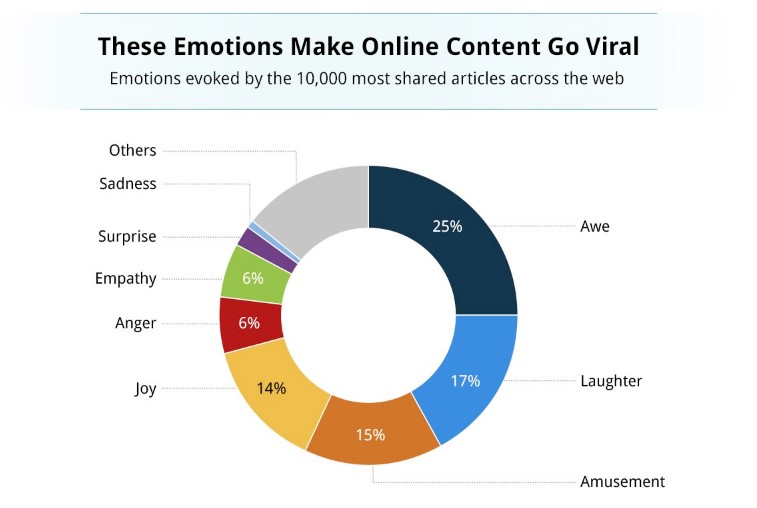
Another effective technique in generating curiosity is leveraging emotional triggers. It is critical to understand the specific words and behaviors that can be used with patients to drive transformation, cause a reaction and create change. Studies report that emotional responses to a basic online ad have over 200% greater influence on buying power than the actual content. Social media messages that extend beyond the features of medicine and connect with personal feelings and experiences is stronger than a message based solely on science, brand characteristics or facts. It persuades patients to take a moment to consider another point of view and engage in a personal way that has meaning to them. It becomes knowledge that is exchanged in both directions and not a sales pitch aimed purely at the patient.
The social proof theory contributes substantially to the success of digital and social media marketing in pharma when patients who sway other patients adopt beliefs or mimic the actions of individuals that they admire or trust, such as celebrities. Patients have an intense desire to gather information from their influencers, including other patients. For example, patient-generated content, such as online testimonials or reviews, are invaluable in showing other patients that a medical device or prescription medication is dependable. Research indicates that more than 80% of patients click on an online ad with content created by other patients with testimonials.
During the coronavirus pandemic, a surge of patients are directing their attention to online influencers for advice and recommendations instead of seeking medical help at a hospital due to their fear of becoming infected by the disease while at a healthcare facility. With celebrity influencers, some communications about medications and medical devices rely on FDA guidance. Recently, Kim Kardashian West overcame slight adversity with a pharma campaign for Diclegis, a pregnancy morning sickness medication, that stirred up an FDA warning two years ago. Complying with regulatory guidelines while maintaining both transparency and authenticity, helps celebrity influencers prevail over possible negative effects of a flawed marketing campaign.
Another technique in social influencing is adding social plug ins and sharing buttons that show the number of shares a particular sliver of content produced indicating positive experiences that other patients will mimic. Patients who are influenced by the actions of other patients are more likely to send along posts that have been shared by other patients. More traffic is directed to the site when content is shared broadly on social or digital media. The interplay is significantly higher which translates into greater sales and higher revenues. In online patient community chat rooms, such as PatientsLikeMe or AskaPatient, connected patients, who are inspired by the opinions and astuteness of others, take the next step and churn out their experiences by further chatting. Half of the patients who use the internet to self-diagnose with online chat features reserve an appointment with a doctor and then ask the doctor for the brands noted in the chat rooms.
In summary, by integrating into technology not only the information gap theory of curiosity, with headlines and emotional triggers, but also the social proof theory, with social influencers, social plug ins, and sharing buttons, pharma companies experience increased search engine traffic, better brand identity and improved leads. The key is for pharma marketers to provide online paths that help patients and influencers exchange data offering different alternatives to inform decision making. Influencers help build brand trust with almost half of the patients depending on their recommendations from social media. Nearly three quarters of patients who have had positive experiences with a brand are likely to suggest the same brand to their friends and family on Facebook, Twitter, and various patient chat rooms. Pharma companies are realizing that there is not one suitable approach with online marketing; rather incorporating the element of psychology into their online marketing platforms adds to their bottom line success.
Resources
Coleman, D. (2013). Rules engagement: 7 tips for successful pharma content marketing. eyeforpharma.
Cornejo, C. (2017). Social media influencers in healthcare and pharma: What’s their role? WEGO health.
Englestrom, C. (2020). Social media marketing for pharma industry. InsightsSuccess.
Jones, S. (2017). 5 Psychological theories to help you understand your prospects. MPH creative.
Mohsin, M. (2020). 10 social media statistics you need to know in 2020. Oberlo.
Shewan, D. (2017). 6 ways to use the curiosity gap in your marketing campaigns. WordStream.
Williams, B. (2018). The power of emotion in pharma advertising – stronger than ever in 2018. Bastion brands.


 As out of pocket healthcare costs grow, consumers and patients are sometimes faced with the challenge of being able to afford and take their medication as prescribed. Within the past two years, dermatologist Dhaval Bhanusali, MD, FAAD had a situation where he had prescribed an anti-fungal cream to a patient. In a follow-up, he discovered that a treatment that should have cost her less than $8 ended up costing $1,200.
 The medical entrepreneur had previously launched a platform to compare prices between different local pharmacies as well as an EMR platform for Dermatologists and even helped launch Amazon’s first private skincare brand. Skin Medicinals, an online platform that utilizes compounding pharmacies to specially mix medications for patients, emerged as a result of that work. Dr. Bhanusali is also an instructor in the Mount Sinai Health System and works in private practice in NYC.
 Speaking with DTC Perspectives, Amy Graham and Sherry Novembre shared that this is currently a year-long project about which they are highly passionate, with each month highlighting a different type or types of cancer. Novembre, SVP, Management Supervisor at Ogilvy Health, shared that “the spirit of what we are doing is … small, regular gains that add up.” March’s effort sees the agency’s Young Professionals Network leading a colored band-aid drive for children to benefit the Rutgers Cancer Institute of NJ’s Pediatric Wing. An additional focus in March will highlight colorectal cancer: an educational poster created to generate awareness among Ogilvy Health employees is now being shared publicly to help bring awareness to the masses, allowing other companies to access and distribute the poster share with and educate their staff.