Latest News


March 18, 2015

The goal of any support program should answer this question: What factors must we use in the program that will instill patient confidence in our product – and by default our company? Trust is built by a series of actions and those actions speak volumes more than any words or discount prices ever can! A recent article in eMarketer reported seniors do not trust pharmaceutical company sites and prefer WebMD more.  In this work, companies need to be brave and work harder to deliver a better “patient experience,” while a patient is “on the product.”

A situational review

  • Patients do not want a relationship with a product; they want an “experience.”
  • Federal regulations tend to inhibit innovation in these pharmaceutical support programs.
  • The pharma industry’s patient support programs, in terms of the information they provide, are not valued as they once were. So many other avenues are available, and considered more trustworthy, to patients to get information, including the Internet and patient advocate groups. Maybe it is time to give Regulatory and the other legal protectors some new assignments.
  • Competitive pricing could force excellent programs to be marginalized and undifferentiated (i.e. Gilead and Abbvie in hepatitis C).
  • Patient Engagement is the hot new topic. Not only is pharma trying to come up with a viable, profitable formula for PE, but the Accountable Care Act is forcing many ACOs, integrated delivery networks, and other health care delivery system to tackle this issue as well. With so many different health care systems putting their unique spin to the issue, other questions arise: what works, what does not, how to separate the good from the bad? Think mobile app development.
  • The industry has examples of good and bad pilots. When programs scale to larger patient populations, they lose their patient focus. Outside of specialty drugs, physicians will choose DTC efforts over patient support programs as a factor influencing prescription recommendations.

The first problem is inherent in the program itself: Not all are ground in proven theoretical based methodologies that assist with a patient’s needs. In our opinion, the way to connect and engage is remove the current program silos. Commercial organizations need to consolidate approaches, converge vendors, look to execute more than innovate, and, most importantly, measure and value engagement as much as they do reach and lead generation efforts. Senior leadership should consider looking at the total spend as many fail to ask if all those dollars being spent can be focused more effectively to deliver better program execution.

It has been done before

We frequently mention the work! Biogen Idec demonstrated this with its MS drugs (Avonex & Tysabri) in the in the late 90’s to early 2000’s. Its focus was execution excellence and customer support. The call center and customer relationship management approach acted as the quarterback of its patient focused efforts. Its current website says it handles 800,000 calls a year.

Patients wanted to know about what to expect on therapy, they wanted to know what side effects they would experience, especially with Tysbari’s known side effect, Progressive Multifocal Leukoencephalopathy ( PML). Because of the regulatory requirements, the company embraced this as an opportunity, not a burden, to disclose potential side effects. Moreover, in 2002, Biogen had to take these issues head on because of other products in the market and the high visible media reports on PML.

Back then, management felt it important to have an employee assigned to each patient or caregiver as the single point of contact and relationship steward. This required consolidation and coordination with the ad agency, PAP, HUB, Co-Pay Card, Reimbursement and Benefits investigation, specialty pharmacy and technology.

It’s not a stretch to say that, 13 years later, this plan is still literally paying off: To quote a recent Motley Fool: “Biogen Idec's MS drugs include the billion-dollar blockbuster drugs Avonex, Tysabri, and Tecfidera, as well as the company's newly launched Plegridy … Sales of Biogen Idec's MS drugs increased 47% to $7.93 billion, and its total sales increased 40% to $9.7 billion last year.”

In conclusion, keep in mind these points:

  • Doing this right with patients will produce the brand’s best product advocates.
  • Switch the metric quantified! Measure and reward commercial and medical teams on the number of patients who get better on the therapy as a result of the product and support; not on how many new patient starts were achieved in the past week. Measure engagement, get engagement is what produces real results!
  • “What have you done to help a patient on our product today?” should be stuck on a post-it on every employee’s computer, laptop and iPad.

If the product works, produces outcomes, and patients can easily access information they want, this will help them. They will get started on therapy and realize the value of staying on therapy for the long term. Consider who saved Tysabri from a market recall.

Robert Nauman


March 18, 2015

In such a strongly regulated industry where it is most important to avoid a downslide, pharma is falling behind in digital health. Risk taking and innovation suggests being open-minded for failure. As Robert F. Kennedy said, “Only those who dare to fail greatly can ever achieve greatly.” The path to success is filled with risk taking: adventurously shifting the predictive and precise, sustainability, quality-based and patient-centric healthcare delivery models away from the reliance on profitable drugs and moving towards resource allocation in digital health to engage patients in new ways.

Predictive and Precise Healthcare Delivery Model with Data Analytics: Real-world evidence and outcome research not only identifies high risk patients but also anticipates medical issues to create customized care plans for individuals as well as improves patient population health through data analytics in the predictive and precise model. Digitally leveraging this model with telehealth efforts, such as wearable devices, can result in pharma partnering with equipment manufacturers to deliver patient adherence information. Headsets which track brain activity and sleep patterns, and sensored “esmart” clothing which monitors blood pressure and heart rate can allow for medication content to be analyzed and then used to form clinical decisions. mPharma and smart devices can digitally leverage this model with real-time, self-tracking, and progress feedback devices and apps, such as 1) food and movement tracking apps; 2) compliance apps with automatic prescription refills; and 3) sensor supported diabetes apps that create a new demand for test strips.

Sustainability Healthcare Delivery Model with Community and Personalized Content: Fostering digital patient-to-patient interaction instead of information exchange exclusively between patient and physician is a key factor in the sustainability model. Online patient communities, such as PatientsLikeMe, digitally leverage this model by allowing for patient reciprocation of objective medical information that results in resourceful discussions about a patient’s personal experiences with different medications that have proven efficacy. Physician communities such as KevinMD and Sermo also can digitally leverage this model with physicians acquiring value through sharing online information with other medical experts about new and successful drugs. Both communities not only promote certain medications but also create pharma brand loyalty.

Quality-Based Healthcare Delivery Model with Physician Tools: Reimbursement depends on measures which promote clinical expertise in the quality-based model. Physician tools support the diagnosis and selection treatment, increase the efficiency of the care process and improve the rapport between the physician and patient. Digitally leveraging this model with IBM’s Watson shows that physicians are on the forefront of technological care access with virtual assistants to facilitate physician referencing and decision making and also improve patient confidence in the progressive capabilities of their physicians who they believe will prescribe the newest and most effective drugs on the market. Electronic Health Records (EHRs) are utilized as cloud-based solutions that integrate data resulting in research and clinical trials that lead to faster results. Patients are engaged via recruitment for clinical trials and the post-market monitoring of safety and efficacy with prescription medication.

Patient-Centric Healthcare Delivery Model with Patient Tools: Consumer experience and understanding patients in their daily lives to achieve patient adherence is the main emphasis of the patient-centric model. Patient tools such as Quick Response (QR) codes that allow patients to interact with chosen information at their own pace can digitally leverage this model. Specific QR codes for each product can be imprinted on prescription bottles and boxes leading patients directly to the online product website. Patient education explaining use, dosage, and safety information can be highlighted through animations, interactivity, and videos from medical practitioners. Remote monitoring support programs can provide information about a patient’s surgically-implanted device that allows constant observation of functioning organs and the skills patients need to manage them. Monitored results can be programmed to text patients’ phones to remind them about upcoming medication doses. The information can be collected and returned to the physician in real-time which would allow for any necessary intervention to be delivered immediately.

In summary, technologically leveraging the predictive and precise, sustainability, quality-based and patient-centric healthcare delivery models with data analytics, community and personalized content, physician tools, and patient tools, respectively, will bring pharma up to speed with current digital health efforts resulting in improved outcomes. Pharma will always invest money where it believes it can secure the highest return, but risk is of utmost concern. At the moment, pharma envisions the highest gain and lowest risk opportunity in developing drugs and not in developing ways of digital patient engagement. By pharma taking a riskier, spirited leap of faith and engaging patients through digital health, greater progress will be achieved.

References:
Gupta, Anu, Schumacher, Jeff and Sinha, Saptarshi. “Digital Health:  A Way for Pharma Companies to be More Relevant in Healthcare.” Booz & Company. (2013)
“Healthcare Delivery of the Future:  How Digital Technology Can Bridge Time and Distance Between Clinicians and Consumers.” EHealth Research Institute. (2014)
“Wearable Tech Regulated as Medical Devices Can Revolutionize Healthcare.” MDDI Medical Device and Diagnostic Industry News Online. (2014)
Palgon, Gary. “Secondary Use of Healthcare Data. and Health:  Use the Cloud to Harness Mainstream Patient Data for Valuable Research.” Contract Pharma. (2013) Brueggeman, Jessica. “Managed Markets:  Operation Patient-Centricity.” Medical Marketing & Media. (2014)

admin


March 17, 2015

Children and fools speak the truth, they say. When Galileo first said that the Earth travels around the Sun, he was held for a fool. When industry pundits say that patients are at the center of the life science Solar System, they, too, are sometimes accused of throwing around mere buzzwords. But that doesn’t make it any less true. Patient centricity matters for the sake of patients as much as for the sake of business. So how can it be done well?

1. Prioritize face-to-face encounters
Of course, we do market research, social listening, and a myriad of other activities to gain insights and improve business strategies. Those things are needed and necessary. However, how many of us are actually engaging patients personally? While words can convey a great deal of information, but visuals, the voice, the face, and body language all provide relevant context to what is said. Nothing shows greater respect and a higher level of interest than taking the time to be physically present and interact personally with someone. When was the last time you actually had a conversation with someone who had the condition you are working on? If that was not recent, perhaps that’s the place to start.

2. Be human
If you ask patients what’s most important to them when they choose a healthcare provider, overwhelmingly, they’re looking for someone who cares how they’re doing. For a number of reasons, pharmaceutical brands can be perceived as lifeless, cold, necessary evils. They are viewed as merely pills, injections, or infusions, and their benefits sometimes get lost in the commercial mandatories for people to only find that they can’t remember why this brand was a good idea in the first place. We shouldn’t be content with just being “necessary.” Successful brands have a human face, because they work with real people living with the disease, and they offer real support rather than just marketing messages.

3. Include care partners
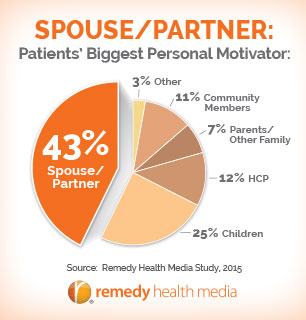
A large body of literature points to the importance of close family and friends to help patients adhere to their treatment regimen and to provide for the right care at home. In some disease categories, reaching care partners is arguably more important and more appropriate than reaching the patients themselves; think of Alzheimer’s, autism, or any kind of pediatric disease, where it’s mostly physicians and care partners making the most important decisions on the patient’s behalf. A parent caring for a child with a disease will struggle with a different set of worries than someone caring for a spouse, so customization is vital. Care partners often end up being just an afterthought, but in our experience the best patient communication programs have always taken loved-ones into account early in the process. Being mindful of how an illness affects not only the person, but also those around them, is a critical consideration in the communication strategy.

4. Be relevant – tell stories
Research points to three main drivers of medical adherence: patient comprehension, recall, and motivation. Only one messaging format can address all three supporting factors to improve behavioral outcomes: stories. As studies at the University of Princeton have shown, storytelling can lead to neural coupling, where the brains of listeners essentially mirror activities happening in the brain of the storyteller. What this means is that if you hear a story, your brain comes close to actually experiencing the story. Stories get our attention, so our brains are switched on, which helps us understand and remember what we’re being told. And since stories also stimulate us emotionally, we are more open to messages that encourage certain behaviors.

5. Choose peers as messengers
The most credible messenger for any target group is a peer. Testimonials and personal recommendations by people in our inner circle have always had the strongest influence on our most important life decisions. We trust people who are just like ourselves more than total and utter strangers. Storytelling is good, but it has to be culturally appropriate; i.e. your messengers should have a similar demographical background as the target group. Don’t speak through “the average person on the street,” but through “the average person living with the condition,” or a person just like the ones you’re trying to reach.

Bottom line: Engaging with patients takes commitment and preparation. Yet, regardless of brand, it needs to be done – it’s about accepting the facts surrounding the entire healthcare universe. It’s about listening to “fools” like Galileo.

Chemelle Evans


March 17, 2015

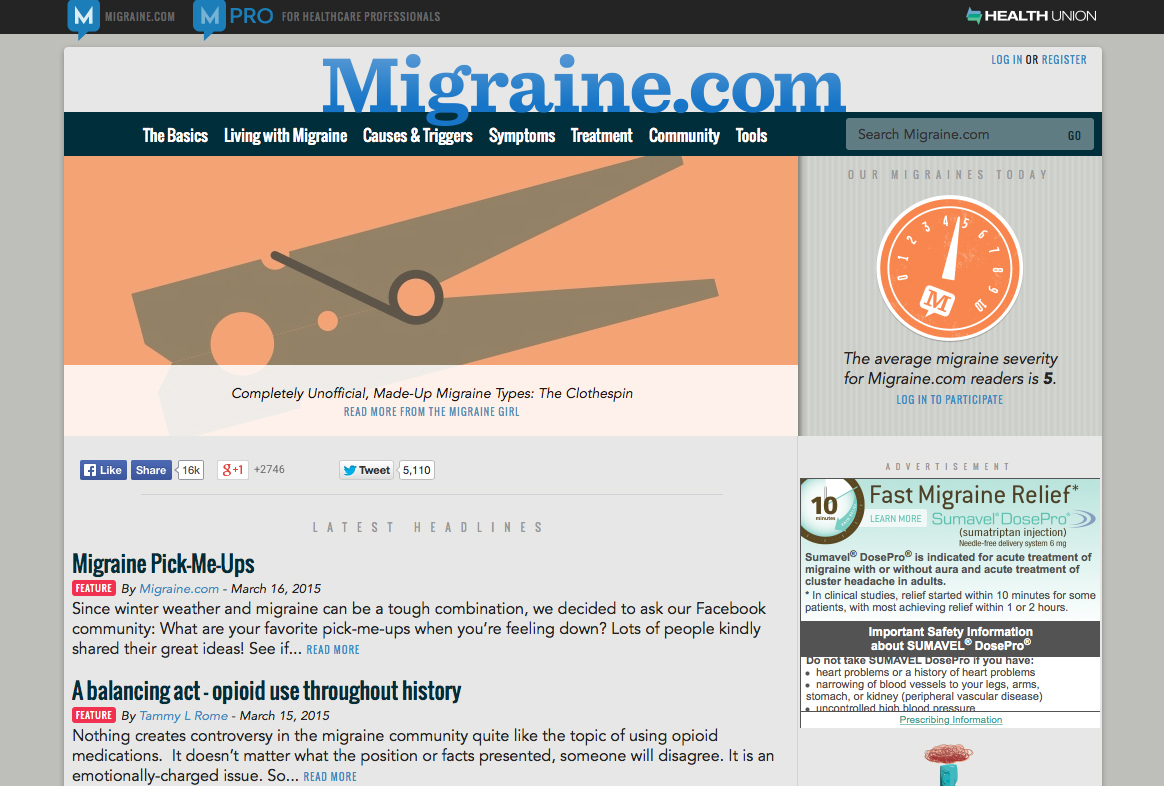
People actively involved in their health and healthcare generally have better outcomes in managing their condition. So how do those of us working in healthcare and healthcare marketing motivate people to get more involved? While we don’t have all the answers, Health Union has learned some valuable lessons and practical tips for enhancing patient engagement since launching our first platform, www.Migraine.com, more than four years ago. Here, we share some key insights from our recipe for cultivating active, engaged patient communities, and hopefully, help marketers avoid common pitfalls.

1. Listen to patient communities
Our mantra – the community is always right! Observe patterns of engagement to learn what interests patients and what doesn’t. Success will come from aligning your agenda to respond to their needs, which will continue to evolve over time. For instance, early in the lifecycle of our RheumatoidArthritis.net community, Health Union created a series of yoga videos that could help patients with rheumatoid arthritis increase strength and flexibility. Unfortunately, we offered a great solution to a problem that our current members weren’t interested in fixing. However, as our RA community continued to grow – and interests became more diverse – these yoga videos eventually became relevant to a certain segment of the community. Engagement often depends on offering the right content at the right time, and it’s important to continually assess the needs of patients as your audience grows.

 2. Segment based on behaviors, not demographics
In our communities, we observe similar behavior patterns at various phases throughout the patient journey. For example, in people with type 2 diabetes, we recognized that patients who were newly diagnosed, adding a new medication, or lapsed treaters were all relating to tips-and-tricks-type of problem solution articles. So, we created a profile for these “frustrated quick-fixers” and developed a strategy to develop this type of content on many different topics. Once you recognize a behavior segment, seek to understand what’s driving those behaviors and find multiple ways to meet the true underlying needs.

3. Meet people where they are
Make it simple for people to engage, regardless of how much time, knowledge, or interest they have. The easier it is for people to engage, the more likely they are to do it, and keep doing it! While this seems obvious, it is important to keep in mind that what is easy for one person, may not be easy for another. Provide multiple, unique, and easy opportunities for people to participate where they are and according to their comfort level. We often initiate engagement on Facebook (without requiring a site visit) since patients are already there and willing to participate with a like, share, or comment. On our websites, anonymous polls enable “lurkers” to participate. We also build content to meet the needs of different types of community members. While some content is simple, basic information that can quickly answer commonly asked questions, other content is more detailed with higher-level scientific data.

4. Validate concerns or challenges first, and then offer solutions
Most people know what they should do to improve their health, but they don’t take action, for many reasons. Choosing healthy behavior is difficult. We’ve learned that we can increase engagement and empower our community members when we acknowledge and validate the challenges of making health improvements before offering solutions.

Many people with migraines become frustrated when encouraged to exercise by their healthcare providers. For some, exercise can trigger a migraine attack; for others, migraine is chronic and getting out of bed is exhausting in itself. Exercise tips and advice are often met with negative reactions among the migraine community. However, when we acknowledge that exercise can be a challenge for people with migraine and offer varying ways to increase physical activity while managing potential migraine triggers, we create a positive connection and encourage healthier behavior.

5. Align interests and opportunities
Once you learn what interests and motivates your audiences, provide more opportunities for them to get involved. Use past performance to guide strategy. Experiment with variations on proven areas of interest to create new ways to engage. For instance, we received an overwhelming response to our annual Migraine In America survey, making it clear that people with migraines are seeking opportunities to be heard, share their opinions, and compare experiences. As a result, we started building more feedback mechanisms into our communities – from quick polls and questions for our Facebook community to creating specific opportunities for patients to opt-in for survey invitations from corporate and academic partners.

While there are many ways to create and maintain patient engagement, these principles are some of the most critical for success.

Editor’s Note: This is the first installment in a two-part series from Health Union. Check out our April issue of DTC in Focus to read about making engagement a habit and how these principles apply to adherence and patient support.

Amrita Bhowmick


March 11, 2015

Since 2009, the nascent medium called social media has blossomed into something that is now entwined into the very fabric of our personal lives. Billions of people flock to Facebook daily. Some 90% of journalists now get their news and news ideas from Twitter. LinkedIn has dramatically altered how we find and recruit talent, and YouTube has completely changed how we watch videos. Newcomers like Instagram and Pinterest are also garnering hundreds of millions of users.

Social media outlets have revolutionized the healthcare industry and are quickly becoming the preferred resource for individuals seeking healthcare information. Patients turn to social networking groups to find others who are battling the same diseases (for patients preparing for the same type of surgery, following tweets helps demystify the process, and ideally reduces anxiety about upcoming operations), share advice, recommend doctors, even send other members a virtual hug. Clinicians connect to share information and learn from each other.

Through it all, the pharmaceutical industry continues to either ignore this medium or dabble in it in a way that feels like an afterthought. There is still a fundamental misunderstanding of this medium and how it could be applied. While patients, advocacy groups, and the likes of the Mayo Clinic have flocked to social media, most of the pharmaceutical industry has largely ignored it.

It’s not to say nothing is being done – some major companies have established centers of excellence (created to understand this medium), hire agencies to help them and manage the process, and educate internal stakeholders. Some have dabbled with a single platform, like Twitter (corporate communications) or YouTube. But most have continued to say “No social media” in relation to the promotion or marketing of their products. When people have dabbled, it has mainly been around paid media on social channels – that is, advertising.

Brands have limited roles in our actual social life. We just have to understand how and where we can be part of the conversation. In our regulated industry, we’re limited in what we say, so we say very little. Once we’ve recited our label, we’re going to repeat what’s on it (and maybe offer a coupon). So, absent any true guidelines from the FDA, what can the industry do? Particularly now that most every manufacturer is looking at ways to “go beyond the pill” and promote more of a patient-centric approach to their business.

Social media should be viewed more as a way of doing business and less as a means of promotion. While promotion is a component, there are now aspects of social that can be applied to a number of areas, in a compliant way.


Socializing customer service

Industry leaders all provide programs for customer service that are manned by call centers all across the US. There are SOPs that are 10 years old that these centers abide by. These same SOPs could be applied to providing service via social channels, particularly Twitter or Facebook. Banks and financial services companies, who have a similar (but not the same) regulatory environment, have figured out how to do this. Combining social listening and customer service could enhance the patient experience and help with the patient-centric positioning most companies are striving to achieve.

Twitter has been embraced by the corporate communications function to blast out press releases, socially responsible acts committed by the firm, and medical meeting information. However, there is little engagement. This should change now that the FDA has provided guidance on the use of limited-character platforms.

Paid social will grow as more and more media planners come to grips with this medium, especially at drug launch. Planned and managed properly, paid social can be a great vehicle for targeting patients with an unbranded message for disease awareness campaigns. There will still be challenges in using this medium for branded media, primarily due to Important Safety Information (ISI) requirements.

The use of YouTube is a requisite now in most marketing plans. However, it is tied mainly to MOA or KOL videos. Tools such as http://www.storyvine.com/ are now enabling the capture of true patient/user-generated content that can be moderated and put through the same legal and regulatory framework that exists for other content.

From a patient perspective, the biggest opportunity for pharma will be with Facebook as it begins to hone its healthcare strategy. Even though pharma already has a presence on Facebook, pharma is all over the map with regard to Facebook communities. There are unbranded and branded communities, as well as communities based on partnerships with third parties.

Pharma has created product pages, such as https://www.facebook.com/Podhaler and https://www.facebook.com/GilenyaGO, disease awareness campaigns like https://www.facebook.com/DRIVE4COPD, and unbranded presences such as https://www.facebook.com/merckengage.

Pharma should look to truly engage the patient on these communities. By partnering with Facebook, pharma companies could:

  • Provide better, up-to-date product and scientific information in patient-centric language
  • Work with advocacy communities on Facebook to raise awareness of a disease
  • Expand the use of Facebook to reach specific audiences, such as rare-disease communities who are very active on Facebook


In summary

The marketing function of the pharmaceutical industry needs to begin focusing on changing its thinking around social media, to more of an engagement-oriented model and less around advertising and promotion. Social should be viewed as an integral part of the overall marketing mix and not something that is siloed or the domain of corporate communications.

Granted, this relegates the use of social media to a couple of areas, such as those outlined above. But that is much better than doing nothing at all, or doing it badly.

Ritesh Patel


March 6, 2015 0
Bob Ehrlich
“Patient engagement…will be a company survival imperative.”
-Bob Ehrlich

We have an impending health care cost crisis facing many Americans. Anyone with employer subsidized insurance has seen their share of the cost rise over the years. My personal premiums as a Pfizer retiree have risen every year and now approach $5000 a year plus my deductible. So before I see much reimbursement I pay close to $7000. I know this is still a good plan and much better than what I would pay on the exchange.

On those state and federal exchanges, my premiums would run about $8000 and a deductible of $6000 would be normal. So most health insurance is really for an unexpected serious illness beyond what we would expect in a typical year. Most years I do not reach my deductible, and that is a good thing because it means I am relatively healthy.

So whether one has employer or exchange-based insurance we still are paying our own way much of the time. I know we get that free check-up once a year and a couple of other freebies under the ACA. The fact is, however, that anytime a doctor wants to do a procedure, test, or write a prescription we are paying for all or much of it out of pocket.

I have been getting used to that with my dentist for years since I have no dental insurance. As most of you know teeth somehow are extremely expensive to repair. That tiny porcelain crown costs $2000. My tiny little titanium implant cost around $4000. Lacking dental insurance makes one very attentive when the dentist recommends a procedure. I have lost all reluctance to push back on price and actively explore cost of the procedure. I also negotiate. I am no longer reluctant to show emotion and skepticism when told that little tooth somehow needs work.

We can certainly expect patients to react to this cost shift by engaging in traditional consumer behavior. The idea that patients accept whatever the doctor suggests will be affected by cost. As unseemly as it is, patients will be challenging their provider on price/value. They will demand in advance understandable explanations as to cost and the alternatives.

Drug companies have for years been the recipient of tougher negotiations by insurance companies. Insurance companies have increasingly passed on the cost of branded drugs to their patients. So, the bottom line is drug companies are faced with a marketing problem. How do they convince patients to pay higher fees for their drugs? While tiered formulary has been a fact for years, it is getting worse.

As patients start demanding value for their money, drug companies need to change their engagement strategies. Added value can be achieved in many ways. That can be through pill size, dose, frequency, side effects, packaging, efficacy, multi-indications, and follow up service.

While patient engagement has always been a goal of drug marketers, it will be more of a company survival imperative in the future. The new patient, driven by cost pressures, will demand value for premium priced drugs. Drug companies may not yet be ready to deal with the empowered patient armed with information and angry at their rising health expenditures. I would hope drug executives are acutely aware of this new consumer power. Successful drug companies will be those who stress price value and respect the rising power of the patient.

Bob Ehrlich


February 18, 2015
Bob Ehrlich, CEO, DTC Perspectives
"Consumers.. remember very little…so less is more." -Bob Ehrlich

FDA is proposing a study which I call “less is more.” The study is long overdue. They are concerned that too many risks are being presented in television ads and perhaps this confuses consumers. The basic lesson of advertising is to focus on the main point or compelling benefit if you want people to remember it. That lesson also applies to risk.

Consumers deserve to know about any significant risk of a drug they are taking or may take. Current DTC ads are risk heavy and loading ads with the many potential risks and side effects obscure what really are the most important. So if something minor happens to one in ten thousand people, is that worthy of being mentioned?

I have always been an advocate of presenting the odds of serious risk. FDA needs to provide guidance in consumer terms. If I have several friends who got a side effect, then that is worth mentioning. If I have to dig in the medical literature to find the one person having a side effect it is not. FDA is considering doing what any reasonable person would do. That is, discuss risk in the context of its frequency and seriousness.

We do not require auto makers to say you may die driving their car. We do not require airlines to discuss the risk of a crash. Yet drugs seem to be treated as something deserving of the mention of anything that may happen if taken. It is about time consumers were given some better information. If it kills one in a five hundred thousand do I really need to be told that in an ad?

I hope this study can provide some data that will help. This falls in the category of better late than never. There is, of course, a lot of general literature on advertising recall, and perhaps FDA could make sensible conclusions based on the existing vast history on advertising concepts. That would say consumers watching ads can remember very little, so less is more.

I know FDA is filled with bright people so I assume they know this concept. What is frustrating is their pace in advancing sensible regulation. By the time they finish this study it will be twenty years since television ads were presented to consumers. If consumers are risk confused now, they were in 1997 as well. FDA has told me numerous times how busy they are, so it is no surprise they are just getting to this study. It is a sad commentary, however, on their staffing and/or their priorities.

I guess we must be thankful FDA took some regulatory liberties and allowed the 60 second ad in 1997. So despite the nearly two decades it took to get here, the study is important for industry and its customers.
Bob Ehrlich, CEO, DTC Perspectives

Bob Ehrlich


February 18, 2015

Programmatic advertising, the automation of media buying and selling using technology and data for hyper-targeting, is one of the ad worlds’ hottest trends. Research firm eMarketer recently estimated that digital display ads bought programmatically in the US grew 137% to more than $10 billion in 2014, and now account for 45% of all display ad sales. eMarketer expects programmatic spending to increase another 47.9% this year and by 2016 to reach $20.41 billion, or 63% of U.S. digital display ad spending.

Why the tremendous growth in programmatic? With the rapid increase in digital media over the past decade, there was simply too much inventory for humans, both buyers and sellers, to keep track of. Previously, the inventory that was hardest to monetize was aggregated into popular exchanges, bought and sold through real-time-bidding (RTB).

Buyers were purchasing “remnant” inventory via RTB. Premium inventory on premium sites was still limited. Enter “programmatic direct” or “automated guaranteed” – as the Interactive Advertising Bureau calls it – which allows advertisers to buy guaranteed premium inventory in advance from desired publishers. While programmatic direct made up only 8% of all programmatic sales in 2014, according to eMarketer, it’s expected to reach 42% by 2016.

And that’s where pharma advertisers should take notice. While RTB-based programmatic buying focuses on audiences, usually through some kind of cookie-based tracking, often behavioral in nature, programmatic direct brings the focus back to the editorial environment of context and content where pharma brands like to be.

DTC advertising, after all, has lagged behind every other category, as per Nielson reports citing a 22% decline in display ad spending from 2012 to 2014. For an industry specifically dubbed “direct-to-consumer,” DTC has often appeared to be neglectful of where consumers are actually looking for product information – online! eMarketer, after all, noted that since 2013, consumer digital use has even surpassed TV viewing.

The situation is compounded when you consider how quickly consumer mobile use is growing. comScore reportedin August that mobile use had overtaken desktop use. And while 44% of programmatic spending in 2014 was already on mobile, eMarketer projects that number will also surpass desktop this year.

DTC, alas, is also lagging in mobile. Funmobility’s Mobile Advertising Trends Report 2014 found pharma dead last in mobile spending amongst nine categories, and concluded: “This provides a gap in marketplace saturation that savvy advertisers can capitalize on.” The solution? “Preferentially target mobile ads to tablets, not smartphones. Tablet owners tend to have more disposable income, are 3x more likely to make a purchase based on a mobile ad, and use their devices primarily for web browsing – which is the behavior that health and pharmaceutical ads need to encourage, in order to educate users about their product.”

Of course, most pharma marketers are already vying for standard destinations and portals. But they can add programmatic strategically to improve the efficiency of their media plans, find relevant patients with larger reach, and get access to targeted consumers at lower cost. Here are some possibilities:

  • Contextual – Target via contextual analysis at the page level to reach patients in relevant environments along the patient pathway.
  • Overlaying first and third party data sources – IMS, Crossix and Symphony, to name a few, offer different products to better target relevant patients across the exchanges.
    • For Example, look-alike segments…cookie-based, without following patients
  • Geo-targeting – Use prevalence of a condition, script-level physician data, or patient data to improve campaign performance.

With safety being paramount to the placement of any campaign, the proliferation of brand protection services offiers pharma marketers the ability to verify context, block non-human traffic, optimize for viewability, and more.

So, for pharma media planners feeling the pressure from increased CPMs caused by lack of quality inventory and too much competition for premium inventory, adding programmatic placements to the media plan may well be the perfect prescription.

Bill Jennings


February 18, 2015
Why innovate? It’s a question frequently asked by many pharmaceutical marketers. From a campaign development perspective, innovation is seen as a way to break through the clutter in order to set new benchmarks for success. Unfortunately, in the process, it’s easy to just innovate for innovation sake, and implement the latest thing without regard to how it will accomplish brand objectives or scale in a meaningful way. Measurement is also often an afterthought that mitigates the cultivation of valuable insights and leads to irrelevant KPIs.

Widespread conservatism within the industry, due to regulatory burden, compounds the issue. Unorthodox innovation initiates a waterfall of time-consuming MLR reviews, which can lead to the dilution of the concept itself in order to gain approval. That new thing you were so excited about? Not only has it lost some of its luster, but the window for launch has been delayed to the point that it is no longer considered breakthrough. To make matters worse, the annual planning cycle compresses your once innovative idea to a four-month flight.

Marketers should never veer from paving new ground. It is essential that we identify and execute new marketing strategies that best align to our brands, can be effectively measured, and also meet the restrictions unique to our industry. In a time where technology, platform and content evolution is happening faster than ever in leading consumer and HCP channels such as mobile, social and point-of-care, it’s critical that marketers understand the challenges of adopting new strategies and utilize a tactful, big-swing approach to overcome each of them. That said, a methodical approach to prioritizing should be considered so that the new path leads to meaningful success.

Herein lies the innovator’s dilemma. How do pharmaceutical marketers embrace innovation successfully while adhering to the constraints unique to our industry?

For all of us, a brand’s life cycle is finite. FDA approval process and patent law has given us a clear start and end point. We’re all under pressure to use this time and our yearly budgets as efficiently as possible. Unfortunately, the default is to reinvest in tactics that have worked well in the past. While this is not 100% unwise, there are steps to be taken to reset our baseline for success.

  1. Be Selective: Pursue innovative tactics that are conducive to meeting your objectives. Just because everyone is talking about the next big thing doesn’t mean it is right for you. It’s critical we take aggressive bets on the right innovation, as that is how we can raise the bar.
  2. Think Big: Rather than pursuing many ideas at once, focus on a couple ideas that can make a meaningful difference.
  3. Think Long-Term: Twelve month media planning cycles aren’t going to change anytime soon. What can change is the way we think about our most strategic programs. Rather than approaching impact from an annual perspective, you can focus on ideas that you incrementally improve over time. While you may not be committing to a multiple-year program, empower your partners to ideate with you on what a long-term vision could look like.
  4. Consider Immediacy: Immediacy comes in two flavors – launch timing and time to impact. Innovation doesn’t have to mean creating new assets. It could be deploying them in new ways. Giving legs to proven assets not only squeezes more out of your creative budget, but it also allows for a more timely review so that you can move the needle for your brand faster.

As new technologies, channels and strategies surface in our industry, all marketers will inevitably face the innovator’s dilemma. Take confidence in knowing that innovation can truly change the success of your brand. If we as an industry can take an approach to adoption that is thoughtful, sustainable, and scalable, the pay-off will be tremendous for all groups involved.

Ashik Desai