Latest News


September 19, 2020 0

The coronavirus pandemic has altered every facet of our lives. Everyday tasks suddenly became challenging and anything not deemed “essential” came to an abrupt halt. New terms and safety procedures are now part of our daily lives and even the most mundane contact with friends or extended family is accompanied by health and safety measures. But as we approach the reopening of schools and begin to find “normalcy” in pandemic lives, there is another threat that looms for our healthcare system: the impending flu season. The influenza virus, while more studied and known than the novel coronavirus, presents itself with symptoms that are similar to (if not indistinguishable from) COVID-19. This similarity of symptoms will make effective prevention of illness and proper diagnosis of the flu or COVID-19 an even more critical task.

Our healthcare providers are our best line of defense against both of these viruses and offer an authoritative voice in the face of rampant misinformation. And yet, our health system is already under immense strain given the lack of ubiquitous national guidance, the lack of testing, the lack of hospital capacity, and the variety of ways in which COVID-19 is presenting itself in human systems. Luckily, studies show healthcare providers have remained the most trusted group for information throughout the pandemic, and we have every reason to believe this will continue as we approach the 2020-2021 flu season.

As the country prepares for flu season and the ongoing COVID-19 pandemic, accurate information will be our biggest weapon in the fight against both of these viruses. It will be our job as healthcare marketers to use Point of Care (POC) to relieve some of the stress on physicians and help patients understand what they need to know to stay healthy. 

Tracking the Flu Season 2020

Early prevention, detection, and response are key to preventing the spread of any disease, so POC platforms should leverage their nationwide reach to make patients and providers aware of the tracking site FluNearYou.org. This resource allows individuals to report symptoms in real-time to complement traditional tracking while providing useful information directly to the public. National tracking from multiple sources can help healthcare providers determine the probability of infection by the flu virus and potentially better manage their patient populations.

Patient Education at the Point of Care

Symptoms for the seasonal flu and COVID-19 may be similar, so patient education at the POC is likely the most important thing we can do to help keep our healthcare systems from being overwhelmed. Educating patients and their caregivers about the importance of getting the flu shot, how to spot the differences between the two viruses, and actions to take if someone is experiencing symptoms, are important messages for patients. POC also serves as a great space to remind patients about hygiene protocols that work to stave off both viruses – like washing hands thoroughly for at least 20 seconds, refraining from touching eyes or face, wearing masks, social distancing, etc. Lastly, combatting disinformation about masks, remedies, medications, and vaccines will be necessary given the amount of misinformation circulating online. Patient messaging about myths and truths overall will be helpful reminders for those trying to distinguish fact from fiction.

Flu Shot Awareness

The POC channel should inform and support flu shot awareness. As we know, the flu vaccination can provide greatly needed protection from the worst effects of the flu virus, help shield others, and aid in recovery. As a trusted source of information, POC should ensure this message is communicated to patients, as well as information about treatments, when to seek support from your healthcare provider, and how/where to get the vaccine.

For the last several years, Outcome Health has partnered with Unity Consortium to bring their important messages about vaccination and immunization to physician practices and health systems across the country. Judy Klein, President of Unity Consortium, stresses that all adolescents and young adults should get their flu shots to protect themselves, their families and their communities: “It's more convenient than ever to get vaccinated – at your local pharmacy, clinic or physician office. Pharmacists are now able to administer vaccines to individuals ages three through 18 years old, and physicians are ensuring their offices are a safe and easily accessible place to visit and get vaccinated. This year especially, when our healthcare system is already under such burden and stress due to COVID-19, people must prioritize getting their flu shot.”

Relieving Physician Stress and Burnout 

In today’s COVID-world, every physician practice and health system is under added stress. In fact, in a recent JAMA study, over 50% of healthcare providers reported symptoms of depression and over 70% reported symptoms of distress. We believe the POC should be a place that can support healthcare providers that are serving their patients, so we must use this channel to help relieve physician stress. We can use POC platforms to help manage various diseases and conditions, providing educational and actionable messaging patients may not otherwise get. This will both give patients trusted information and relieve some of the burden on healthcare providers to do this so they can manage treating flu against the backdrop of the pandemic. This support will be especially important in resource-limited settings where there may be a weaker healthcare infrastructure or the one community doctor is the entire healthcare system in that area.

Additionally, now that more healthcare providers are leveraging telehealth solutions, we have the ability to plug into virtual meeting spaces to make these appointment experiences even more valuable. Whether it’s during the wait for an appointment to begin or part of the meeting experience, we can use this digital space to provide information and resources that help patients navigate this year’s flu season. 

As the country battles the ongoing pandemic and prepares for the seasonal flu virus, our role as healthcare marketers has never been more important. We have the opportunity to help ensure our healthcare providers can handle the load from their communities by reaching patients and caregivers with critical information when it is needed most.  

Paul Hayward


September 17, 2020 1
Bristol Myers Squibb (BMS) has premiered a very interesting combo DTC ad featuring its two immunotherapy drugs Opdivo and Yervoy. The ad is for treatment of Non Small Cell Lung Cancer (NSCLC). What is very interesting is the approach of advertising two drugs in one ad. The FDA approved the combo for first line treatment for NSCLC in May 2020. I am not aware of another DTC campaign for two separate drugs. There are many combo drugs but they are marketed under one brand.

Trying to explain one drug is hard enough, but in this campaign BMS is trying to explain to consumers how the combo is effective versus chemotherapy. They premiered the campaign with an announcement print ad. This is not a visually rich ad, just a text announcement exposing consumers to the new indication. Using major newspapers BMS launched a blitz of their Big News headline “the first and only chemo free combo of 2 immunotherapies.” That was followed up with numerous magazine print titles through the summer months.

In September, BMS premiered its 90-second television ad which is also an announcement oriented ad. The creative approach is to announce the new combo with headline supers followed by the “chance to live longer” theme showing scenes of what that could mean in terms of real life experiences with family. The fair balance, as for all these cancer drugs, is lengthy, taking about 40 seconds. There are about 25 possible side effects mentioned which are recited in about 20 seconds. That lengthy list is normal for these powerful drugs.

With cancer drugs, the key message, which this ad communicates well, is hope. No one expects these ads to really explain much because treating cancer is complex. What the ad is designed to do is get consumers to ask their doctors if their lung cancer treatment could benefit by using this combo. Simply the ad is meant as an initial suggestion to consumers to raise the possibility with their doctor. All DTC ads do this, but some can actually create a more in-depth ad sell in categories more easily understood. 

Doctors don’t usually have a strong preference which statin, dry eye treatment, antihistamine, or insulin pen you use. Your wish is, in many cases, their command as far as writing the drug you mention. In cancer drugs, they very much control what you get and your request will not hold much sway unless it really is the best drug. In this case, the ads provide a basis for discussion if the Opdivo + Yervoy combo has relevance.

The ad’s “Chance to Live Longer” is a powerful message sure to get attention if the viewer has or knows someone with NSCLC. The clinical reality is these drugs can add months, not years, of life. That said, those extra months are precious to patients and loved ones, and this campaign hits the right tone. These ads help create consumer pressure on insurers to cover these expensive drugs, which BMS says is about $100,000 for a course of treatment. The premium price is what allows BMS to get a return on investment on using mass media for a narrow target audience. DTC has been increasingly used for these low incidence diseases as campaigns pay back if just hundreds of incremental patients get the advertised drug. 
Bob Ehrlich
Chairman
DTC Perspectives, Inc.

Bob Ehrlich


September 10, 2020 0
This is a big year for vaccines. The daily mentions of the progress on Covid-19 vaccine development and the push for increased flu vaccine coverage is raising the awareness of vaccines in general. The push from vaccine makers for their existing vaccines is likely to increase this year.

Certainly flu DTC is going to increase as the opportunity to increase sales is there with only about 50% of the population getting vaccinated. The government is sure to add to the DTC mix as they do not want to see flu cases increase along side of Covid.

Glaxo has two vaccines currently using DTC. Both are unbranded. They also do a corporate spot on the value of vaccines in general. The general campaign is multi-media and focuses on life’s moments worth protecting. It explains how vaccines have allowed us to have these moments of enjoying life because vaccines prevent disease. Both TV and print use vignettes of family moments like birthday parties, outdoor hiking, fishing with grandkids, and beach scenes. The one page ad in print has the headline saying Brought to You by Vaccines referring to the moments in the picture below.


Glaxo has two specific disease education campaigns. Shingles vaccine Shingrix, approved in 2017 is used to help prevent the approximately 1 million new cases diagnosed in the US annually. The campaign is multi-media using the line “Shingles can be Whaaat? Prevented.” Both TV and print use the theme. They show people being told about Shingles and responding surprised that this painful condition can be prevented. The campaign is targeted 50+. It is a very simple but effective campaign. Basically, Shingles is painful, is lurking in anyone who had chicken pox but can be prevented. 

The next campaign is for Meningitis B. Again a multi-media campaign is used. The target is parents with teens heading off to college. The latest TV campaign shows teens at prom, on the soccer field, and entering their freshman dorm. The message is that a rare but serious disease, Meningitis B, is possible in affecting teens. It kills 1 in 10 of those afflicted and causes lifelong problems in many who recover. This campaign is emotional and plays on the parental desire to do all they can to protect their kids.

The print campaign is similar to the TV spot. It uses the name of the teen as a headline supered over a picture of the teen. Inside the name is the letter B, highlighted to reinforce the Meningitis B. In print, the Robert execution is used; in TV we see Sabrina, Kimberly, and Robert with the highlighted B.

It is likely that all the Covid and Flu vaccine discussion will lead to general physician patient discussions on what other vaccines are available. The drug makers will be doing ads on the long history of vaccines and how safe they have been. This is needed to encourage the large skeptical population afraid to take vaccines for Covid, Flu, and other diseases. This has been caused by the anti-vaxxer movement and political issues surrounding the Covid warp speed project. 

Expect that once a Covid vaccine has been clinically shown safe and effective, HHS and drug makers will spend lots on DTC convincing us vaccines are safe and effective. All vaccines could benefit from the halo effect of Covid vaccine ads. Given the attention on vaccines, expect all vaccine makers will join the DTC push in late 2020 and 2021. This Covid year has been awful for most Americans, but the silver lining is the expected major investment in vaccine development as Covid will not be the last pandemic threat.
Bob Ehrlich
Chairman
DTC Perspectives, Inc.

Bob Ehrlich


September 2, 2020 0
In my June 24th column I discussed the Ubrelvy campaign. They had a pool of everyday situations at home or work at all times of the day. The “Anytime Anywhere” medicine is the positioning. Coinciding with the start of the US Open tennis tournament, Ubrelvy has engaged Serena Williams to be a spokesperson.

Debuting a television ad with scenes of Serena on the tennis court and working out, Ubrelvy has stayed with the basic theme in the creative. They kept the largely black and white scheme with large headlines in blue. Serena becomes the narrator for the selling message which is the first 22 seconds of the 45-second spot. She comes back to close for the final 8 seconds.

What I like is that the use of Serena does not change the campaign. She is seamlessly inserted without altering the look and feel of the vignette campaign. Of course Serena is the star of this execution, but is shown like the others in past executions struggling to deal with migraines. The illness is what is highlighted not Serena’s tennis accomplishments. This understated use of celebrity is what makes the spot so good. Serena is just like everyone else who struggles with unpredictable migraines.

AbbVie also has a 7-minute interview with Serena on their website detailing her struggle with migraines and her experience with Ubrelvy. The interview is conducted by a physician who makes sure Serena’s comments are on label and are supported by clinical studies. Celebrities have been an issue for some drug companies when they made claims in interviews or PR events without providing fair balance. Here, the physician modifies any statement made by Serena to add fair balance.

The concern with celebrity use is how genuine they appear. Are they just promoting a product for a paycheck or do they have a credible story on why this drug helped them? Serena is used by a number of companies to promote products such snack bars and energy drinks. She also runs a fashion line which she promotes on shopping channels.

In this Ubrelvy ad, she does pass the credibility test. Clearly Serena has a high stress job, and can not afford to let migraines ruin her practice schedule or, worse, come up during a match. The interview on their site adds to the credibility as this is a problem she has had for more than a decade. Since most viewers will only see the television ad, Serena still achieves the sincerity threshold in the 45 seconds.

There are several campaigns that have integrated a celebrity into their standard campaign theme. Cosentyx with Cyndi Lauper and Enbrel with Phil Mickelson have been successful using celebrities as part of but not dominating the campaign. Mixing real patients with a celebrity who also has the disease helps add to the believability of the core message. Serena, Cyndi, and Phil are just like the rest of us and have the same problems. Well, not like the rest of us most of the time, but they can have migraines, psoriasis, or psoriatic arthritis. In a way, it is reassuring that these stars are not exempt from nagging conditions no matter how much they have in money or prestige.

Ubrelvy has taken the opportunity to enlist Serena Williams in their campaign at a time tennis gets center stage. Is this a one shot celebrity use? We shall see but clearly it can work with others if AbbVie chooses to look for more celebrities who are sufferers.
Bob Ehrlich
Chairman
DTC Perspectives, Inc.

Bob Ehrlich


August 27, 2020 0

Sponsored Content

While social distancing is essential, “medical distancing”—staying away from the doctor’s office for fear of contracting COVID-19—is dangerous. Just as phrma.org’s latest campaign strives to remind people that seeking care is not only safe but necessary, we see it as our duty at PatientPoint to provide patients, physician practices, and brands the support they need to ensure effective engagements are still occurring at the point of care.

Our business is driven by a deep understanding of patient and physician behaviors and desires at critical touchpoints in the care journey. We know your business relies on these insights as well. That’s why we are continually talking to our network of physicians, analysts, and industry insiders to secure proprietary data that we can use to provide you with the most up-to-date insights into the pulse of marketplace.

Here are three new insights, according to patient-level claims data and the latest results of ongoing, independent COVID-19 patient surveys.

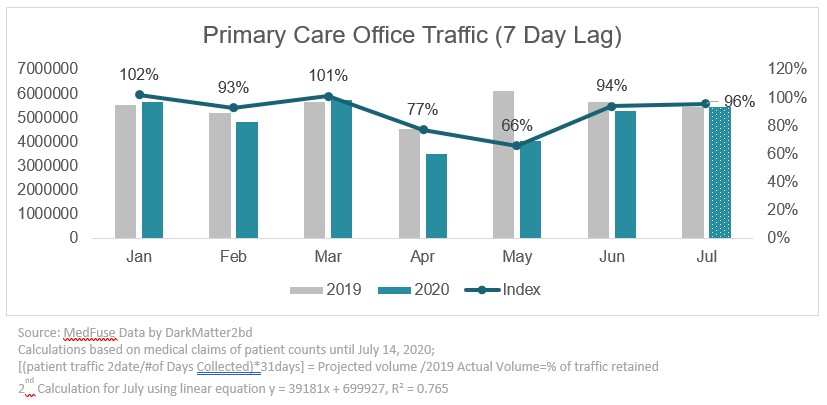
1. Patient visits are steadily increasing and now exceeding 2019.

While the impact on patient traffic was significant during the onset of COVID-19 in late March and April, since that time primary care office visits have steadily increased and returned to near normal ranges in June and July.

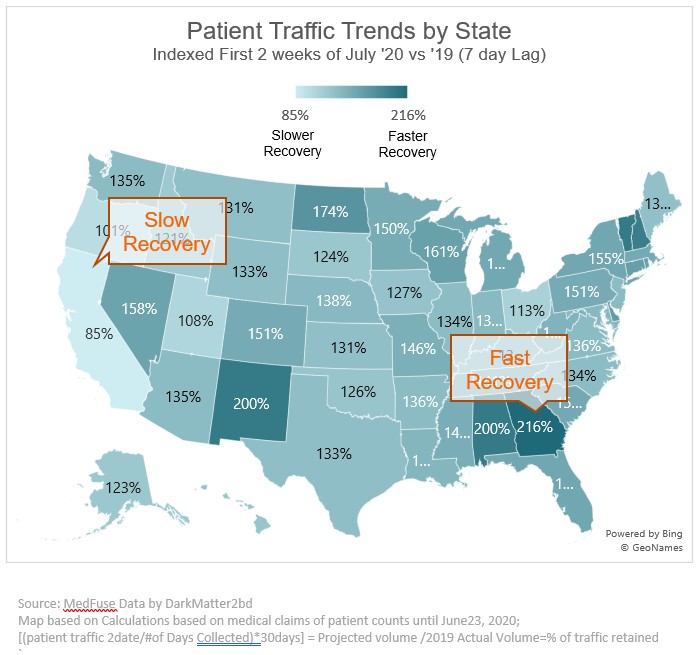
2. The second COVID surge is not impacting patient traffic in physician offices.

An additional look at trends across the country, using the same patient-level claims data, uncovers that primary care practices in most states have returned to their pre-COVID patient volumes (despite the second surge).

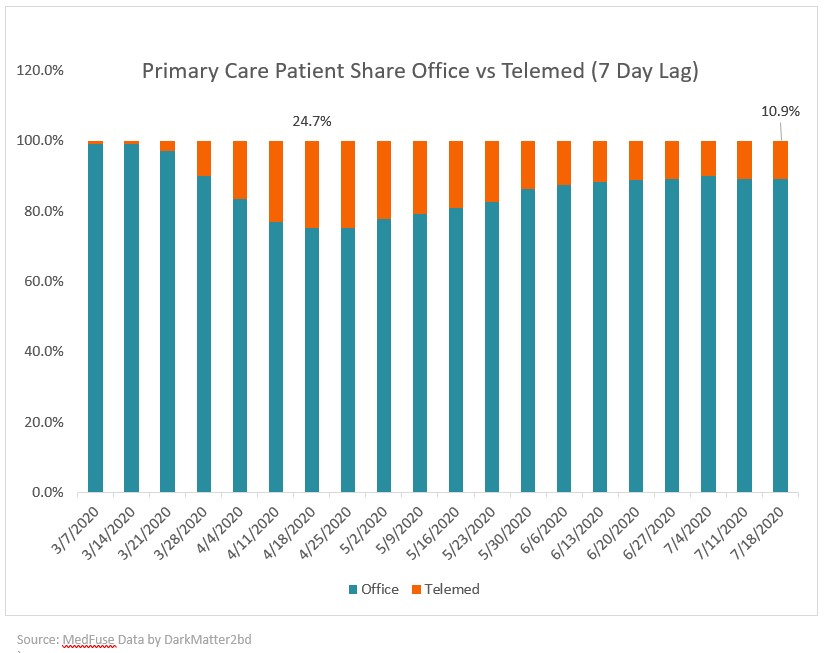
3. Telehealth visits are leveling off.

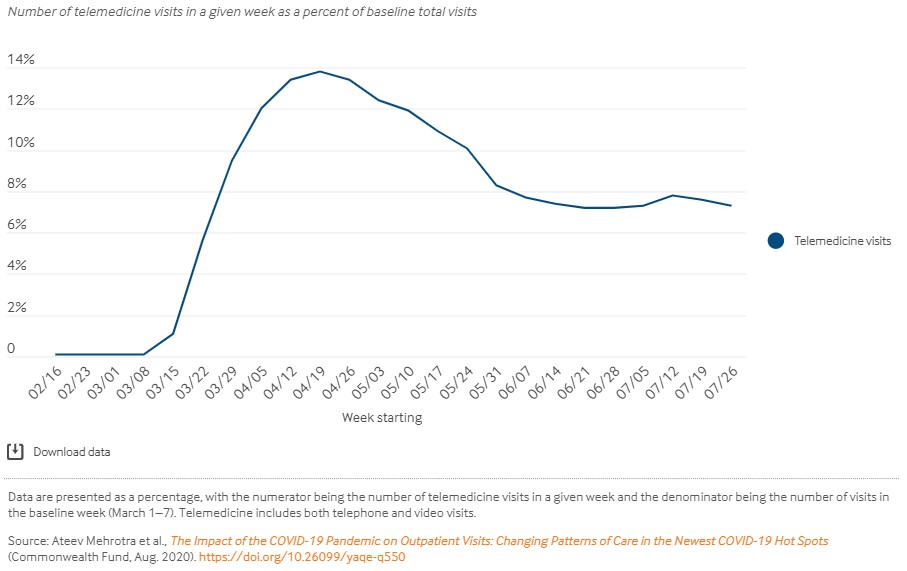
As more patients return to the doctor’s office, we see the percentage of telehealth visits now comprising approximately 10-11% of all primary care visits (compared to about 25% at the peak of COVID in mid-April). According to our recent consumer surveys, 72% of patients say they prefer in-person appointments.

Through our ongoing data collection, we hope to separate fact from fiction about patient care and COVID-19, and provide an ongoing benchmark of real insights straight from doctors and patients during this unprecedented time. We will continue to apply what we’ve learned to ensure we make every doctor-patient engagement better at all points of care.

Keep up to date on all of our latest research and insights by visiting our COVID-19 News of the Day blog.

Linda Ruschau


August 27, 2020 0

A record low price increase on branded drugs and changes in health insurance benefit design are just a few of the reasons that patients in the US are experiencing improved affordability for their medications, according to a new report from The IQVIA™ Institute for Human Data Science. Their research found that 71% of branded prescriptions have a final out-of-pocket cost of below $20, while just 3.6% of branded prescriptions have a cost above $125. The report, Medicine Spending and Affordability in the U.S.: Understanding Patient Costs for Medicines, discovered that “[a] rising number of prescriptions are now dispensed with a $0 payment by the patient, and now amount to 44% of all branded prescriptions in 2019, up from 36% in 2015.”

Additionally, the data found that branded prescriptions costing more than $125 largely affects those with commercial plans (44% of high-cost claims) or Medicare coverage (35% of high-cost claims). IQVIA did also find that “abandonment is higher at higher prescription cost levels, and those prescriptions may be underrepresented as those prescriptions might have been abandoned due to cost.” Of the 9% of branded and generic prescriptions that are abandoned: 5% are for medications of no cost, but 60% are when the medicine costs more than $500.

“Lower drug price growth and improvements in affordability to patients is a testament to the positive market dynamics of the American pricing system and the fact that manufacturers, health insurers and the intermediaries, such as wholesalers and benefits managers, have taken actions to reduce the burden of drug costs to patients,” said Murray Aitken, IQVIA senior vice president and executive director of the IQVIA Institute for Human Data Science, in the news release. The report examined the complexities of our current pricing system, hoping to “contribute to more transparency and understanding of the different levels of cost,” Aitken added.

admin


August 27, 2020 0

“Visits to physician offices and other health care practices, which had fallen 60 percent by early April, have now rebounded and plateaued at 10 percent below prepandemic levels,” found the latest wave of research from the Harvard University, Phreesia, and the Commonwealth Fund. In-office visits are still showing a decline, even among those states which saw a surge in cases during the June and July months. However, these declines are still smaller than that of the early days of the pandemic.

Several hot spots states – including early-opening ones such as Arizona, Florida, and Texas – recorded an increase in telemedicine visits, but only a slight decrease in overall visits. “Practices in these states appear to have maintained most of their visit volume by increasing telemedicine visits and creating new safety protocols for in-person visits.”

Telemedicine use peaked in mid-April. While it has shown a decline and its current adoption has plateaued, it is still being used at a “substantially higher rate than prior to the pandemic” the report notes.

The research continued to find a large difference in visit patterns between adults and children, with adults still outpacing children. Those aged 18-64 years old showed a -4% change in visits (the smallest percent change for the week starting 7/26/2020), while children ages 3-5 represented the largest percent change at -36%. Children ages 0-2 were tracked at -32%; ages 6-17 recorded a -17%; and those aged 65-74 and 75+ both came in with a -9% each in visits.

Initial data findings were published in April 2020, with this research partnership team providing monthly updates to track trends in outpatient office visits. Click here to view more of the findings – including what impacts insurance type has had on visit rebounds and the adoption of telemedicine by Federally Qualified Health Centers (FQHC) and non-FQHC.

admin


August 27, 2020 0

With the rapid use of telehealth resulting from the pandemic, the Centers for Medicare & Medicaid Services (CMS) released a new toolkit to help the Medicaid and Children’s Health Insurance Programs (CHIP) accelerate their adoption of telehealth coverage during this time. The toolkit is designed to walk states through identifying policies that they will need to address to facilitate virtual health services as well as what issues or obstacles they should be considering as they implement or expand their usage of telehealth.

As states navigate their virtual health needs and coverage policies, they need to review the patient populations that are eligible for these services, what coverage and reimbursement policies are or will be, and what special considerations may be needed for pediatric patients. States also need to evaluate whether a practitioner or provider can appropriately deliver care using virtual health. Are there any limitations or training needed for the delivery of such services? If the medical professional can provide care in this manner, issues such as eligibility, licensure, credentialing, and payments need to be factored in next. Additionally, technology requirements need to be considered as there are a variety of options that fall within the the virtual health category – video chat, audio-only communications, and remote patient monitoring to name a few.

“While not all patient interactions can be delivered through telehealth, our clinicians on the frontlines need every tool in their arsenal to fight this invisible enemy,” said CMS Administrator Seema Verma in the news release. “I'm urging states to use this toolkit to make sure our Medicaid patients, particularly our children, can continue to receive needed care from the safety of their homes.”

admin


August 26, 2020 0
The multiple sclerosis (MS) category is increasing its DTC use. Historically, low incidence diseases have used print and digital targeted efforts rather than mass. That has changed over the last few years as drugs for Hep C, HIV, lung cancer, and other lower incidence categories have gone mass media including television.

Approximately 1 million Americans have MS with 12,000 newly diagnosed cases each year. This is more prevalent in women. New treatments have been making this a more competitive marketplace. Novartis’ Mayzent and EMD Serono’s Mavenclad joined the mix in 2019. Genentech’s Ocrevus was approved in 2017. Genzyme’s Aubagio has been around since 2012.

The big spender is Ocrevus at about $100 million over the past 12 months. While MS has been advertised using limited print historically, Ocrevus has gone full multimedia, including a huge television investment. Ocrevus started its campaign in late 2019. They use print, TV, and display ads along the theme “Dear MS.” This is an MS patient telling the MS disease they found a new treatment to help them take back control.

Using a vignette approach, each patient profiled tells MS that they used to be controlled and defined by the disease. Now, they found Ocrevus and have more space to live their lives. The ad is impactful, using real sufferers and an arresting first visual. The 60-second ad is nicely balanced with 25 seconds of benefits, 25 seconds of fair balance, and 10 second wrap up stating MS does not get to control the sufferer, with the end line “MS can’t own us.” The print ad is themed the same as television with the “Dear MS” headline. It states Ocrevus is a 2x a year treatment in the headline.

Aubagio has done a good job with their print based campaign. With a lower budget than Ocrevus of about $18 million, they used a headline in a two-page spread that reads, “To Find A Way to Keep Moving Forward.” Above the headline is an explanatory smaller type saying “With Relapsing MS Your Goal Is.” I am a big fan of eye catching headlines in an easy to read font, on a background that makes the headline stand out. Using white lettering on blue background accomplishes that. Aubagio, also in a sub headline, states it is a once a day pill.That is important since some MS drugs require infusion.

What I also like about the Aubagio campaign is its consistency. They have used the same headline for the past two years. The only change has been the color of the background which seems to be rotating with the blue version. Both versions show a 30-something female jogging along which goes with the moving forward headline.

Mayzent has just started its consumer print campaign with a two-page spread. They are going for an emotional approach of a woman with a cane, pictured with her child. Their indication is for secondary progressive MS where there is a worsening condition.

Zeposia, an oral pill from Bristol Myers Squibb, was approved March 2020 so we can expect that to be added to the DTC mix likely in 2021. Numerous drugs in oral and infusion doses are in phase 3 trials so this category will remain active for DTC. What is increasingly clear is that most new brands believe DTC is an important part of their marketing strategy.
Bob Ehrlich, Chairman
DTC Perspectives, Inc.

Bob Ehrlich


August 19, 2020 0

There are a number of drug makers that do disease education ads. Those companies have a drug that treats the disease or have one about to be approved. Disease education ads make financial sense when a drug company has the only drug to treat the disease or are the dominant competitor. Most disease education ads are followed with a branded campaign when competition emerges or when the addition of a branded campaign can help increase patient requests.


Neurocrine Biosciences is a a San Diego based company that currently gets 97% of its revenue from one product called Ingrezza, a pill that helps reduce uncontrolled eye, mouth, and body movements in people taking medications for schizophrenia, bipolar disorder, and depression. Tardive Dyskinesia (TD) is the name of this disease. Ingrezza was approved in 2017.


Neurocrine decided in early 2019 to do a disease education campaign on television and digitally. The current campaign rotates three executions. The 60-second spots do a very good job introducing the disease with an actor stating the problem and an animation that explains where on the body the symptoms might occur. The campaign is called “Talk about TD.” The campaign has the difficult job of educating patients, families, and caregivers to understand Tardive Dyskinesia. I never heard of it until I saw the campaign.


TD is a disease that affects about 500,000 people. About 58% of patients taking anti-psychotic drugs were unaware those treatments can cause TD. Thus, the need for patient education. Ingrezza is a premium priced drug at about $300 a pill retail. The dose is once a day so the revenue potential for Neurocrine is up to around $9,000 a month per patient. Of course, they get less from payers who negotiate the formulary position. Neurocrine reports revenue of about $5,700 per month per patient.


The educational challenge here is threefold. First is to identify the symptoms of TD which can affect any part of the body, and a second is to get patients to understand that these movement symptoms are something you can treat. Third is to explain how to get more information on treatments. Each of these challenges is dealt with well in the campaign. The ads are visually interesting in how the scenes shift from actor to animation of the symptoms.


Disease education on heart disease, diabetes, or cancer is common place. The TD campaign spending is relatively high for a small company. MediaRadar reports the television spending at around $19 million since the launch. An additional $2 million was spent on digital. Based on reported sales, Ingrezza has done very well. In 2019, it did about $750 million. In 2020, it looks like the drug could top $1 billion. The ad campaign seems to generate a very good ROI given the growth in 2019 and anticipated growth in 2020.


The trend towards doing DTC for limited size categories continues with Ingrezza. In the past, categories of this size would have used highly targeted patient marketing programs. What makes DTC enticing is the revenue per patient, as a $21 million disease education investment would require only a few hundred new patients to be successful. Without having any inside Ingrezza data, I think this campaign exceeded that break-even level.

Bob Ehrlich, Chairman
DTC Perspectives, Inc.

Bob Ehrlich