Latest News


January 27, 2021 0

The Point of Care Communication Council, PoC3, updated its official guidance regarding Verification and Validation. The 2021 guidance provides three major changes:

  • the expansion of network audits to include a company's asset management system's internal control and procedures;
  • the volume of campaign audits required for certification will be based on annual campaign volume (not individual campaign spend);
  • the frequency of campaign audits has been changed to every six months.

Given the current industry and challenges faced by COVID-19, the POC3 Verification & Validation Committee decided to review the previous 2019 guidance to better reflect today's world and appropriately meet its needs. These new amendments also allowed PoC3 to create their own auditing and certification process for POC companies – available to both PoC3 member and non-member companies. PoC3 collaborates with the Alliance for Audited Media and BPA Worldwide to “validate network-related items including network size, network health and campaign performance,” stated the news release.

Certifications will be reviewed and disseminated on a first come, first served basis. On January 22, the first group of certifications was issued to member companies Phreesia, PatientPoint, Health Media Network, and CheckedUp, as well as non-member company Outcome Health.

“PatientPoint is generating monthly reports audited by AAM for every campaign running on our digital networks. This is an important milestone in our 30-year legacy of going above and beyond to deliver compelling results that marketers can trust,” said PatientPoint Founder and CEO Mike Collette in their news statement. “These automated reports resemble the dashboard reports sponsors receive when running an online digital campaign and can give sponsors the same level of confidence investing in Point of Care as in any other digital media channel.”

“From day one, Phreesia has been an industry leader, exemplifying the importance of transparency and the integrity of our data,” said David Linetsky, Phreesia’s Senior Vice President of Life Sciences and a PoC3 board member in their press announcement. “We appreciate AAM’s diligence in validating the measures of trust and accountability we value so highly, and we thank PoC3 for recognizing our continued commitment to delivering the highest level of quality to our partners.”

AAM audited PatientPoint and Phreesia; BPA Worldwide audited Health Media Network, CheckedUp, and Outcome Health.

“This is an exciting day for the POC3 organization, and for the companies that have achieved these initial certification seals,” Richard Murphy, Executive Vice President, BPA Worldwide, told DTC Perspectives. “Thank you to the volunteer members of the POC3 organization who worked tirelessly to create and update these guidelines.  And congratulations to CheckedUp, Health Media Network, Patient Point, Phreesia, and Outcome Health on this accomplishment.  These companies made significant investments in their organizations to obtain this certification.  I am glad to see their dedication, commitment and efforts recognized.”

The Committee will continue to evaluate and update guidance as needed based on “industry evolution and feedback.”

Editor's note: This post has been updated to correct the companies certified as per our article title. The article has been updated to add in a quote from BPA Worldwide as well.

admin


December 9, 2020 0

This column is not about a DTC advertising campaign that already exists. Instead, it is about what should happen after the Covid-19 vaccine is approved. Unfortunately, too many Americans are skeptical of a vaccine. 

Trump clearly showed that he was not medically accurate in many of his Covid related treatment statements. His vaccine program was doubted by some for being an election booster if it could be fast tracked and approved before the election. His Democrat opponents cast doubt on any vaccine developed under his watch. Several states said they would independently review vaccine data even after the FDA approved it.

Now that Pfizer and Moderna have announced the phenomenal results, the hard work begins after approval in terms of timely distribution and getting enough Americans to take it. DTC must play a role in convincing Americans the vaccine is the solution to this worldwide nightmare. 

The conundrum is how much should a drug maker spend on DTC when they can sell all they make. Should the front runners Pfizer and Moderna run DTC even though they don’t need to create demand? The answer is yes. This is a case where all drug makers of vaccine have an ethical responsibility to make Americans want to get this vaccine as soon as it is available to them. We know that vaccine makers have done a good job creating ads for their other vaccines. The DTC goal is reassurance that the vaccine is safe and will end the pandemic.

It will be interesting to see the creative on Covid vaccines. The challenges are to first ensure that safety concerns are dealt with as safety data is only over a short period. We don’t want Americans to hold back and let their friends and neighbors go first. The second challenge is the two shots needed. Drug makers are going to have to convince us to get shots a month apart. Third, is the concern that the shot may only last months not years. 

Of course, we can expect that drug makers will see massive government investment in consumer outreach. Federal and state health departments will spend to get the message out. Employers will be adding their own efforts to get employees vaccinated. So, my estimate is we will see over $100 million invested in vaccine DTC. Money should not be a limitation given the Covid pandemic has cost this country hundreds of billions in economic losses. We can hope government will be setting aggressive targets to raise the percent of those vaccinated. Experts think we need at least 70% of the population vaccinated to nearly eradicate Covid. 

Particularly important is convincing African-Americans to take the vaccine. According to Pew Research only 42% said they are definitely or probably going to get vaccinated. The number among the total population is 60%, and among Hispanics it is 63%. All these are under the estimated 70% it will take to get herd immunity. DTC is one of the fastest ways to get Americans convinced the vaccine is necessary. All constituencies, public and private, need to invest in a major DTC effort and accelerate adoption.

Bob Ehrlich,
Chairman
DTC Perspectives, Inc.

Bob Ehrlich


November 18, 2020 0

Early this morning, Pfizer and BioNTech issued a news release stating that the Phase 3 study of their MRNA-based COVID-19 vaccine met all primary efficacy endpoints. “Analysis of the data indicates a vaccine efficacy rate of 95% (p<0.0001) in participants without prior SARS-CoV-2 infection (first primary objective) and also in participants with and without prior SARS-CoV-2 infection (second primary objective), in each case measured from 7 days after the second dose,” stated the announcement. For those older than 65 years of age, the efficacy is reportedly over 94%.

No serious safety concerns have been reported by the Data Monitoring Committee for the study. According to the findings, “most solicited adverse events resolv[e] shortly after vaccination” – with 3.8% experiencing fatigue after their first or second dose and 2% recording headaches after their second dose. The FDA-required safety milestone for an EUA (Emergency Use Authorization) has been met, and thus, the two companies plan to submit an EUA request to the agency in the coming days.

Dr. Albert Bourla, Pfizer Chairman and CEO, issued a statement as per the news release: “The study results mark an important step in this historic eight-month journey to bring forward a vaccine capable of helping to end this devastating pandemic. We continue to move at the speed of science to compile all the data collected thus far and share with regulators around the world. With hundreds of thousands of people around the globe infected every day, we urgently need to get a safe and effective vaccine to the world.”

Expressing a concurring sentiment, Ugur Sahin, M.D., CEO and Co-founder of BioNTech stated: “We are grateful that the first global trial to reach the final efficacy analysis mark indicates that a high rate of protection against COVID-19 can be achieved very fast after the first 30 µg dose, underscoring the power of BNT162 in providing early protection. These achievements highlight the potential of mRNA as a new drug class. Our objective from the very beginning was to design and develop a vaccine that would generate rapid and potent protection against COVID-19 with a benign tolerability profile across all ages. We believe we have achieved this with our vaccine candidate BNT162b2 in all age groups studied so far and look forward to sharing further details with the regulatory authorities. I want to thank all the devoted women and men who contributed to this historically unprecedented achievement. We will continue to work with our partners and governments around the world to prepare for global distribution in 2020 and beyond.”

The news release added that Pfizer and BioNTech “expect to produce globally up to 50 million vaccine doses in 2020 and up to 1.3 billion doses by the end of 2021.”

admin


November 18, 2020 0

Sponsored Content

Over 200 days into the COVID-19 pandemic, people around the country and the world are, at the very least, becoming normalized to the new normal. Kids are back in school, sports have returned and, depending on where you live, some restrictions may have been relaxed.

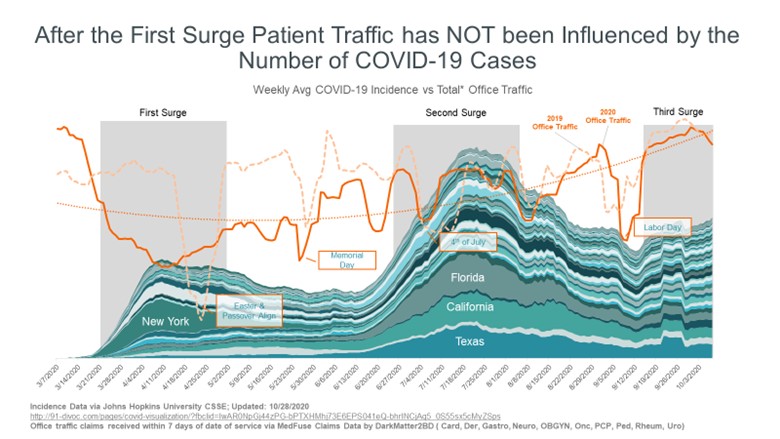
This more relaxed approach to life possibly in combination with the cooler weather is resulting in a third surge in the number of COVID-19 cases in the United States. According to John Hopkins data, the U.S. one-weekly daily average of new cases is 101.8K as of Nov. 8, which is an increase of +114% from Oct. 8. This uptick prompts the obvious question of how will patient traffic within the doctor’s office be impacted?

Contrary to some expectations, the data suggest patient traffic is not affected by increasing incidence of COVID. Except for the late-March / mid-April timeframe, patient traffic and COVID numbers have moved independently of each other, as can be seen by the graph below. Patient traffic has steadily increased since mid-April even as the number of new COVID cases have fluctuated. People are again comfortable going about their lives and taking care of their daily needs.

Based on the data trend and the positive news regarding the success of vaccine trials, the outlook for patient traffic and treatment going into 2021 is positive. We can expect patient office traffic across most specialties and disease states to remain within normal seasonal levels. The possible exception to this will be with acute illnesses primarily within primary care and pediatrics as masks and social distancing may result in a milder cold and flu season.

For marketers, this means as much as things have changed, the future is looking very similar to what it did pre-COVID. As we are still seeing signs that practices are catching up on some of the delayed care from earlier this year, it is probably more important than ever that marketing plans are being made at scale.

At PatientPoint, we are continuing to work with our clients to access our market insights based on our data assets and analytical capabilities. Using these insights, we are able to better help brands plan, execute, and optimize in order to maximize the impact of their point-of-care campaigns.

admin


November 18, 2020 0

Sponsored Content

There’s a lot of brand managers who prioritize patient engagement, but not many who really understand how patient ready their brand is. Let’s try and clarify what that means.

These days, brand marketers widely acknowledge how important it is to have a plan for engaging their patient communities. However, drawing up such a plan presents some challenges: Professionals need to reconcile competing goals, from financial constraints, to privacy requirements to legal, regulatory, and compliance considerations. Overcoming these hurdles requires a systematic situation analysis. Taking the time to do this will offer an overview of which resources need to be obtained, which are already available, and which can be improved for enhanced patient centricity. The result will be a foundational guide that helps you make strategic decisions based on the environment today.

While there may be tempting shortcuts, doing it right is an opportunity to build solid relationships with the patients your brand serves—a valuable asset for any brand. To build such a relationship, brands need to make themselves patient ready. Why is that so, and what does it even mean, to be “patient ready?”

Patient ready brands engage with patients in meaningful ways, with the right tone and content that’s authentic and in sync with people’s own experiences. Such a brand makes an effort to identify needs in the community and to find out whether others are already addressing those needs and in what way. A patient ready brand will then take measure of internal capabilities and resources, and match those to unmet needs still existing. Thus, we create brand value through patient value by communicating to a receptive audience in ways that resonate.

All good and well, but how do we achieve this gold standard when facing educated and savvy patients? That really depends on three dimensions that circumscribe what it means to be patient ready:

Dimension 1: Understanding patient needs

Fundamentally, understanding the needs of patients and caregivers is at the heart of any patient ready assessment. At Snow, our proximity to many patient communities uniquely positions us to recognize and understand the importance of patients’ ever-changing needs. Our State of the Patient Study spans many different disease states and conditions to track the trends and behaviors across the patient journey. It also focuses on the experience gaps and issues with services and products currently available to them through pharma brands or other stakeholders. The community has concerns, expectations, and hopes—and research that focuses directly on your disease category, quantitatively and through first-hand interactions with patients themselves, can capture all of that. Insights such as these can guide a brand towards becoming a trusted and credible partner to the community.

Dimension 2: Understanding competitive benchmarks

Building on top of this foundation of thoroughly understanding the patient community, the next logical step is to explore the competitive landscape: What’s currently working, what isn’t? Which activities match expectations, which ones fall short? What’s the general sentiment towards competitor products and services? By finding answers to questions like these, we can set the benchmark: This is what it will take to keep up and to stand out among the competitors. It’s not about imitating all their good work while avoiding their mistakes. It’s about finding your brand’s unique role in supporting patients throughout their journey. It’s about positioning your initiatives in such a way they’re meeting a need, so you don’t have to create demand. Because the demand is already there, and you’ll be armed with evidence to prove it.

Dimension 3: Understanding resource requirements and availability

At the risk of sounding like a broken record: pharmaceuticals are highly regulated. Anyone engaged in marketing, especially directly with patients, must have a thorough understanding of the legal and regulatory rules that apply. They must also work alongside numerous other stakeholders, which means process, training, policy, and procedure. Respecting and working within this reality is the only way you’ll be able to execute on any patient engagement plans. No one person or department can bring all the needed parts to the table: Partnering with experts who have specialized knowledge is the most effective way to mitigate risks and finding solutions that are known to work.

How to Get There: The Snow Patient Ready Model

Exploring these three dimensions is a tall task. Fortunately, Snow can help you zero in on those answers. Our Patient Ready Model can help you understand and evaluate your brand’s needs in order to design and deliver strategic and compliant patient engagement solutions.

The Patient Ready Model is powered by data that sheds light on all three dimensions of patient engagement:

  1. Insights: Understanding patient needs
  2. Benchmarks: Understanding the competitive landscape
  3. Resources: Determining specialized resources and requirements

Being familiar with your brand’s performance and requirements along each of these axes is valuable in its own right. Together, they paint the full picture of how your brand can better engage with patients. And Snow is uniquely positioned to help you pull that portrait together. We’ve spent decades working with thousands of patients across a spectrum of categories, so we have the experience, tools, and data to help you become truly patient ready. Once that happens, the path to building positive and sustainable patient relationships opens up. And it is relationships such as these that will ultimately make or break brand success.

Are you ready to find out if your brand is patient ready? Go to AreYouPatientReady.com and follow the directions to take a short survey.

Molly Scarbrough


November 16, 2020 0

Sponsored Content

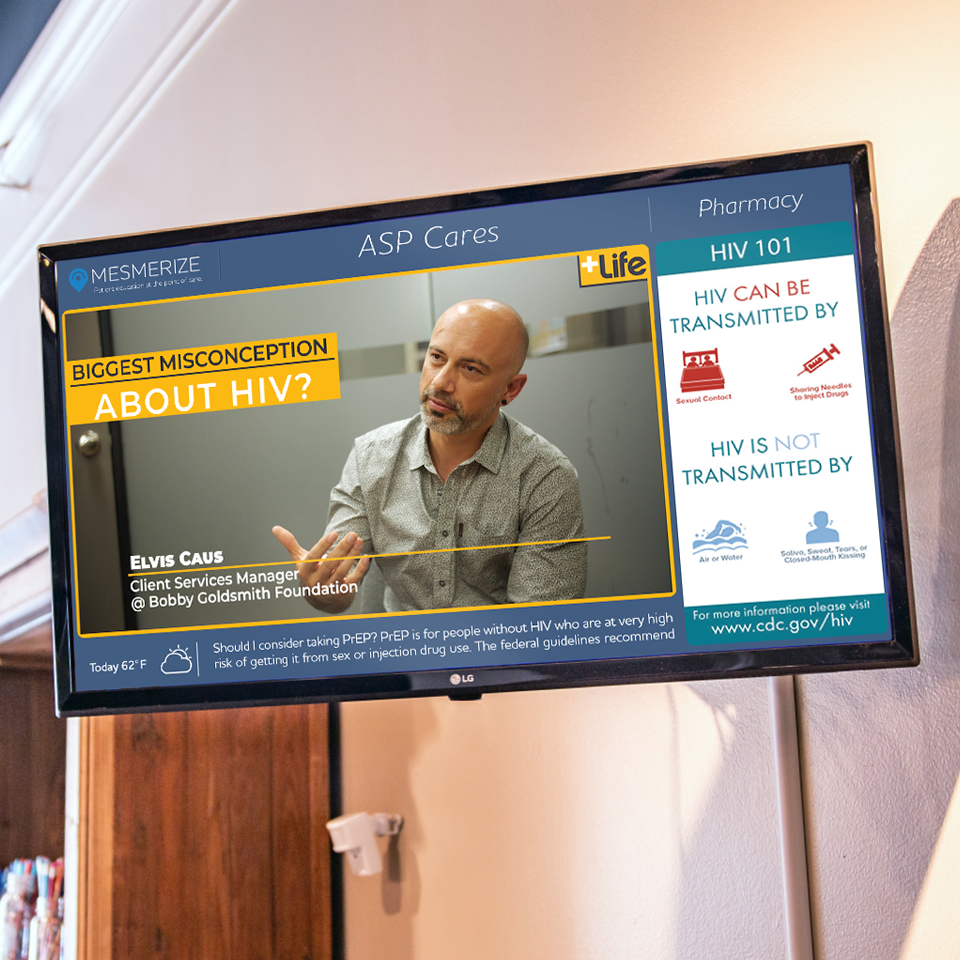
About 29 million people in the United States rely on community-based organizations (CBOs), which provide care to low-income and uninsured patients, often living with infectious disease including HIV/AIDS and Hepatitis C [9].  Since the onset of the HIV epidemic, community-based organizations have proved vital to the United States’ HIV prevention efforts, delivering the most effective HIV prevention strategies to those who need them the most and are at the greatest risk of infection [1].  As the U.S. continues to battle COVID-19, community-based organizations are facing unprecedented demands to combat COVID-19 while continuing to deliver essential HIV prevention and treatment services [2]. 

According to Kelsey Louie, GMHC, CEO:

“COVID-19 created unprecedented challenges for GMHC in ensuring that we could sustain our services for our clients during the pandemic.  We pivoted many of our programs to remote delivery using video conferencing and implemented at-home HIV testing so these vital services could continue to be accessible to our communities.  The new technologies that we have embraced during COVID-19 including telehealth and Mesmerize’s patient education platform, will continue to be vital parts of our programming well after the pandemic ends.”  

Many CBOs shared case studies demonstrating the impact of COVID-19 on their organizations at the 2020 United States Conference on HIV/AIDS (USCHA).  Here are 5 ways COVID-19 affects community-based organizations and their efforts to end the country’s HIV epidemic:

1. Testing is the only way to know if you have HIV.  If everyone knew their status, we could protect ourselves and each other, bringing us closer to ending the epidemic.  As a result of COVID-19, however, community-based organizations were forced to think outside of the box to maintain client access to essential HIV prevention and care services including HIV, Hepatitis C (HCV) and STI testing.

Community-based organizations that have been providing long-standing and proven-effective HIV, HCV and STI testing to communities at risk have had to change their standard testing procedures to continue providing these vital services while also addressing COVID-19 [6].  As a result of COVID-19, most CBOs were forced to change their traditional methods of care to continue in-person appointments while prioritizing the safety of their staff and clients and preventing the transmission of COVID-19.  Changes to care included pre-screening prior to scheduling appointments, integrating HIV screening services into existing workflows, designating exam rooms to patients who are known to be at risk of COVID-19, and disinfecting all exams rooms after each appointment [5].  While there are options for at-home HIV testing, STI testing requiring bloodwork must be done by a practitioner on-site.  CBO staff are working hard to ensure that newly diagnosed patients are immediately linked to treatment and existing patients are adhering to their medications, while simultaneously working to prevent an already vulnerable population from getting COVID-19.

2. Community-based organizations are working to address and integrate COVID-19 with their existing HIV, Hepatitis, and STI care and prevention programs.  Their deep community roots and relationships make them uniquely equipped to handle the transition from protecting vulnerable populations from infectious disease to include COVID-19 as well.

CBO staff have reported adding COVID-19 work to their scope of usual services and are calling for additional resources to address emerging COVID-19 related needs among their clients [6]. Most organizations reported some level of involvement in COVID-19 related activities, including educating clients about COVID-19 risks and protective measures, conducting COVID-19 testing and contact tracing, and providing counseling and care for clients with COVID-19 [7].  Compared to the traditional doctor’s office, community-based organizations have deep community roots as well as strong expertise in addressing social supports such as mental and personal care within the communities they serve [10].  This makes CBOs uniquely positioned to transition their staff’s expertise from sexual health to general health and makes them well equipped to incorporate questions pertaining to COVID-19 concerns including mental health and wellness, social isolation and current events, into previously routine testing appointments [8].  Some organizations still reported the need for additional staff training and educational materials on COVID-19 to distribute to clients, which Mesmerize continues to provide to these organizations in conjunction with the Center for Disease Control (CDC) [7].

3. Community-based organizations have adopted and executed new measures and strategies to address COVID-19 related needs among their clients.

Many community-based organizations have adopted new strategies to continue providing quality service to the communities they serve.  New strategies include digitizing client forms and medical records, as well as utilizing virtual care as an additional means for providing health education and counseling [6].  While the pace at which these organizations were able to execute such new strategies is remarkable, many reported needing additional resources to properly implement these strategies, including technical assistance to integrate COVID-19 within HIV, HCV and STI services, technology training, and structured clinical support for staff [7].  Additionally, while technology has been able to solve for some of the problems facing CBOs, there are many services these organizations provide to the community that must be addressed in-person, including STI testing, affordable housing, and meal services.  In an effort to continue providing these essential in-person services, CBOs have had to purchase additional PPE for their staff, as well as hand sanitizer and masks for community distribution, requiring significant investment from these organizations [7].

4. CBOs have a history of facing financial challenges, with many organizations having few or no financial reserves, running persistent operating deficits, and having a lack of access to capital for investment in resources and technology [8].  Community based organizations have incurred immediate expenses connected to the COVID-19 epidemic [7].

Many community-based organizations have limited or no financial reserves, making them extremely vulnerable to fluctuations in expected revenue and cost levels [8].  COVID-19 has resulted in immediate expenses for CBOs, including the implementation of safety measures, infrastructure enhancement, and changes to their standard provision of services [7].  While many organizations were able to quickly and creatively implement new methods to continue providing quality HIV, HCV and STI care throughout the COVID-19 epidemic, these rapid enhancements require significant investment from CBOs, including investments in Electronic Health Records (EHR), computers, and hotspots [7].  Many organizations are tapping into their funds amidst the cancelling of fundraising events [7].  Even those with unrestricted funds are concerned about the long-term sustainability of implementing safety and procedural measures to address COVID-19 while continuing to provide foundational HIV and Hepatitis prevention and care services [6].  CBOs present at USCHA also expressed concern over their ability to strategically separate funds so that money reserved for HIV and Hepatitis prevention and care is not spent fighting COVID-19 [7].  Organizations are hopeful that the next round of government funding will provide valuable support for CBOs to continue providing these valuable services, while also offsetting some of the losses they’ve incurred fighting COVID-19, and better preparing them for the future.

5. While adopting new methods and strategies to simultaneously fight both the AIDS and COVID-19 epidemics has been costly, many CBOs believe these new practices are for the better of the organization and will be adopted long-term with lasting impact.

Many CBOs invested in technology upgrades, provision of virtual services, and HIV/HVC/STI program adaptation to continue providing essential services to their clients while simultaneously navigating new measures in place to address COVID-19.  While COVID-19 has created unprecedented and numerous challenges to community-based organizations, The Stronger Together Partnership (comprised of The Black AIDS Institute, San Francisco Community Health Center and Latino Commission on AIDS) applauds these organizations for their ability to “take on the challenges by implementing team approaches to problem solving, embracing technological upgrades, and fostering innovation.  Many leadership staff have identified lessons learned from this pandemic and are doing their best to see this as an opportunity to develop new strategies and expand their service portfolio” [6].  Many organizations also reported that the new strategies and measures put in place to respond to COVID-19 will prepare them for emergency responses in the future, allowing them to better serve their community and be prepared for whatever may impact them next.

Sources

[1] CDC NCHHSTP. “CDC Awards $216 Million to Community-Based Organizations to Deliver the Most-Effective HIV Prevention Strategies to Those in Greatest Need.” HIV.gov, 1 July 2015, www.hiv.gov/blog/cdc-awards-216-million-to-community-based-organizations-to-deliver-the-most-effective-hiv-prevention-strategies-to-those-in-greatest-need.

[2] “COVID-19 and HIV.” Centers for Disease Control and Prevention, Centers for Disease Control and Prevention, 10 Aug. 2020, www.cdc.gov/hiv/covid-19/index.html.

[3] “The COVID-19 Pandemic's Impact of HIV and Hepatitis Programs.” NASTAD, NASTAD, 12 Aug. 2020, www.nastad.org/sites/default/files/resources/docs/covid19-impact-hiv-hepatitis-programs.pdf.

[4] Dreyfus, Susan, and Tracy Wareing Evans. “The Importance of Community-Based Organizations in Human Services.” Independent Sector, Independent Sector, 23 Jan. 2018, independentsector.org/news-post/the-importance-of-community-based-organizations-in-human-services/.

[5] Hadayia, Jennifer. “US Conference on HIV/AIDS.” Legacy Community Health, Expansion/Integration: HIV Testing & PrEP During a Pandemic, 19 Oct. 2020, vevents.virtualtradeshowhosting.com/event/USConferenceonHIVAIDS/en-us#!/Workshops/n820161. .

[6] Hucks-Ortiz, Christopher, et al. “COVID-19 National Rapid Assessment Preliminary Report: The Institutional Impact of COVID-19 on Organizations of Color Providing HIV/STI/HCV Services to People of Color across the U.S., Puerto Rico, U.S. Virgin Island, and Affiliated Pacific Island Jurisdictions.” Institute for Latinx Health Equity, 2020, ilhe.org/stronger-together-partnership-c19-national-rapid-assessment-preliminary-report/.

[7] Hucks-Ortiz, Christopher, et al. “US Conference on HIV/AIDS.” Stronger Together Partnership (STP), Impact of COVID-19 on Organizations of Color Providing HIV/STI/HCV Services, 19 Oct. 2020, vevents.virtualtradeshowhosting.com/event/USConferenceonHIVAIDS/en-us#!/Workshops/n820161.

[8] Shaw, John, et al. “US Conference on HIV/AIDS.” The Project of Primary Healthcare, A New Normal: HIV/HCV/STI Testing during Covid-19, 20 Oct. 2020, vevents.virtualtradeshowhosting.com/event/USConferenceonHIVAIDS/en-us#!/Workshops/n820161.

[9] Stone, Will. “Under Financial Strain, Community Health Centers Ramp Up For Coronavirus Response.” NPR, NPR, 24 Mar. 2020, www.npr.org/sections/health-shots/2020/03/24/821027067/under-financial-strain-community-health-centers-ramp-up-for-coronavirus-response.

[10] Super, Nora Mary Kaschak Elizabeth, et al. “Health Care And Community-Based Organizations Have Finally Begun Partnering To Integrate Health And Long-Term Care: Health Affairs Blog.” Health Affairs, 2 Feb. 2018, www.healthaffairs.org/do/10.1377/hblog20180130.620899/full/.

Samantha Brown


November 16, 2020 0

In mid-October, the latest wave of research tracking COVID's impact on outpatient visits was published by Commonwealth Fund, Harvard, and Phreesia. The latest data found that overall outpatient care visits in the prior month have finally returned to prepandemic levels, after dropping nearly 60% during the spring. (This fifth wave data set tracked trends through October 10th.) Not only did overall visit counts per week return to normal levels, but they even “slightly exceed” pre-COVID counts. But, as researchers noted, “there is considerable variation by patient age, geographic area, clinical specialty, and insurance coverage.”

While all age groups are on an upward trajectory again since the spring weeks, “visits for younger children remain substantially below the prepandemic baseline,” noted the report. Those aged 6 years or older all exceed prepandemic levels (6% above baseline for ages 6-17; 4% for ages 18-64; 5% for ages 65-74; 4% for ages 75+). Children ages 0-2 years are recording at 18% below baseline and ages 3-5 are coming in at 10% below baseline.

Weekly visits to dermatologist offices and adult primary care appointments are showing the highest level of rebounds, coming in at 17% and 13% above baseline, respectively. Areas such as OBGYN and Oncology are even with baseline. While pulmonology, otolaryngology, and behavioral health visits each track well below baseline at -20%, -17%, and -14%, respectively.

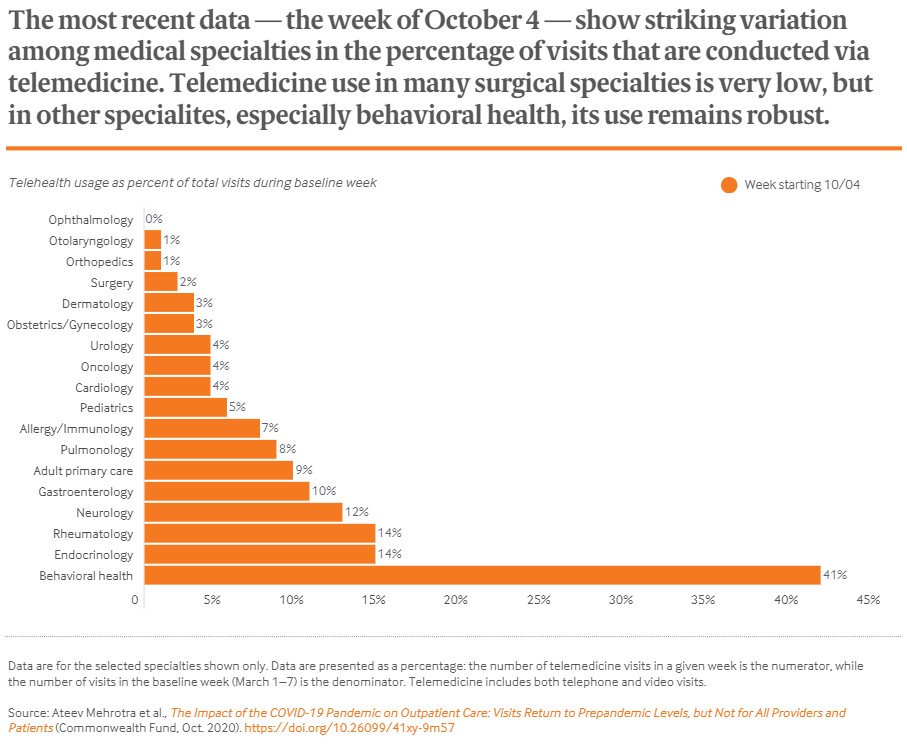
The researchers also detailed that while “telemedicine use has slowly but steadily declined” after peaking in April, its usage is still “well above the prepandemic baseline of very few telemedicine visits.” The use of telehealth varies depending on the medical specialties: areas such as surgical record low level usage (2% of total visits), but behavioral health outpaces other areas significantly (41% of total visits). Telemedicine's implementation does vary by provider organization as well. For example, “organizations of six or more clinicians use more telemedicine than practices of one to five.” Additionally, the report finds that approximately 32% of organizations “never adopted [it] at all”. Those that did, however, have seen their use of it decrease to Minimal usage in the fall after Heavy or Moderate usage in the spring.

admin


October 29, 2020 0

A very interesting campaign from Abbott has launched that promotes its wearable technology to monitor symptoms of heart disease and blood glucose levels. These are not disease education ads in the traditional sense. Nor are they the common corporate ads promoting their laboratory research. This campaign is more of a plug for technologies that Abbott developed to change how diseases are monitored.

The theme of the television campaign is that you don’t wait for life, you live it. The idea is that new technologies to monitor disease allow people to go on with the moments of life. The glucose monitoring execution shows children playing with their siblings and mom. After about 20 seconds, we see one child wearing a glucose monitor device on her arm. Then the announcer identifies the Abbott glucose monitor which he says is always on so you don’t wait for life, you live it. 

In the second ad from this campaign, we see a man coming home to a dog apparently newly adopted, and then we see him later in scenes with his new dog. In this case, Abbott is promoting a small implantable heart monitoring device. Like with the glucose monitor ad, the announcer says the heart monitor technology allows you to live life.
The purpose of these ads is not to sell the technology to patients but to promote Abbott as a corporate leader in diagnostic technology. We have all heard about Abbott being active in developing the 15 minute Covid test. These spots seem to be designed to show Abbott is a leader across many disease states in diagnostic technology.

The campaign is an interesting take on corporate ads. We see consumers shown benefiting from the technology by making it easier to live life to its fullest. Abbott’s goal appears to be raising its consumer and investor profile as an innovative diagnostic company.
Abbott is also running print ads with the headline “Life. To the Fullest.” These are running in business publications like ForbesBloomberg, and Fortune, which discuss the rapid Covid test as well as the glucose monitor in a separate ad seen in The Economist
Covid has raised the profile of Abbott through its widely publicized rapid test and the company also wanted to promote its other innovations to investors and influencers. The campaign is well done as it is visually interesting in both television and print. At a time where diagnostics is taking an important role for most Americans, the Abbott campaign is well-timed and highly relevant.

Bob Ehrlich
Chairman
DTC Perspectives, Inc.

Bob Ehrlich


October 15, 2020 0

As a marketing channel, the pharmacy turned challenges into opportunities for Rx brands

Pharmacies stepped up to help consumers through the public health crisis. And consumers responded by stepping into pharmacies. That dynamic has been an important part of getting many communities through an unprecedented challenge. And it has also helped pharma marketers reach patients in healthcare settings and generate positive ROI in several therapeutic categories at a time when few other businesses could operate in near-normal conditions.

Pharmacy in 2020: reliable, essential, more valuable than ever

The stay-at-home orders from COVID-19 response nationwide interrupted many typical doctor-patient relationships as access to clinics and hospitals was curtailed or discouraged for non-emergency, nonessential concerns and public transportation was interrupted. So pharmacies became an even more natural and logical healthcare destination.

And pharmacies leaned into that responsibility. As CVS CEO Larry Merlo said in the company’s second quarter earnings report, “The environment surrounding COVID-19 is accelerating our transformation, giving us new opportunities to demonstrate the power of our integrated offerings and the ability to deliver care to consumers in the community, in the home and in the palm of their hand which has never been more important.”

Pharmacies opened thousands of on-site COVID-19 testing centers and became de facto leaders in transmission reduction for retail stores. In concert with the Department of Health and Human Services, pharmacies expanded vaccine services by broadening the range of vaccinations approved for administration by a trained pharmacist. In hard-hit communities, pharmacies stepped up their telemedicine and delivery options, even launching drone services to minimize contact and spread. Some locations even opened customers’ eyes for the first time to the full scope of services when they applied their compounding skills to make hand sanitizer during shortages.

Stay-at-home’s impact on the pharmacy channel

Look past the headline items when evaluating the story of patient outreach in the pharmacy channel. Visits to pharmacies were undeniably down at the peak of stay-at-home orders. That resulted in a short term impediment to campaign lift and ROI.

Doing well in a tough time

Yet even during the periods of curtailed movement, pharma marketers were reaching patients in a relevant setting and an appropriate mindset. InStep Health’s media programs in 2Q 2020 operated mostly on-plan and on-schedule, even as stay-home orders were in their fullest force in most markets. Consumers still saw appropriate messaging in categories including eczema, type 2 diabetes, dry eye, and HIV. And despite the challenging operating environment, those messages were seen and acted on.

Over this period, our Media Display program continued to deliver positive results, with an average lift in total prescriptions of over 5%1 and ROIs greater than 4:12 across several therapeutic categories. Those results reinforce the pharmacy’s strength and viability as a marketing channel, even at a time when people are focused on the barest essentials.

A resilient rebound

Many of the effects of stay-at-home on pharmacy performance were short lived. Even when overall visits to pharmacies and general outlets were flat or trending down, visits relevant to pharma marketers were outperforming industry averages. As measured by IRI reporting3, while total non-edible (CPG) trips decreased to an index of 84 at their lowest point over the course of the stay-at-home period, trips for non-edible items, including health products, trended 11% higher during the same timeframe.

Basket sizes have climbed as well. So although hard-hit areas did show a drop in visits and for pharma marketing program performance, we also saw compelling data showing that consumers have pent-up demands and look for opportunities to return and shop.

New prescription volumes declined significantly, and the so-far lower propensity for telehealth visits to generate new prescriptions has slowed recovery in new scripts. But volumes have been steadily climbing since late spring 2020. At the same time, patient confidence as measured by HealthVerity quickly neared pre-pandemic levels in summer after bottoming out in late April.

Industry data analysis published on drugchannels.net found that in-store visits for refills, which account for the vast majority of visits, have nearly rebounded to pre-pandemic levels after spiking early in the stay-at-home order period and remaining depressed in spring. And concerns that the pandemic would send more customers to mail-order remain unfounded, as dispensing growth through both mail and retail channels is virtually identical year-to-date through mid-August.

What hasn’t changed

The key strengths of the pharmacy channel remain intact. So do the fundamental principles of a strong in-pharmacy marketing program.

Measurement needs to be governed by consistent standards, including the use of test and control groups for matched panel analysis. Campaign performance should also take into account when the program ran: pre-COVID-19, during stay-at-home, or post-restriction periods. Understanding differences in performance between geographies will also be more relevant than ever.

Partnerships already guided by sound measurement and long-term analysis will find it easier to incorporate COVID-19 adjustments into both evaluating campaign performance and future campaign planning. COVID-19 and related responses will undoubtedly continue to affect consumer behavior, pharmacy visits, and doctor access for a period of time. Sticking with careful, detailed analysis will reduce risk for future campaigns by providing a solid base for planning and decision making.

Most of all, what hasn’t changed is that the pharmacy is solidly positioned at the front line of community healthcare. Even as pharmacies adapt to changing needs by expanding delivery services and promoting telehealth options, the local pharmacy remains a pillar of in-person healthcare delivery. As healthcare services return to normal capacity and delivery channels continue to evolve, the pharmacy will be more relevant than ever.

Instead of speaking for the pharmacy, we’ll leave the last word to Walgreens Boots Alliance co-COO Alex Gourlay. “We’ll be relied upon in this new world to get medications and products to customers faster because of the proximity of our brick-and-mortar locations. Flexibility in supply chains and among wholesalers and delivery partners will become critical,“ he wrote in Chain Drug Review. “What won’t change? The heart of the retail pharmacy.”


InStep Health is a continuum of connections. We place Rx, OTC, and CPG brands at the center of care, wherever consumers go. Designed for the individual experience (iX), our platform reaches patients when they interact with healthcare providers or pharmacists, reaches healthcare providers and pharmacists so they’re up to date on the best possible solutions for their patients, and uses best-in-class data insights and technology to focus when and where your messages will have the most impact.


Kathleen Bonetti
EVP Marketing
Kathleen.bonetti@instephealthmedia.com

Rob Blazek
SVP Networks and Analytics
Rob.blazek@instephealthmedia.com

Sources:

1. Matched-panel research conducted by Retail Intelligence Inc. for InStep Health Media Display programs executed April – June 2020

2. Patient Value ROI calculated using script lift and client-supplied or RED BOOK™ pricing data

3. IRI Consumer Network™ Panel All Outlets (CSIA) Data for weeks ending 04/12/20 – 06/28/20 instephealthmedia.com

admin


October 15, 2020 0

Hypertargeting brings pharma marketers closer to the defined patient populations we all want to reach at the moments that matter for consumers and patients. It’s making it easier for us to address health interests, concerns, and questions with specific guidance and timely insights. We can speak to patients at actionable decision points rather than spending money on awareness campaigns and casting a wide net in an ever-growing sea of marketing messages. Ultimately, the spread of hypertargeting will build higher quality connections and lead to superior patient outcomes.

All of this is good news. But hypertargeting is more than just a messaging or delivery strategy. To make the most of the new techniques that hypertargeting enables, and ultimately invest marketing dollars where they will provide the most benefit, make sure you understand these five things about the new discipline.

Hypertargeting helps you educate

We all understand that in today’s data-driven market, there’s little reason and even less reward to simply blast a brand message far and wide in the hopes of catching a few good candidates. Hypertargeting makes it easier to refine your message and your reach so that more of the recipients are actively looking for answers. It dilutes a brand’s image and trustworthiness when it spends so much time and energy reaching people when they are uninterested and unmotivated, or otherwise consider the message irrelevant to their needs.

Now that hypertargeting can communicate more directly with the people most likely to benefit from a specific medication, it’s time to rethink the way messages are structured. Instead of awareness, brands can embrace the opportunity to start a one-to-one conversation at a deep level in a way that feels serendipitous to the patient. We’re just in the beginning stages of seeing how these new educational messages can be structured, and it’s an exciting time for strategists to experiment.

Hypertargeting unlocks the right locations

Hypertargeting’s strengths are best realized when we can reach patients in a timely manner. That includes delivering messages that reflect an understanding of where patients (and prospective patients) are on their individual treatment continuum. But it also means opening up to the idea of meeting patients in different ways and in all the locations where care decisions will be timely and relevant to their interests. This includes doctor’s offices and pharmacies, the most common places people seek remedies and pursue treatment. And as a result of the COVID pandemic, telemedicine has become an increasingly relevant touchpoint option in the care path. A hypertargeting strategy that focuses narrowly on a single channel could be just as limiting as one which relies too much on wide-net broadcast.

Icon

Description automatically generated

Hypertargeting needs credibility and transparency

The importance of industry standards for sensible, respectful practices and measurable, auditable processes will only be amplified by hypertargeting. As we gain greater ability to reach patients in new locations and with extraordinarily focused and relevant messaging, we will all collectively have to take responsibility for reaching patients with messages that do not feel invasive and are tonally matched to the environment they’re in.

And with the emergence of new targeting strategies, the need for transparent, verifiable deliveries and results will also grow. Industry players should hold each other accountable to timely deliveries of credible data, and ideally involve a third-party analyst in the validation of performance and results.

Hypertargeting requires robust data and robust strategy

To properly execute a hypertargeting strategy, pharma marketers need more data than ever before. This can include taking deeper dives into sources like retail pharmacy data and demographic insights. To optimize both physical and digital deliveries through hypertargeting, go deeper into connecting data sources including medical claims and Rx claims when possible. These data sources can help identify audiences with the greatest likely need for specific treatments and incrementally improve the focus of your hypertargeting campaigns.

Marketing strategists will also need to think about new ways to act on these deeper data pools, including integrating insights when allowed to reach potential patients at a moment of heightened need or awareness. The most coherent targeting strategy of tomorrow will be based on relationships in the data that marketers haven’t been able or motivated to discover in the past.

Hypertargeting should be measured and held accountable for results

When new strategies come to the fore, it can be tempting to rush to implementation and focus on details like tangible performance metrics later. Pharma marketers interested in hypertargeting should hold this complex strategy just as accountable to rigorous measurement and tangible impact as any other campaign or strategy. And if you are not already moving past soft impact measures like site visits or brand engagement, hypertargeting offers a new opportunity to dig for more.

Tie hypertargeted messages directly to measurement of changes in patient care and outcomes. Just as hypertargeting allows us to be more specific about our intentions and communications, it should be seen as opening a door to more specific understanding of success as seen through treatment and adherence.

________________________________

Soon enough, we’ll be able to drop the “hyper-” prefix and simply see hypertargeting as the natural evolution of communication strategies that have gone from broad to narrow at an accelerating pace. And like so many of our shared priorities in pharma marketing, hypertargeting is just another way to keep the individual at the center of everything we do.

Rob Blazek