Latest News


March 31, 2021 0

In January, President Biden aimed to administer 100 million COVID-19 vaccination shots to Americans in the first 100 days that his administration had taken office. Initially seen as aggressive, that objective was met only 58 days in. In a recent speech, the president explained how this was achieved: “Using the power given to a President under the Defense Production Act, we expedited critical materials in vaccine production, such as equipment, machinery, and supplies.  We worked with vaccine manufacturers to speed up the delivery of millions more doses and brokered a historic manufacturing partnership between competing companies who put patriotism and public health first.” Last week in a press conference, President Biden doubled his goal to 200 million shots in 100 days.

Additionally, the Biden-Harris Administration announced a nearly $10 billion investment by the U.S. Department of Health and Human Services, with significant funding from the American Rescue Plan, “to expand access to vaccines and better serve communities of color, rural areas, low-income populations, and other underserved communities in the COVID-19 response. This funding will expand access to vaccines for vulnerable populations and increase vaccine confidence across the country.”

With a pledge of seeing 90% of U.S. adults eligible by April 19 and 90% being within five miles of a vaccination location, President Biden's next phase of vaccine dissemination directs all states, tribes, and territories to make every U.S. adult eligible by May 1st. To help reach this new milestone:

  • the number of vaccination sites will increase, including adding mass vaccination sites, community centers, local and federal retail pharmacies, and mobile clinics;
  • more people will be able to provide and support vaccinations, including active duty troops, and “qualified professionals such as Dentists, advanced and intermediate Emergency Medical Technicians, Midwives, Optometrists, Paramedics, Physician Assistants, Podiatrists, Respiratory Therapists, and Veterinarians, as well as medical students, nursing students, and other healthcare students in the previously listed professions under the Public Readiness and Emergency Preparedness Act”;
  • the federal government will provide tools and resources to help individuals find a vaccine location more easily (including a federally-supported website and toll-free number), as well as provide technical support at the state level for states to improve their existing COVID-19- and vaccine-related websites.

admin


March 31, 2021 0

It was announced earlier this month that PatientPoint had combined forces with Outcome Health to launch a new platform company, PatientPoint Health Technologies. Functioning under the PatientPoint brand, this merger amplifies doctor-patient interactions across the entire patient care journey and, as noted in the release, helps “meet the tech-enabled patient engagement needs of nearly 150,000 unique healthcare providers and impact roughly 750 million patient visits each year.” The new company plans for both organic growth as well as mergers and acquisitions to help “grow its provider base and to expand the suite of innovative, tech-enabled patient engagement solutions it can offer to its provider customers.”

Remarking how well CEO Matt McNally and COO Nandini Ramani turned around Outcome Health and rebuilt trust, PatientPoint's CEO and Founder, Mike Collette also stated: “By leveraging the best talent and technology from both PatientPoint and Outcome Health, we will be well positioned to expand our suite of innovative patient engagement solutions to deliver improved patient outcomes and a more personalized, relevant patient experience as well as enhanced scale and efficiency for our healthcare sponsors.” He added, “Every key healthcare stakeholder wins with our unique business model: Patients achieve improved health outcomes and an enhanced patient experience, healthcare providers receive innovative, high-value patient engagement solutions at no cost or low cost, and healthcare sponsors that financially support our programs receive forecast-altering sales growth at a compelling ROI.”

PatientPoint's current leadership will remain in place, leading the new platform company: Mike Collette as Chief Executive Officer; Linda Ruschau as Chief Client Officer; Pat O’Brien as Chief Financial Officer; and Chris Martini as Chief Provider Officer. Technology executives from Outcome Health, Glenn Keighley and Sean Barden, will join PatientPoint's engineering and information technology teams.

Click here to read the full announcement.

admin


March 2, 2021 0

With World Cancer Day on Feb 4, 2021, Ogilvy Health closed in on their year-long commitment to cancer awareness through their passion project, #EverydayMatters. DTC Perspectives spoke with two of the team members behind the campaign for its launch and again in late summer for an update. Coming full circle, we spoke with Deb Ciauro, Executive Creative Director; Sherry Novembre, Senior Vice President, Management Supervisor; and Kerianne Slattery, Senior Manager, Communications & Public Relations; to discuss the back-half of #EverydayMatters’ monthly initiatives.

“We’ve done a lot and it has really evolved nicely. We’ve always tried to attach [the work] to reflect current what’s happening in the world and make it resonate,” Ciauro informed. Keeping true with the motivation that regular, daily gains add up to a greater result, the team continued its work on focusing each month on a different cancer-related area, including:

  • Protect Your Skin – skin cancer guidelines to protect your skin, including wearing sunscreen as well as masks in efforts to “sun safely”
  • Pediatric Cancer Awareness – eCards geared to a variety of age groups to build awareness and support those affected by pediatric cancer, focusing on “the patient’s superpowered ability to fight”
  • Make That Appointment Today!– a personal story from Slattery to emphasize the importance of regular wellness checks for National Wellness Month, and to not delay care as many may opt to do in the pandemic
  • Electronic Medical Records – how EMRs can help oncology patients take control of their health info and better help them manage their healthcare journey
  • Lung Cancer Awareness – celebrating advancements such as biomarker testing and immunotherapy is helping prevent, detect, and treat lung cancer
  • Happy Holidays – an expression of appreciation for those important healthcare workers who are “deeply devoted to fighting cancer”
  • Food for Thought – a look at how nutritional choices can impact overall health, including what foods can increase the risk of cancers or aid in your treatment to “help you take a bite out of cancer every day”

From #EverydayMatter’s social media promotions, Novembre shared that more than 147,000 impressions total were garnered and video content via social media promotions tallied nearly 6,500 views. Slattery shared that the launch video and skin cancer guidelines were among the top viewed content.

Ogilvy Health’s commitment to #EverydayMatters remained a priority, even during the pandemic, Ciauro explained. After pivoting and adjusting to their new normal, they all realized they could continue their work without compromising quality, so they kept at it. “We have adapted and this effort has adapted, like everything else. We figured out how to do it remotely and we’ve stuck with it. It’s been gratifying and we’re very thankful that we were able to still see this through,” she said. The team utilized every remotely accessible technology that they could – from online programs by the art team, to the latest smartphones to record tribute videos, to podcast equipment or even a spouse’s at-home music studio to record professional-grade voiceovers – they always ensured that the quality of the work would not be sacrificed.

In fact, this new normal helped create the overall look and tone of their production, which created a cohesive feel and consistent voice across the various campaign elements. The brand identity thus resulted in memorable and engaging efforts that truly resonated with patients and caregivers. Novembre also highlighted how the team members involved in #EverydayMatters were there because they wanted to be, as this was extracurricular and beyond client work. It also afforded opportunities for up-and-comers at the agency to participate, gaining knowledge and experience as well as providing them with exposure to the company’s top talents. Novembre expressed appreciation for their creative team, adding that this genuine desire to participate helped create the charm, authenticity, and personal touch needed for such communication with their target audiences.

While metrics and results showed the campaign to be a success, Ciauro, Novembre, and Slattery unanimously agreed that seeing the real-world impact #EverydayMatters had on consumers to be proactive with their healthcare was the biggest campaign achievement. Calling back to Bryan Minogue’s colonoscopy experience video for colorectal cancer awareness month, Novembre noted how well people responded to the video as personal journeys can provide help and understanding in a unique way. It was Bryan’s honest, candid disposition that not only encouraged viewers to schedule their own colonoscopy, but also helped prepare them on what they could expect during their own appointments.

As the team celebrates the one-year anniversary of #EverydayMatters, they remain steadfast in continuing into 2021 and beyond, as well as globally. They are transitioning to a bi-monthly schedule instead of monthly moving forward, which will allow them to spend more time on a cancer-related topic, Novembre said. They also wanted to be cognizant of not overwhelming audiences with content as people are often already receiving so much through their social channels in everyday life, especially after 2020, she added. The bi-monthly approach will also better accommodate global initiatives and advocacy partnerships since they will have more time to dedicate to each project and be able to involve more voices. One big overarching focus for 2021 will be “how to improve our reach and amplify getting these messages out,” she affirmed.

In looking back over the past year, Ciauro found not only the agency’s commitment and passion for #EverydayMatters, but also the meaningful purpose of sharing such important education and the real-time audience feedback to be particularly moving. “Knowing you are reaching people and creating that awareness is really gratifying,” she stated. Health has become such a primary topic of conversation, and they wanted to be sure that along with COVID-19, “cancer stayed just as important in that health conversation.”

Take a look back at all the team has accomplished with their year-long commitment to recognize that #EverydayMatters through their cancer awareness, education, and activation campaign.

admin


February 25, 2021 0

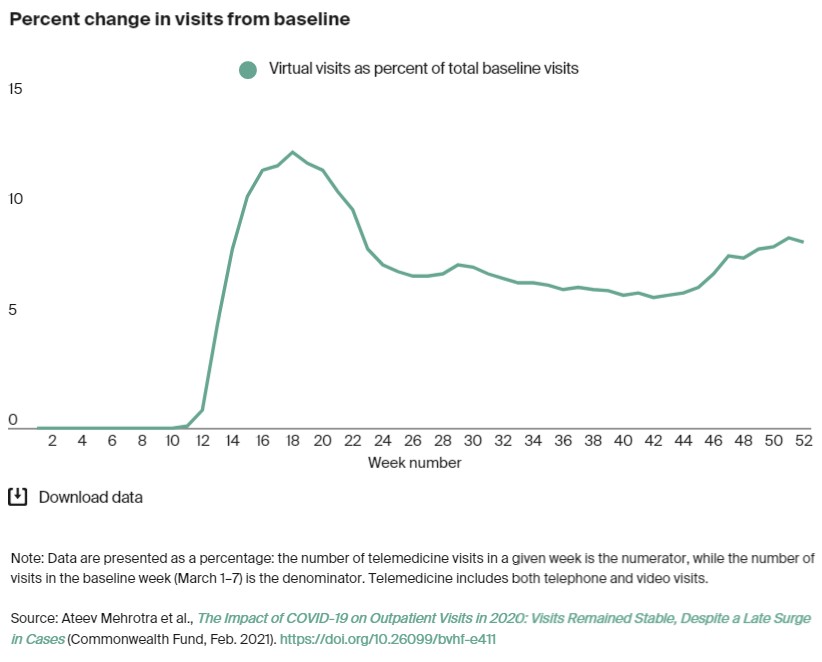
In analyzing data from November and December for its sixth wave of research, the Commonwealth Fund, Phreesia, & Harvard found that, even though there was another surge of COVID-19 cases largely across the country, the number of outpatient practice visits remained stable. When compared to the baseline week of March 1, the November and December outpatient visits were “unchanged”.

The news release also highlighted that “several notable changes” were detected during that time period:

  • Telemedicine experienced a modest increase of usage again. As seen in the chart below, just over 8% of visits were telemedicine visits.
  • While those winter months typically see a rise in patient visits, “they were below the levels” in those two months of 2020; particularly among children, which showed a “substantial drop”. A typical-year shows a 7-10% increase above baseline for December visits among children ages 0-2. In December 2020, visits were 20-21% below baseline for that age group. A typical-year trend for December visits by children ages 3-5 shows a 6-10% increase above baseline. In December 2020, a 34-38% decrease was recorded for the age group. A typical-year trend for December visits by patients ages 6-17 range from 3% above baseline to 1% below baseline. In December 2020, an 18-25% below baseline was charted for the age group. Older age groups “remained more stable”.

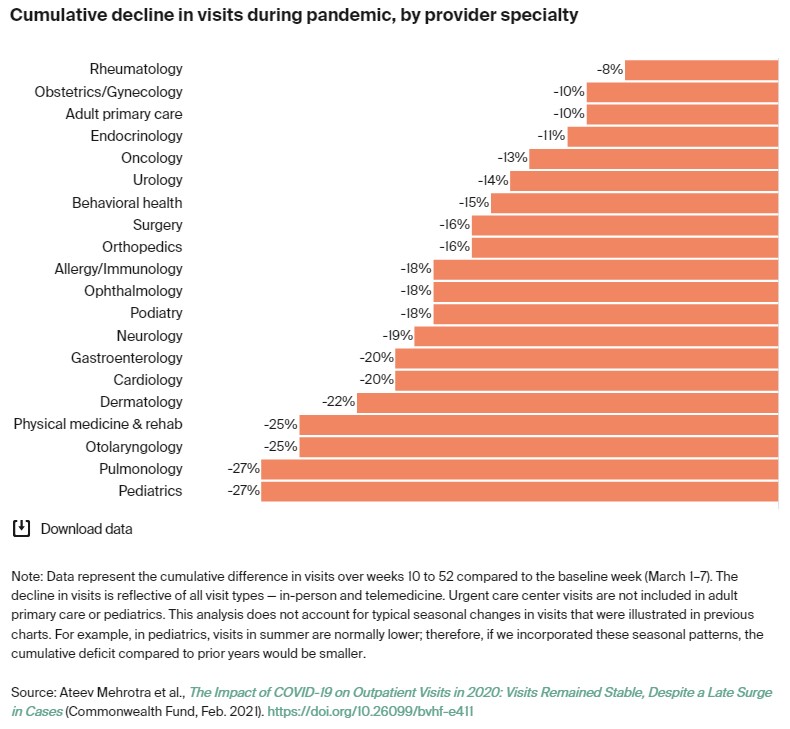
While all specialties saw declines during the pandemic, the report queried, “One critical question is whether visit volumes will rise above the baseline level as we gain increasing control over the pandemic and people receive care that had been deferred.”

admin


February 25, 2021 0

In honor of American Heart Month in February, PatientPoint and the American Heart Association have partnered to highlight stories from heart attack and stroke survivors from the 2021 Class of Go Red for Women® Real Women campaign. These stories will be shared on PatientPoint's digital waiting room screens and exam room touchscreens throughout the US over the course of the rest of the year.

According to the news release, among the Real Women featured are:

  • Dani Aylsworth: A 33-year-old Army combat veteran who battled PTSD, addiction, and heart failure.
  • Megan Corbin: A 30-year-old professional dancer who had a heart attack despite being in top form.
  • Melissa Sloan-Williams: A 39-year-old registered medical assistant who developed Type 2 diabetes and had a heart attack in her early 30s.
  • Steffany Quintana: A 26-year-old who lost the ability to talk, swallow food, and walk unassisted after her stroke last year.

Go Red for Women, which is sponsored by CVS Health, is an initiative from the American Heart Association to raise awareness and end heart disease and stroke in women. As noted in the Real Stories video, one in three women will die from cardiovascular disease annually, making it the leading killer of women in the US. The news release also cited how “research shows heart attacks are on the rise in younger women and new data suggests younger generations of women, Gen Z and Millennials, along with Black and Hispanic women, are less likely to be aware of their greatest health threat, including knowing the warning signs of heart attacks and strokes.”

The Real Stories at the point of care serves to educate women so they understand the signs and symptoms (which are often different symptoms than what men experience) and to inspire them to make heart health a top priority in conjunction with their overall health management.

admin


February 25, 2021 0

Ensuring equitable access to COVID-19 vaccines has been a top concern in the rollout process. According to a brief by the Kaiser Family Foundation (KFF), “National recommendations regarding vaccine distribution have emphasized the importance of ensuring equitable access, particularly for disproportionately affected groups, including people of color.” KFF identified some key barriers when it comes to vaccinating disproportionately affected groups, including people of color.

“Data for existing vaccinations show people of color are less likely to be vaccinated compared to their White counterparts,” noted KFF. Access-related challenges, such as higher uninsured rates, often contribute to the lack of health care. “Although the government has indicated that the COVID-19 vaccine will be made available at no cost, it will be important for people to know how they can access it for free in order to reduce potential cost concerns as a barrier, particularly for people who are uninsured.”

Additionally, a lack of trust, given the medical abuses and mistreatment in history, as well as concerns around safety are prime reasons why some people of color say they would not get the vaccine. And in today's current climate, many still feel race-based discrimination. Citing a recent KFF/The Undefeated survey, an article update from KFF stated: “For example, the survey showed that seven in ten Black adults believe race-based discrimination in health care happens very or somewhat often, and Black adults were more likely than White adults to report certain negative experience with health care providers, including feeling that a provider didn’t believe they were telling the truth, being refused a test or treatment they thought they needed, and being refused pain medication.”

When interviewing more than 1,000 adults via the KFF COVID-19 Vaccine Monitor, 47% of Black adults and 47% of Hispanic adults stated side effects as their biggest concern.

According to the Centers for Disease Control and Prevention (CDC), “race / ethnicity was known for just over half (55%) of people who had received at least one dose of the vaccine” on a national-level. In the updated reporting released last week, KFF shared COVID-19 vaccinations by demographics on the state-level, as reported by 34 states. The KFF analysis found “a largely consistent pattern of Black and Hispanic people receiving smaller shares of vaccinations compared to their shares of cases and deaths and compared to their shares of the total population. For example, in Texas, 20% of vaccinations have gone to Hispanic people, while they account for 42% of cases, 47% of deaths, and 40% of the total population in the state. Similarly, in Mississippi, Black people have received 22% of vaccinations, while they make up 38% of cases, 40% of deaths, and 38% of the total population in the state.” When evaluating the data on Asian populations, KFF found the share of vaccinations, typically, to be similar to their share of cases and deaths. In states where differences were identified, “they were generally small.”

In a data update, KFF also found that, in analyzing vaccination rates across the 26 states reporting racial / ethnic data for people who have received at least one dose, the total average vaccination rate for White people is 10%, Asian people is 8%, Black people is 5%, and Hispanic people is 3%.

The authors concluded by stating, “Together, these data raise concerns about disparities in vaccination but are also subject to gaps, limitations, and inconsistencies that limit the ability to compare data across states and draw strong conclusions. The data are still early, with vaccinations not yet broadly available to the public in many areas. Moreover, some states have high shares of vaccination data with unknown race / ethnicity and / or reporting ‘other or multiple races.' Further, 18 states and the District of Columbia are not yet reporting vaccinations by race/ethnicity. Comprehensive standardized data across states will be vital to monitor and ensure equitable access to and take up of the vaccine.”

admin


February 16, 2021 0

DTC Perspectives was organized in 2000 to focus on pharmaceutical marketing and in 2001 we launched The DTC National. In later years we organized conferences on Hospital Marketing, Multicultural Communications, OTC Marketing, and Disease Education.

To better describe what we do, we are excited to refer to our conference series as Xpectives.Health. We see our business model as providing educational services to companies that market healthcare products and services to consumers. We are still intensely focused on the DTC world of pharmaceuticals but recognize the much broader base of companies that market health directly to consumers.

From now on you will see the name Xpectives.Health used to describe our conference offerings. In October 2021, we will have our first post-pandemic in-person event since April 2019. We are thrilled to offer the in-person DTC National again in 2021. In addition, we are adding other conferences on Hospital, OTC, Womens’ Health, Forum on Virtual Health, and Forum on Social and Technology under one roof. This is called the Xpectives.Health Summit.

For those used to attending The DTC National, we will offer everything we have in the past but you will also have the opportunity to attend sessions of interest at these other conferences. We look forward to offering all consumer healthcare marketers educational and networking opportunities at the Xpectives.Health Summit.

As we lead up to our event in Boston on Oct 12-14, we are offering numerous virtual events across industries under the Xpectives.Health Virtual Series. We are thrilled with the attendance at the events we have done to date and expect our virtual events will remain as a permanent part of our offerings. While nothing is better than seeing our marketing colleagues in person, we see the virtual events as a complementary alternative.

admin


January 28, 2021 0

Announced today, President Biden is set to sign two Executive Orders in his efforts to improve health care access and affordability to Americans. The Department of Health and Human Services (HHS) is expected to re-open a “Special Enrollment Period” this year to the Health Insurance Marketplace, from Feb. 15-May 15, allowing citizens in need of insurance to sign up for health coverage during the pandemic.

The President has also instructed federal agencies to re-examine the following policies to assess whether they are in need of additional strengthening as well:

  • “Policies that undermine protections for people with pre-existing conditions, including complications related to COVID-19;
  • Demonstrations and waivers under Medicaid and the ACA that may reduce coverage or undermine the programs, including work requirements;
  • Policies that undermine the Health Insurance Marketplace or other markets for health insurance;
  • Policies that make it more difficult to enroll in Medicaid and the ACA; and
  • Policies that reduce affordability of coverage or financial assistance, including for dependents.”

Furthermore, a Presidential Memorandum is going to be issued to “protect and expand access to comprehensive reproductive health care.” The Memorandum also “directs the Department of Health and Human Services to take immediate action to consider whether to rescind regulations under its Title X family planning program.”

admin


January 27, 2021 0

Sponsored Content

Samantha Brown, Director of Business Development at Mesmerize, discussed the impacts COVID-19 has had on their business in a recent interview with Bob Ehrlich, Chairman & CEO of DTC Perspectives.  She shares how Mesmerize used this time to focus on expanding its point of care footprint and establishing new partnerships, while continuing to educate and engage consumers via Mesmerize’s vast network of essential businesses.

Bob Ehrlich: How has COVID-19 affected the point of care (POC) industry?

Samantha Brown: While COVID-19 affected in-office visits early on in the pandemic, we’ve already seen the vast majority of our specialty networks return to pre-COVID traffic levels or beyond.  COVID-19 highlighted the need for innovative, dynamic solutions, like Mesmerize’s digital TV screens, at the point of care.  Our digital TV screens allow us to continue delivering dynamic educational content to the offices within our network and serve as a powerful channel to activate on behalf of COVID-19 consumer education, disseminating trusted information by partners, such as the CDC and WHO.  In order to maintain safe social distancing, many practices no longer allowed non-essential visits, including pharmaceutical reps, to their offices.  Our digital network affords advertisers the ability to reach both patients and physicians with their brand’s messaging in a safe, efficient, and effective way.  The addition of QR codes to our printed media allows for patients to scan a QR code on the physical materials within an office and interact with that same content digitally on their mobile device.  The ability to access this content digitally allows patients to bring this information home with them and share it with their caregivers and/or loved ones.

The role of the pharmacist has also evolved dramatically as they continue to serve on the front lines of the COVID-19 epidemic.  Local pharmacists see more patients on a daily basis than any other healthcare provider, and that’s proven to be particularly true in the wake of COVID-19, as pharmacists were licensed to administer COVID-19 tests, and now the COVID-19 vaccine.  COVID-19 highlighted the pharmacist’s role in connecting patients and customers with access to care, increasing awareness of the wide range of vaccines and immunizations pharmacists are able to administer, including COVID-19, as well as protection against HPV, Hepatitis, Flu, and more.  At a time when pharmacists were seeing increasing foot traffic and patient visits, Mesmerize’s TV screens and other point of care tactics played a large role in educating consumers and encouraging them to speak with their pharmacist, a reliable source of counseling and information for general health and wellness concerns, as well as COVID-19.

Bob: It’s been impressive to see what Mesmerize has been able to accomplish this past year, despite COVID-19.  You’ve been busy lately growing your network, most recently with partnerships with Benasource, ASP Cares, Gaudenzia, and GMHC.  What do these partnerships mean to brands working with Mesmerize?

Samantha: Despite the challenges presented by COVID-19, we made a conscious decision as an organization to use this time to double down our focus on network expansion and re-engaging new partnership opportunities.  In 2019, we acquired a digital network of independent pharmacies and have been working to expand upon the existing network since.  In 2020, we partnered with ASP Cares and Benasource, installing Mesmerize’s Digital TV screens in all ASP Cares U.S. locations and Benzer Pharmacy locations.  Specialty pharmacies have unique expertise and experience treating a multitude of conditions including: HIV/AIDS, Hepatitis, Rheumatology, Oncology, Cardiovascular Disease, Gastroenterology, Addiction Management, and more, making them a critical venue for reaching patients with these conditions.

The team worked tirelessly to expand our digital network beyond the pharmacy, first with a partnership with Gaudenzia Addiction Treatment & Recovery Services, followed by a partnership with GMHC, the world’s first HIV/AIDS Services Organization (ASO).  Our partnership with Gaudenzia allows us to provide best-in-class patient education across their drug and alcohol treatment, mental health, and HIV/AIDS programs, reaching nearly 20,000 individuals annually.  Partnering with renowned organizations like Gaudenzia and GMHC, which are vital to improving the community’s health and helping them to achieve a better quality of life, helps Mesmerize fulfill its mission to connect individuals, families, and communities affected by HIV and other infectious disease and/or mental illness to accessible care, treatment, and education.  Mesmerize is excited to work with our new partners to uplift those affected by these diseases and we look forward to continuing to work together to address the underlying causes of new diagnosis, combat stigma and discrimination, and promote healthy behaviors.  Adding our digital TV screens to these locations allows us to effectively reach and connect with affected individuals and communities, and offers advertisers a unique opportunity to reach their target audiences at the places they are seeking care.

Bob: Clearly, 2020 was a very busy year for Mesmerize.  What’s next in the pipeline?

Samantha: We continue to actively seek out opportunities to grow our pharmacy network and remain heavily involved with the HIV/AIDS community.  2021 growth will focus on expanding into additional Community-Based Organizations and AIDS Service Organizations, increasing our reach across these organizations that are vital to improving people’s health and helping them to achieve a better quality of life.  We have a lot of exciting things in the pipeline in terms of content, and our full-service digital signage studio is working around the clock to produce best-in-class patient education speaking to HIV/AIDS and infectious disease specifically, in addition to general health and wellness and other condition-specific content.  After seeing great success building out our digital network of infectious disease offices, AIDS Service Organizations, and Community-Based Organizations, we look forward to rolling out our digital network in specialty doctors’ offices, aligning with client-demand and connecting patients and physicians with valuable information and resources speaking to a multitude of conditions, including: Respiratory/COPD, Rheumatology, Oncology, Gastroenterology, and more.  We are very excited about our most recent partnership with Quest Diagnostics labs, reaching nearly 8.5 million monthly viewers at over 2,000 Quest Diagnostics sites nationwide.  We’ve also begun working with major supermarket/grocery retailers, installing digital TV screens within their on-site pharmacies.  2020 was a busy year and we expect 2021 to be the same!

Bob: How is Mesmerize able to utilize its vast out-of-home (OOH) network at point of care, point-of-sale, transit, and other specialty areas to bring more value to clients?

Samantha: In addition to point of care media, Mesmerize has a vast network of transit and place-based media opportunities, serving as a one-stop shop for cross-channel advertising that allows our advertisers to reach consumers at multiple touchpoints along their out-of-home journey.  Our larger OOH network affords advertisers the ability to reach consumers non-disruptively at every point throughout their daily lives, from their commute to and from the doctor’s office via our network of fixed-route and paratransit buses, to their visit to the pharmacy, grocery, or convenience store following their doctor’s office, ASO, or community-based organization visit.  Mesmerize’s place-based opportunities ensure our advertisers are reaching their target audiences on days they are not visiting their healthcare practitioner, via advertising in cafes, coffee shops, financial service centers, laundromats, restaurants, and more.  When stay-at-home orders were issued and businesses were forced to close as a result of COVID-19, Mesmerize’s point of care, transit, and financial service networks were deemed essential services and remained open for business, continuing to serve as vital touchpoints for reaching consumers.

Samantha Brown


January 27, 2021 0

As part of President Biden's National Action Strategy to combat the global pandemic, he has instructed his COVID-19 Response Coordinator to work with the Department of Health and Human Services (HHS) in securing an additional 100 million doses of each of the two COVID-19 vaccines that have been approved by the FDA from Pfizer-BioNTech and Moderna. According to a White House news brief, this “increases the total vaccine order for the U.S. by 50%, from 400 million to 600 million with these additional doses expected to deliver this summer. With these additional doses, the U.S. will have enough vaccine to fully vaccinate 300 million Americans by the end of this summer.”

Moderna confirmed this news yesterday, stating that they are in talks with the US government, noting that the delivery will be in the third quarter of 2021. The previous amount purchased by the US government was 200 million doses of Moderna's and Pfizer-BioNTech's vaccinations each.

Last Friday, Pfizer and BioNTech had announced “an advance purchase agreement with COVAX for up to 40 million doses of the Pfizer-BioNTech COVID-19 Vaccine. The doses will be delivered throughout 2021.” COVAX is the collaboration of the Global Alliance for Vaccines and Immunization (GAVI), the Coalition for Epidemic Preparedness Innovations (CEPI), and the World Health Organization (WHO), to ensure fair global distribution of COVID-19 vaccines.

admin