 Earlier this month, US District Judge Amit Mehta ruled that the US Department of Health and Human Services (HHS) “lacked authority from the US Congress to compel drug manufacturers to disclose list prices,” as per reports. In mid-June, Merck & Co., Eli Lilly & Co, and Amgen, along with the Association of National Advertisers, filed a lawsuit on the grounds that requiring pricing information in ads would confuse consumers as that pricing would not accurately reflect actual out-of-pocket costs for consumers due to different insurance plans and coverage, as well as further discounts and rebates. Mehta's 27-page ruling, which sided with this group, came out one day before the disclosure rule was to go into effect.
Mehta wrote in his decision: “The court finds that HHS lacks the statutory authority under the Social Security Act to adopt the WAC [wholesale acquisition cost] Disclosure Rule. Neither the Act’s text, structure, nor context evince an intent by Congress to empower HHS to issue a rule that compels drug manufacturers to disclose list prices. The Rule is therefore invalid. In view of this holding, the court does not reach Plaintiffs’ First Amendment challenge.
“To be clear, the court does not question HHS’s motives in adopting the WAC Disclosure Rule. Nor does it take any view on the wisdom of requiring drug companies to disclose prices. That policy very well could be an effective tool in halting the rising cost of prescription drugs. But no matter how vexing the problem of spiraling drug costs may be, HHS cannot do more than what Congress has authorized. The responsibility rests with Congress to act in the first instance. ”
Several outlets – including HHS, the White House, and AARP – released statements expressing their disappointment with the court's ruling.
 And it’s becoming increasingly clear that brands have had enough.
  Every year, events like South By Southwest and Mobile World Congress bring us new technology innovations that have the potential to fundamentally reshape a marketers’ playbook. This year was no different, as pharma marketers in attendance in Austin and Barcelona saw a range of technologies from brands like AT&T and Google.

 Branding: What Science Says About Engaging People


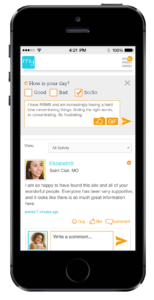
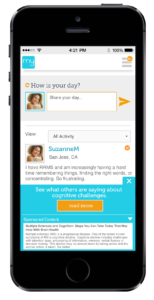

 Many people associate weather conditions with their health and wellbeing. Perhaps you have family members claim to be able to sense changes in the weather because they feel a migraine coming on, friends who swear they can forecast rainfall better than the meteorologists due to increases in pain levels within their joints, or even co-workers who claim to be allergic to certain types of weather. Observations about the interactions between weather and health are not a modern phenomenon. People have been making them for almost 2,500 years—since the writings of Greek physician Hippocrates—and correlations between weather and wellness, if proven, are potentially valuable information for organizations and companies across the healthcare economy.
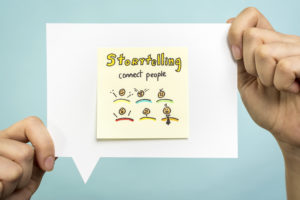
 Healthline Insider's Ingrid Eberly sat down for a conversation with our SVP of Media Strategy & Revenue, Dante Gaudio, on the topic of narrative and the power of narrative in health. In his role, Dante spends a lot of time thinking about ways he can help health brands build powerful stories to change people’s lives.
 Reinforcing your brand message with a dynamic media mix
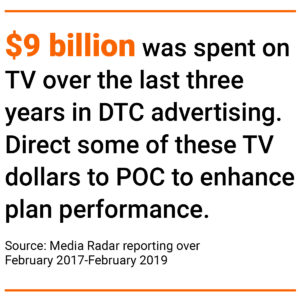
 What’s the best pharma ad you see running on TV right now? I bet you could sing the jingle, but do you remember the specific brand? I’m the odd one that uses my DVR to skip TO the commercials – but you and I are not the average healthcare consumers. That’s why, despite the strength of TV, when it comes to messaging to patients, you have to pull that message through when they are going to be most receptive – in the doctor’s office.