Latest News


August 10, 2016 0

You know the ubiquitous ads soliciting clients who were “injured” by prescription drugs. Lawyers all over the country create a drumbeat of fear over prescription drug side effects. The American Medical Association(AMA) is now concerned that this fear mongering is causing patients to get off or refuse to start needed therapy. Last month the AMA called for warnings in these lawyer ads telling patients not to stop taking their meds without consulting their doctor.

The stats are amazing. About 360,000 lawyer ads were run in 2015 on drugs and devices. Many of these law firms are just bundlers who get leads from the ads and turn the names over to trial firms for a cut. The AMA has called for a ban on drug company DTC which seems odd if they are concerned about the scare tactics used by law firms. Drug ads give the positives and negatives while law firms only give negatives. One would think the AMA would want the positives out there if they fear the effects of fear based lawyer ads.

Bob Ehrlich
“FDA should conduct a study to determine affect lawyer ads have on consumer attitudes.”
-Bob Ehrlich

The most ads were run against Xarelto, with Pradaxa, Invokana, Risperdal and Androgel in the top 10. FDA should conduct a study to determine what affect lawyer ads have on consumer attitudes. While they do not regulate what lawyers say a study could help them determine how consumers react to these risk ads. That might help them determine how drug companies discuss risk.

There is no doubt some patients have legitimate claims against drug companies. Lawyers can play useful roles in protecting patients. These ads go beyond that role as they chase clients and create a climate of fear. That being said, these law firms make money doing this direct response advertising. The fact that 360,000 ads were run show they work. A Congress filled with lawyers is unlikely to hold any hearings take steps to stop these ads.

One would hope ethics would mitigate the egregious nature of these ads. Ethics are clearly not the main concern of those drumming up business by scaring patients off their meds.

Bob Ehrlich


July 20, 2016 0

July2016-RuschauArtworkOne of the first health lessons many of us ever heard was that famous rhyme our mothers used to recite frequently: An apple a day keeps the doctor away. With all due respect to mothers everywhere, while apples are a perfectly good source of nutrition and have many benefits, unfortunately we know that simply eating one every day is not enough to keep us in perfect health.

However, if you’ll indulge me for just a minute, let’s pretend that apples really could keep the doctor away. Sadly, here’s what we know would happen:

  • Roughly one-third of people who are supposed to eat an apple a day wouldn’t even go to the grocery store to buy a bag[1]
  • 75% wouldn’t eat an apple all seven days of the week, but they’d definitely try their best to eat an apple at least four or five times per week[2]
  • More than 70% of those struggling with depression would start eating apples every day, but would no longer be eating them after six months[3]
  • The grocery industry would be spending hundreds of billions of dollars per year trying to figure out why nobody wants to eat their apples[4]

Unfortunately, as we all know, we’re not talking about apples. This is the reality of the pharmaceutical world, as study after study has shown that patient adherence and compliance are two of the biggest challenges facing the industry.

You can write this off as human nature if you want. After all, people are notoriously bad at taking orders and following directions. But what if the problem isn’t that patients don’t know what they are supposed to be doing, but rather, they simply don’t understand why they should be doing it?

As a brand marketer, there’s a huge opportunity for you to go beyond the prescription pad to give patients what they want most: knowledge.

By incorporating key messages in education materials placed in the offices and exam rooms where they receive this prescription, you can go beyond simply telling the patient what they should be doing. Rather, you are showing them why they should be doing it and empower them to ask questions that truly make a difference in their health journey.

What are those questions? Here are a few to get you started (using our “apple a day” example):

  • What do I need to know about this disease/condition?
  • Why is an apple a day the right treatment option for me?
  • How is the apple a day going to improve my disease/condition?
  • Do I want a red, green, or golden apple?
  • Are there any side effects to eating an apple a day?
  • In addition to the apple per day, what are other treatment options or things I should be doing to manage this disease/condition?

And it’s not just patients who find this information helpful. As Debra Miller, M.D., from the Mapleton Medical Center in Indiana told PatientPoint, “Staff and patients really love [your] brochures because it’s easy to get the information they need. Often, I walk into the exam room and the patient has already taken a brochure and has questions ready for me.”

By planting the seeds of knowledge before the script is ever written, you encourage a meaningful conversation between patients, staff and physicians about the disease and medication options. And while telling someone to eat an apple a day may result in temporary success, showing them why it’s an effective option can produce much more fruitful results.


SOURCES:

[1] http://annals.org/article.aspx?articleid=1852865

[2] http://www.talkaboutrx.org/documents/enhancing_prescription_medicine_adherence.pdf

[3] http://www.medscape.com/viewarticle/818850

[4] http://www.medscape.com/viewarticle/818850

Linda Ruschau


July 20, 2016 3

The current statistics on medication adherence are remarkably somber. At the moment, lower rates of adherence translate not only into poor health outcomes which result in 125,000 deaths per year, but also healthcare costs ranging from $100 to $300 billion annually. Over the past 30 years, the WHO and Institute of Medicine (IOM) have not been able to achieve their goal of rate improvement. July2016-DiPersioArtwork1By addressing challenges associated with health beliefs, learning styles, medication regimens, and inherent changes in patient status, pharma will develop the necessary support system to increase rates. Mobile phone interventions, patient literature, and pharmacy in-person consultations are critical tools of a multi-channel approach to maximize medication adherence.

Mobile Phone Interventions

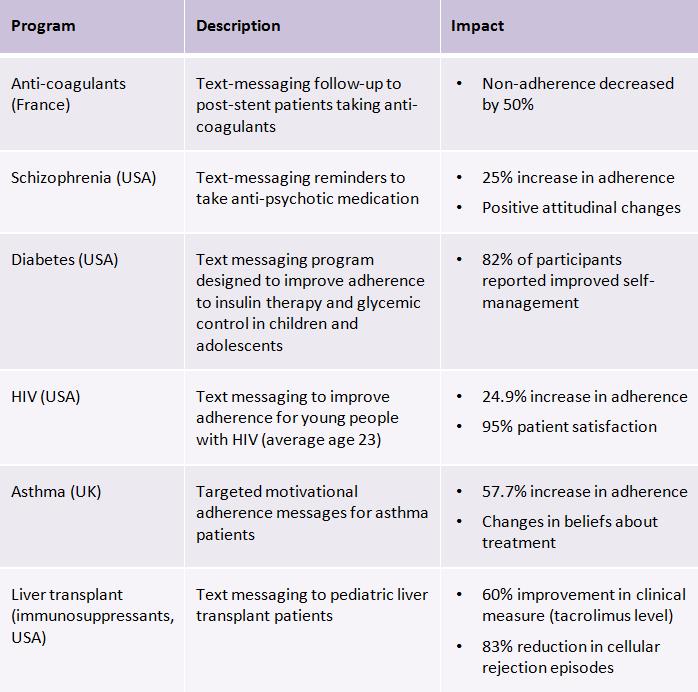
The simplest form of mobile technology which increases medication adherence is text messaging or short message system (SMS) that includes program details, therapy reminders, and motivational information. This inexpensive vehicle provides a consistent flow of enhanced daily patient communication. Targeted and personalized information is quickly and conveniently sent via mobile phone to the right people at the right time. An OptumRx study involving experimental subjects who received several different kinds of medication alerts, refills, and dosage reminders culminated in an overall medication adherence rate of 85% on the experimental side and only 77% adherence on the control side.

July2016-DiPersioArtwork2On the other hand, adherence rates are higher when using the most complex form of mobile technology that includes artificial intelligence-adapted text messages with reinforcement learning (RL). RL automatically modifies SMS communication to provide data which is tailored to current needs and also adapted to future needs as patient status changes. The customized algorithms “learn” from their interactions with patients to determine the appropriate action that optimizes total reinforcement and motivates behavioral changes. In a University of Michigan project, researchers created a RL algorithm for innovative decision making based specifically on hypertension medication bottle openings recorded via electronic medication monitoring. A database tracked patient feedback from the medication event by monitoring system cap openings and then a RL engine learned from patient experience to determine individualized messages to send at specific times.

Patient Literature

More than 95% of pharmacists believe patients who receive product-specific, easy-to-understand, and culturally relevant education brochures from the pharma industry, such as novelas with comic-book style images in the Hispanic culture, benefit from greater levels of medication adherence. However, the caveat is low literacy skills across all populations that often times result in a misunderstanding of prescription drug warning labels followed by an incorrect use of medications. The majority of prescription instruction sheets are written at a ninth grade level or above but almost 90 million Americans read below the fifth grade level.

However, patient literature is boundless in improving oral cancer drug adherence. Oral cancer medications are self-administered with patients taking charge of managing their own conditions. July2016-DiPersioArtwork3While perusing literature at their convenience during their own private time, patients not only educate themselves about their illness and the common side effects of oral chemotherapy but also develop the insight of when to seek emergency care. Literature motivates them to gain a better understanding of the condition and assume an active role in their treatment. The American Cancer Society states that some patients will not take their medications as prescribed because of depression or limited emotional support. However, further understanding the literature could motivate them to adhere to a specific regimen and view adherence as a means to well-being and a healthier outcome.

Pharmacy In-Person Consultations

Live patient counseling with pharmacists is the most effective channel for medication adherence. The tenet of “two minutes to trust building” is based on patients having a long-term healthier outcome when they are allowed to speak openly for a minimum of two minutes with free flowing conversation. At the pharmacy, patients discuss sickness more willingly and ask more questions. They are less intimidated by pharmacists than physicians partly because they do not see a huge divide in standing and do not feel a sense of inferiority.

July2016-DiPersioArtwork4A Walgreens study about a cholesterol level lowering regimen showed that patient face-to-face consultations with pharmacists result in the highest medication adherence. At the end of one year, well over 40% of the experimental group reached a target adherence rate of 80% or more, while only a little over 30% of the control group reached the same rate. Pharmacists need to be trained specifically to converse with patients about perception of therapy value, anxiety about side effects, absentmindedness, and the advantage of an established routine for medications. Prior to engaging in an effective consultation, pharmacists should complete a personalized non-adherence risk assessment which includes determining what patients know about their regimen presently, how patients can read labels correctly, their perception of efficacy and safety and the benefits of a demonstration.

In summary, medication adherence was at a standstill – until now. The old adage that talk is cheap certainly does not apply to our forward-looking pharmaceutical industry which recognizes the immense value of communication with adherence. Engaging in a multi-channel communication approach with mobile phone interventions, patient literature and pharmacy in-person consultations increases medication adherence rates, achieves healthier outcomes and lowers healthcare costs overall.


SOURCES:

“Improving Prescription Medicine Adherence is Key to Better Health Care.” PhRMA. (2015)

“In-Person Consultation with Pharmacist May Improve Statin Adherence.” MedTera. (2014)

“Medication Adherence Time Tool.” American College of Preventive Medicine. (2016)

Mitchell, A. J. and Selmes, T. “Why Don’t Patients Take Their Medicine? Reasons and Solutions in Psychiatry.” Royal College of Psychiatrists. (2016)

“Patient Education Brochures, Other Approaches May Improve Oral Cancer Drug Adherence.” MedTera. (2014)

admin


July 20, 2016 0

Today’s most successful adherence programs focus on the patient, not the product

doctor talking in a callcenterDeveloping successful patient adherence programs is a win on all fronts. Each year, a lack of patient adherence costs the U.S. healthcare system an estimated $290 billion. Indeed, payers benefit in the long run from reduced costs of healthier patients. Yet there are other far-reaching benefits beyond the potential billion-dollar savings. Patients who comply with medication and treatment programs often experience improved health outcomes, and these documented treatment programs can increase the amount of physician drug referrals and repeat prescriptions.

While the traditional approach to patient adherence has been a one-way street — that is, communicating to a patient about what he or she needs to do to stay on a treatment regimen — focusing on a more holistic approach that encourages conversation with the patient can greatly improve the success of your adherence programs.

This approach begins with program design. By ensuring that your program encompasses all facets of a patient’s unique healthcare situation — which includes not only the patient’s health condition and particular medication, but also the patient’s support system or caregivers, socioeconomic status, level of health literacy and other factors — you can set yourself up for success.

Let’s explore the best practices for connecting with patients and the ways you can make your adherence programs both relevant and customizable to the participants’ needs and preferences.

Step 1: Engage with the Patient

It may seem obvious, but it’s often overlooked: Your adherence program can only be as successful as the patients who are enrolled and engaged with it. That means making it easy for patients to learn more about your program and providing multiple access points for patients to register.

This step often begins with a physician. Many patients may not even be aware that these support programs and resources exist for their particular condition or while taking a certain medication. A prescribing physician can be an excellent gateway to acquiring patients for your programs who are interested and engaged from the start. Tap into this resource by reaching out to physicians who prescribe your medication, and share information and materials about the benefits of your program and the complementary support it provides to their patients. This can even prove to be a competitive differentiator. Later, once the program is underway, it’s critical to keep the communication with the physician open and to provide the physician with concise updates on the progress of a patient in a program.

By knowing your audience and recognizing the levels of engagement, you can recommend and deliver a multifaceted program that reaches the patient (as well as his or her caregiver, when necessary) and the physician.

Focusing on engagement from the start reminds us how the best adherence programs are patient-centered, not exclusively product-focused. In the next steps, we’ll explore the ways participants can help drive the conversation, and not be solely a listener, in these programs.

Step 2: Make Your Program Relevant

First things first: ditch the script. Whenever possible, your adherence program should feature applicable content delivered by flexible guides. Allowing your agents to use their own words within the guidelines of approved messaging is much more well-received by a patient than a script read word-for-word on a call.

Furthermore, have you considered the critical role your agents play in making your programs relevant? Your agents are more than message-deliverers; they are supporters, educators, and advocates, and they provide resources that are useful and helpful to each patient’s full scope of care. Consider the ways you can best match your agents with the content they deliver — for example, is healthcare background necessary? If so, would a certain healthcare specialty or other experience (such as social work or psychology) be most beneficial? Once you’ve found the appropriate match, allowing your patients and agents to develop one-to-one coaching relationships throughout the course of your program can pay dividends in improving patient satisfaction and compliance with the program.

Consider this example of a cancer adherence or support program. The nature of this type of program lends itself to having a qualified agent who is intimately familiar with the complexities of cancer care, such as an oncology nurse. While sharing the expected side effects of the treatment itself is important, it is crucial for the nurse to also become a complete resource to the patient — creating opportunities for two-way conversation in order to help the patient overcome their health challenges. That might mean answering questions or providing resources about how to cope with side effects (and directing back to the physician where appropriate), providing nutrition and stress management tips, or even assisting with the coordination of transportation or questions regarding insurance coverage.

Without a doubt, one of the key values of adherence programs that emphasize engagement is that the content itself is relatable and considers health literacy. Engagement-focused, patient-centered programs convey content in easily understandable, conversational terms; they stay fresh over the course of a program; and they empower patients to be involved in their care.

Step 3: Customize Your Program

Personalizing your adherence program can go a long way in achieving better outcomes. The program’s communications — or more specifically, the conversations that take place — should be customized to enhance engagement, increase the program’s success rates, and ultimately, improve the patient’s health.

Early on in your program, conversations with the patient can uncover personal barriers to adherence — physical, emotional, practical, or otherwise. These barriers can range from undesirable side effects (“This drug makes me feel nauseous”) to indifference (“It doesn’t matter if I really take this drug”) to cost (“I can’t afford to take this drug”). A personal relationship with the patient can allow an agent to pick up on those cues in conversation, so that these barriers can be addressed throughout the full course of the program.

Because patient side effects and adverse events can vary throughout a treatment regimen, it’s crucial for the agent to have that personal relationship with the patient so they can guide them through the treatment protocol, while also listening carefully to report key data that offers valuable insights to improve the patient’s health and, in the long run, potentially even improve the drug itself.

Once you have designed and implemented an adherence program that is engaging, relevant, and customizable to the patient, be sure to measure your program data to evaluate its success versus the developed outcomes criteria. Work with your client to understand the measures of success in their eyes. The data collected in your program can yield valuable insights to help you enhance your programs in the future.

Kevin Connolly


July 8, 2016 1

I could not leave last week’s column on media inspired patient fear without another example. The excellent New York Times reporter Gina Kolata did a story on patients resisting drug treatment for osteoporosis out of side effect fears. The story in the June 1 New York Times said millions of people were forgoing osteoporosis drugs out of fear from exceedingly rare side effects.

Ms. Kolata highlights the problems doctors are having convincing patients who need drugs to start therapy. Use of these drugs has gone down by 50%. The incidence of broken thighbone side effects is 10-40 patients for every 100,000 and one in 100,000 for broken jawbones. This means millions of sufferers of osteoporosis are needlessly suffering fractures because they fear side effects.

Bob Ehrlich
“FDA needs …much better guidance on quantifying risk.”
-Bob Ehrlich

Who is to blame? The media reports are partially to blame because they do not give the minuscule odds of a side effect compared to the effects of non-treatment. Lawyers are to blame fishing for patients who take these drugs and claim side effects. How many commercials do we see from lawyers listing a litany of drugs that may have caused side effects?

The FDA is to blame for requiring these extremely rare side effects be part of the ads. While every patient should know the risks, saying fatality in an ad without context is a disservice to patients. What we need is a reporting of the odds of a serious side effect, not vague terms like rare. Consumers will overstate the odds if they hear the word death in an ad. I doubt too many consumers would avoid a drug with a one in a 100,000 incidence. To consumers, words like rare could mean 1/100 not 1/100,000.

FDA needs to have a much better guidance on quantifying risk. Serious risks require clear quantitative odds of occurrence. Patients deserve it. The media should also be held to a high standard when doing their sensationalist stories on drug risk. As this article reports, scared patients make irrational risk/benefit decisions.

Bob Ehrlich


June 24, 2016 0

The AHSP, the organization that represents 43,000 pharmacists and technicians in hospitals and other acute care settings, called for banning DTC. This was a change from previous positions that supported DTC in limited use. The AHSP does not represent retail pharmacy but it is still an important voice in health care. Along with the AMA this call for a ban adds fuel to the political fire related to drug company bashing over pricing and marketing.

Bob Ehrlich
“The AHSP..cites.. much misstated data on drug marketing..”
-Bob Ehrlich

The AHSP statement calling for a ban cites the much misstated data that says drug companies spend more on marketing than research. They also say that DTC can be misleading. Therefore they feel that pharmacists and other clinicians can best help consumers with drug selection. This reasoning is faulty. Drug company marketing data includes sales force expense, sampling costs, physician ads, as well as DTC. The drug companies spend over $50 billion on R&D. That is ten times the amount spent on DTC.
Are drug ads misleading? FDA requires all claims to be clinically supported and requires fair balance. They review all ads for accuracy. While advertising is designed to sell, drug ads are the most scrutinized of all advertising categories.
Despite the facts, the anti DTC forces are a major concern for drug advertisers. Hilary and Trump are not friends of the drug industry. It is clear from their statements that neither has their facts straight. Hilary sees drug companies as her enemy, an evil profit hungry industry. Trump sees drug companies as one of his vendors to be squeezed like a mattress supplier for his hotels.
What drug company employees and their media and agency partners must do is let Congress know the facts. Take the time to educate your Congressional representatives how important drug advertising is and why it is important to consumers. Have them understand that DTC does not raise prices. Banning commercial speech for lawful products is a bad idea. What category will be next?
The call for a ban by hospital pharmacists is hypocritical given the huge investment hospitals are making in DTC. Almost every hospital advertises these days. These same hospital based pharmacists think it is acceptable to advertise surgery on television but not drugs.
DTC advertising is not perfect but deserves to be one way for patients to get information. If pharmacists think banning information helps patients, they are wrong. Their input is valuable but to say they and the physician should have a monopoly on patient communication is unrealistic in the Internet era.

Bob Ehrlich


June 23, 2016 0

The irony of the surname of 19th century Scottish author and reformer Samuel Smiles resonates within the pharmaceutical industry in its efforts to bring disease education and prevention to a huge and diverse population. Smiles stated, “Hope is the companion of power, and mother of success, for who so hopes strongly has within him the gift of miracles” – which begets smiles. Pharma has hope for humanity through drug development/dissemination, strategy interventions and funding for both ancient diseases of poverty in developing nations and non-communicable illnesses in developed nations.

Ancient Diseases of Poverty in Developing Nations

DiPersioartwork1-June2016 Background. Unclean water systems, degenerative housing and unsuitable waste disposal in poverty-stricken developing countries are contributing factors to longstanding tropical diseases. The aim of the World Health Organization (WHO) is to eradicate the following nine tropical diseases within the next four years:  Chagas disease, Dengue, Dracunculiasis (guinea-worm disease), Leprosy, Leishmaniasis, Lymphatic filariasis, Malaria, Onchocerciasis and Schistosomiasis. The great disparity between 90% of diseases being dependent on only 10% of global medical research mandates a call to action to produce better medicines and vaccines. The 90/10 gap is even more disconcerting when considering that over 1 million people succumb to Malaria each year because new drugs to combat the disease lose their effectiveness in a relatively short period of time due to the parasite quickly adapting itself to the newly created drug.

DiPersioartwork2-June2016 Strategy interventions. Vaccinations, preventive chemotherapy and concentrated disease management will control and eliminate these targeted diseases. One-time dosages of high quality and safe medications are on tap to be administered as treatment for these nine diseases. On the other hand, single applications are not yet available to handle protozoan and bacterial diseases. Improved case detection and decentralized clinical management are two ways that the WHO intends to prevent mortality for such complex illnesses.

Funding. The Global Alliance for Vaccines and Immunization (GAVI), Medicines for Malaria Venture (MMV), Global Alliance for TB Drug Development (TB Alliance) and Drugs for Neglected Diseases Initiative (DNDi) are only a few of the public-private partnerships (PPIs) formed by governments, health agencies and private industry to overcome tropical diseases. Under the TB Alliance, the Bill and Melinda Gates Foundation and Rockefeller Foundations pledged $40 million to develop new Tuberculosis drugs. The MMV raised $107 million to create anti-malarial drugs while the GAVI raised $2.3 billion to provide access to valuable but insufficiently used vaccines. Along with PPIs, several pharmaceutical companies are donating an unlimited supply of drugs as long as needed to treat tropical diseases. At the same time that GlaxoSmithKline is providing Alberndazole for handling Lymphatifilariasis worldwide, Novartis is contributing an indefinite supply of multidrug therapy blister packs of rifampicin, clofaziminie and dapsone to deal with Leprosy.

Non-communicable Diseases (NCDs) in Developed Nations

DiPersioartwork3-June2016Background. Non-communicable diseases (NCDs) are aptly defined as “non-infectious and non-transmissible diseases that may be caused by genetic or behavioral factors and generally have a slow progression and long duration which include cardiovascular diseases, cancer, chronic respiratory ailments and diabetes.” They are impacted by genes, stressful lifestyles in the age of technology and early life environmental factors which are connected to the amount and timing of toxicants and nutrients that infiltrate the placenta. Deaths caused by NCDs are on the rise; mortality is projected to increase by more than half in a little more than a decade.

Strategy interventions. As part of the WHO Global Action Plan, 80% of the basic technologies and high-priority medicines will be made easily available. Lowering deaths from NCDs by 25% by the year 2025 (known as the 25 by 25 goal), lessening current tobacco use by 30% and minimizing the detrimental use of alcohol and lack of physical activity each by 10% are key components of the program. The daunting task of persuading a population to update its life regimen appreciably based on scientific findings may seem unattainable. However, fundamental interventions that are both inexpensive and highly impactful have been identified to assist in the process. Specifically, the WHO initiative addresses a multitude of risk factors that promote healthy living by providing guidance on how to:  1) educate the public on preventing and reducing tobacco use and overconsumption of alcohol; 2) engage in substituting more fruit and vegetables for less fatty foods while reducing amounts of salt; and 3) expand physical activity. Bringing the fight against NCDs and the promotion of healthy living forward at the national level can be brought to fruition if merged into governmental policies that support legislative action.

Funding. Disease prevention and education programs established under the Department of Health and Human Services (HHS) are supported by the formidable endeavors of the National Institutes of Health Research (NIH) and the Center for Disease Control (CDC). For over 20 years, the CDC has provided grants to state and major city health departments to identify risk factors and organize systems to monitor epidemiology and track vaccine-preventable diseases. In 2012, the CDC funded a Field Epidemiology Training Program with over $12 million to prepare trained public health workers to respond to NCDs. In the same year, NIH awarded $14.4 million to scientific institutions for NCD research and surveillance.

In summary, health care in developing nations is designed to treat infectious diseases with ancient diseases of poverty; non-communicable diseases are the priority of developed nations. Pharma is committed to bringing disease education and prevention to both worlds with specific strategies and funding. Its goals are based on the strong desire to reach the masses with pharmaceutical treatments that provide overall wellness and longevity by eradicating ancient tropical diseases and controlling NCDs. The positive attitude of pharma is making a difference in many lives and bringing hope, miracles – and smiles.


References:

“Accelerating Work to Overcome the Global Impact of Neglected Tropical Diseases:  A Roadmap for Implementation.” World Health Organization. (2015)

“Fighting Diseases of Developing Countries.” Parliamentary Office of Science and Technology. (2013)

“Preventing Emerging Infectious Diseases:  A Strategy for the 21st Century Overview of the Updated CDC Plan.” Center for Disease Control. (2014)

“Primary Prevention:  Avoiding Non-Communicable Diseases by Reducing Early Life Exposure.” National Institute of Environmental Health Sciences. (2015)

“The U.S. Government and Global Non-Communicable Diseases.” The Henry J. Kaiser Family Foundation. (2014)

admin


June 22, 2016 0

The American Society of Health-System Pharmacists (ASHP) has joined the American Medical Association (AMA) in calling for a ban on DTC advertising. Announced during an annual meeting of the ASHP House of Delegates during their Summer Meetings and Exhibition last week, the national pharmacist group approved a new policy calling on Congress to ban all DTC advertising. This action demonstrates a move away from their previous policy – which was first adopted in 1997 and repeatedly refined over the years – that opposed DTC ads unless they met certain criteria.

The organization cited a 2002 Government Accountability Office (GAO) report, which stated that “pharmaceutical companies have increased spending on DTC advertising more rapidly than they have increased spending on research and development … DTC advertising appears to increase drug spending and utilization.” ASHP also opined that despite FDA regulation being “generally effective” over DTC, their “oversight has not prevented the dissemination of misleading advertising by some pharmaceutical companies.” ASHP CEO Paul W. Abramowitz, Pharm.D., Sc.D. (Hon.), FASHP, stated via the news release, “ASHP believes that medication education provided by pharmacists and other providers as part of a provider-patient relationship is a much more effective way to make patients aware of available therapies, rather than relying on direct-to-consumer advertising.”

While this is just the latest news to put DTC in the crosshairs once again, instituting a ban would ultimately harm knowledge sharing and patient empowerment. DTC not only creates awareness, it also helps educate consumers with accurate information, leading to better doctor discussions, decision-making, and, ultimately, patient outcomes.

Jennifer Kovack


June 22, 2016 0

Where do consumers go to find information?

Don’t overthink it—the simple answer is Google. In fact, the last time Google released data in 2012, the search engine giant reported more than 1 trillion searches every year. It’s only safe to assume that number has grown significantly since then.

But where are these consumers getting their health information? Where are they learning about disease education and prevention?

Oh sure, they may still be Googling medications or symptoms, but how many actually trust the varied results found on the internet? Or more importantly, if they do research a medication they want to try, how many are doing so without consulting their doctor first?

When it comes to disease education, prevention and medication, consumers still turn to the most trusted source—their doctors. And if that’s where consumers go for specialty information, shouldn’t you focus your marketing efforts at the point of care?

CIXR_Enviro_3DHeartAnat_Color_10June2016Consider this PatientPoint research data:

  • 65% of patients believe their doctor only allows a brand to advertise in their office if they feel it is the most effective product available.
  • 62% believe their doctor has personal experience with the brands advertised in brochures and allows advertising only for those they consider best for patients.

The bottom line is that patients still trust physicians to make the right decisions for their health—including disease education, prevention and medication. Therefore, as a brand marketer, if you want to reach more consumers, you have to reach more doctors. More importantly, the doctors have to trust your brand.

There’s that word again: trust. It really is a core component to the marketing world, and it’s what the entire point-of-care industry is built upon. Patients trust their doctors to prescribe medication that is in their best interests, and doctors trust brands and health education providers to offer solutions that improve health outcomes, efficiency and patient satisfaction.

As we all know though, it takes a lifetime to build up trust and only a second to lose it all. It’s something that must be pursued daily, with no shortcuts.

At PatientPoint, we are honored to work with leading brands to help them connect and build trust with their customers in the point-of-care industry.  We take our role very seriously. It’s why we reference only medical, professional, government, and not-for-profit organizations as sources when researching health topics and consult medical reviewers to provide oversight of all our editorial content.

This approach ensures patients and physicians receive balanced and objective health education that they can trust. It also has proven results (which we’ve shared before, but are worth repeating):

  • Nine out of 10 patients report learning a tip they can take action on right away.
  • 96% of patients agree the education and technology solutions PatientPoint delivers makes health information easy to understand.
  • 98% of healthcare providers believe our programs are a valuable patient education tool.

When patients and physicians trust the education they receive, it spells good things for brand marketers, too. Sponsors experience nearly five-to-one ROI and can average 12% new prescription lift with education solutions at influential points of care and engagement.

Now those are results you can trust!

Linda Ruschau