

The significant majority of pharma budgets are often spent on TV media due to its wide reach and being a great starting connection with consumers.
In a recent study by TiVo, which was not pharma specific but rather covered a broader TV industry perspective, found that reducing TV ad spend led to a loss in ROI for 11 of 15 brands studied. Conducted in partnership with consultancy engagement firm 84.51° (a wholly-owned subsidiary of The Kroger Co.), TiVo research discovered that “for every dollar decline in ad spend, the 11 brands lost 3x that amount in return.” The white paper was sponsored by media companies such as A+E Networks and Turner.
To read more about the TiVo report, “Independent Study Confirms That Decreased TV Advertising Spend Hurts Sales,” click here.
 Advantages
 Opportunities
 Benefits
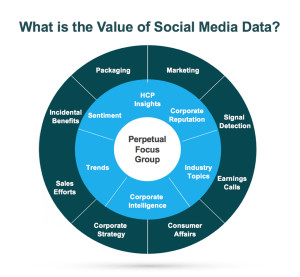 In the healthcare industry, patients and healthcare providers (HCPs) are looking to social media for information and support regarding their health and the health of their patients. They serve as a “perpetual focus group,” whose conversations taking place on social media provide brands with the opportunity to listen. Patients share their opinions, ask questions about diseases and treatment options, and directly or incidentally report adverse events. Meanwhile, HCPs voice opinions on the healthcare industry, provide thought leadership on a wide range of topics such as participatory medicine, reimbursement, and medical education. In a recent survey, more than 40 percent of respondents reported that information found via social media would affect the way they coped with a chronic condition or their approach to diet and exercise; 34 percent said it would affect taking certain medication.1 This demonstrates to companies that patients are directly impacted by what they view on social media and in order for brands to leverage that data radiating out of all the social conversations, several factors need to be in place.
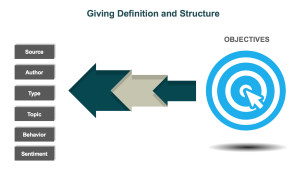 d is looking to identify who is talking about a product, the kinds of content they are posting, and the topics within their content, a structure that would classify posts into categories such as Consumer, Branded Product, and Medical Inquiry could be utilized. As more and more posts are tagged, patterns, trends, and themes can be identified.