Latest News


Nimble_Header-graphic-1.png

April 13, 2026 0

Getting a patient diagnosed and prescribed is hard. Keeping them on therapy long enough to see real benefit? That's often even harder — and the stakes couldn't be higher.

Most medications don't deliver their full effect after a single fill. Antidepressants require weeks of consistent use before therapeutic stabilization sets in. Biologics for chronic skin conditions need time to modulate the immune response. Long-term maintenance therapies only work if patients actually maintain them. When patients drop off early, they don't just generate less revenue for the brand — they frequently don't get better.

For pharma and life sciences brands, the gap between prescription and persistence is therefore one of the most costly — and underaddressed — challenges in the business. Patients discontinue therapy for a wide range of reasons: they forget refills, lose touch with their specialist, or simply don't feel the urgency to continue a medication when symptoms aren't immediately visible. The result is a cycle of drop-off that undermines both patient outcomes and brand performance.

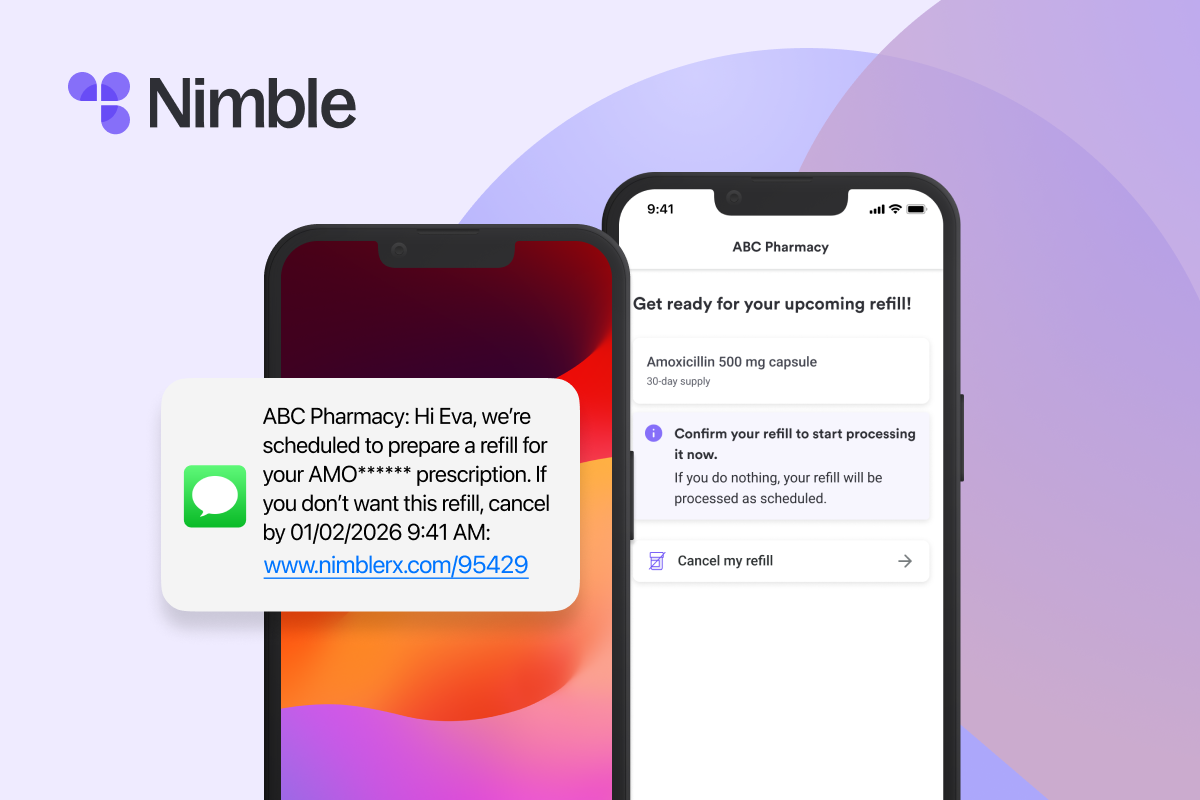
Nimble, the platform modernizing independent and regional pharmacy operations, has developed a data-driven approach to solving this problem — and the results across multiple therapeutic areas are compelling.

The Core Idea: Meeting Patients at the Moment That Matters

Nimble's patient engagement programs work through the pharmacy layer — a touchpoint that's often overlooked in DTC and patient support strategies but sits at the critical junction between prescription and actual medication use. By leveraging precise digital outreach, Nimble can identify targeted patient populations and deliver timely, relevant interventions that keep them connected to their care plans.

The approach isn't one-size-fits-all. Nimble tailors its programs to the specific clinical and behavioral challenges of each therapy area — whether that's addressing the high discontinuation rates common in mental health, re-engaging patients who've drifted away from specialist care, or sustaining adherence for long-term maintenance medications.

What the Data Shows

Nimble recently published a new case study documenting outcomes across three distinct therapeutic programs: a mental health indication, a dermatology program targeting chronic skin conditions, and a women's health maintenance therapy.

Across all three, the results point in the same direction: patients who receive Nimble's digital support are meaningfully more likely to stay on therapy, refill their prescriptions, and remain engaged with their care providers.

A few highlights from the data:

  • Adherence improvements were consistent and significant across all three programs — not marginal gains, but the kind of lift that moves the needle on persistence curves and lifetime patient value.
  • Specialist engagement increased substantially in the dermatology program, with targeted outreach driving patients back to their physicians at rates well above the control group.
  • New-to-brand starts surged when Nimble identified and activated treatment-naive patients who had previously been managing their condition on inadequate therapies.
  • Long-term adherence continued to climb month over month in the women's health program, with dispensed quantities also increasing — a strong indicator that patients weren't just refilling, but actually taking their medication.

Why This Matters for Pharma Brand Teams

For brand managers and patient support leads, the commercial implications of improved persistence are straightforward: more refills, longer treatment duration, and prescriptions that convert into realized, ongoing therapy.

But the most important story here may be the patient outcome one. Medications only work when patients take them — and for most chronic conditions, the clinical benefit compounds over time. A patient with atopic dermatitis who stays on a biologic long enough experiences sustained skin clearance. A depression patient who remains on their antidepressant through the critical stabilization window is far more likely to achieve remission than one who discontinues after a few weeks. A woman who consistently fills her maintenance therapy reduces her long-term health risk in ways a single fill never could. Persistence isn't just a commercial metric — it's a proxy for whether the treatment actually worked. Nimble's programs address both dimensions simultaneously, turning better adherence into better outcomes for patients and better performance for brands.

The case study also speaks to the value of the pharmacy network as a patient engagement channel. Independent and regional pharmacies serve millions of patients who may have less access to the robust support infrastructure that surrounds large health systems. Nimble's technology brings a level of proactive, data-driven outreach to those patients that was previously difficult to achieve at scale.

Read the Full Case Study

The full case study includes detailed program data, outcome charts, and a breakdown of results by therapeutic area — giving brand and marketing teams a clear picture of what Nimble's interventions look like in practice and the kind of impact they can deliver.

Download the Case Study

To learn more about Nimble's patient engagement programs, visit nimblerx.com.

 

admin

Contemplating-amidst-digital-clutter-1200x800.png

April 9, 2026 0

Pharma’s next growth market isn’t a new drug. It’s an underserved audience.

For decades, pharmaceutical marketing has prioritized scale over specificity, relying on broad campaigns designed to reach the “general market.” But as the United States becomes more diverse and patient expectations evolve, that definition no longer reflects reality.

Today, growth in healthcare is being driven by audiences that have historically been overlooked, particularly Black and multicultural consumers. These communities are disproportionately impacted by many chronic conditions, highly engaged in health decision-making, and increasingly influential in shaping cultural and consumer trends.

Yet, they are still not being reached in ways that feel meaningful or culturally sensitive.

This gap is not just a health equity issue. It’s a missed business opportunity.

The Business Case Has Changed

The U.S. is rapidly becoming more diverse, and with that shift comes a change in where growth will come from.

Black Americans represent more than $1.6 trillion in buying power, according to Nielsen, and account for an estimated $135 billion or more in annual healthcare spending. They also over-index in several high-priority therapeutic areas, including those associated with hypertension, diabetes, and asthma. These are conditions that require long-term management and ongoing engagement with care.

At the same time, multicultural consumers are shaping how health information is consumed, shared, and trusted.

For pharmaceutical companies operating in increasingly competitive categories, growth is no longer just about innovation. It depends on reach, engagement, and ongoing adherence.

And, all of that depends on trust.

The Data: Diverse Audiences Are an Economic Opportunity

Industry data tells a clear story. Diverse audiences are not difficult to reach; they are misunderstood.

Citing research from CMI Media Group, a recent report in MM+M suggests that Black and Hispanic consumers may be more receptive to pharmaceutical advertising than many marketers assume, especially when messaging feels relevant and credible.

Nielsen insights reinforce this. Black consumers demonstrate strong brand loyalty when trust is established and show high engagement across mobile, video, and culturally relevant media environments.

Industry data points to the size of the opportunity. Audience-level insights show what it takes to actually earn it.

The Trust Gap Is the Revenue Gap

Despite the opportunity, trust remains one of the most significant barriers and one of the clearest drivers of growth.

Historical inequities and lived experiences have created both mistrust and distrust in healthcare among Black patients. Mistrust can often be addressed with information. Distrust requires something more dedicated and intentional – consistent, credible engagement over time.

BlackDoctor audience-level insights reinforce this dynamic. They show that  trust does not start with messaging. It starts with meeting real needs.

In a 2024 survey of nearly 500 respondents, BlackDoctor found that:

  • 74% said lowering the cost of treatment would make pharmaceutical companies more helpful
  • More than 55% want tools like doctor visit checklists
  • 54% want health information made easier to understand
  • Over 40% want ways to track and better understand their symptoms

These are not just feature requests. They are early signs of trust. When patients feel supported and equipped to navigate their care, they are more open to engagement.

Still, meeting needs alone is not enough.

When asked what pharmaceutical companies should do to build trust:

  • Nearly 47% said invest more in communities
  • 40% called for more Black representation in pharma leadership
  • More than 38% want greater visibility in the Black community
  • Over 32% said communication should happen through Black-owned media platforms

The message is clear. Trust is built with presence, representation, and helping people in real ways. Messaging alone will not get you there.

You see this even more clearly when trust is broken.

In a separate BlackDoctor audience poll, more than 73% of respondents said they felt troubled or insulted when brands used Black representation in mainstream channels while failing to invest in Black-owned platforms. Many said it reduced their trust.

People are not just listening to what brands say. They are watching where and how they show up.

This is where business impact becomes clear.

If patients do not trust the message, they are less likely to seek care, start treatment, and/or stick to their treatment plan.

That directly influences ongoing-adherence and, ultimately, revenue. Medication non-adherence alone is estimated to cost the U.S. healthcare system more than $300 billion annually.

If trust drives adherence, and adherence drives revenue, then trust directly impacts the bottom line.

Why Pharma Has Missed the Mark

Despite growing awareness around diversity, equity, and inclusion, many pharmaceutical marketing strategies have yet to fully evolve.

Analysis from Pharmaceutical Executive points to a familiar pattern. There is strong intent, but inconsistent execution, especially when it comes to embedding cultural nuance into marketing and engagement strategies.

Too often, Black and Brown audiences are treated as secondary segments or campaign extensions, rather than core drivers of growth.

At the same time, many brands continue to rely on broad “general market” approaches, even as the market becomes more culturally defined.

In many cases, the gap is not awareness. It is execution.

Pharma has scaled its messaging. It has not scaled its credibility.

What Winning Looks Like

For pharmaceutical companies looking to unlock this opportunity, success requires a shift in mindset and strategy.

1. Invest in Trusted Platforms

Trust cannot be manufactured. It has to be built or strengthened through the right partnerships. More brands are recognizing the value of culturally rooted platforms, like BlackDoctor which has spent over 20 years earning credibility through consistent, community-centered engagement with both audiences and the healthcare professionals (HCPs) who serve them.

These environments operate differently than traditional media. They do more than deliver impressions. They help shape and influence real decisions over time.

2. Move Beyond Awareness to Education

Patients are not just looking for messaging. They are looking for guidance.

Content that is practical, culturally relevant, and easy to understand – whether it is checklists, explainers, or real patient stories – creates a clear path from awareness to action. Platforms are also beginning to use tools like AI to make that guidance more accessible, delivering information in ways that reflect the audience and the healthcare professionals they trust. When done well, these tools can help people better navigate complex conversations and feel more confident in their decisions.

3. Reflect the Audience Authentically

Representation matters, but relatability is what makes it stick. Messaging needs to reflect lived experiences, cultural context, and real-world concerns to truly resonate. People want to see themselves in the story and feel understood, not marketed to. That means creating content that is not only accurate, but culturally relevant, grounded in real experiences and delivered in environments where people feel safe learning about their health. When this happens the message doesn’t just land. It builds trust and encourages action.

4. Measure What Matters

Traditional metrics like impressions and reach only tell part of the story.

Leading organizations are focusing on indicators that reflect real impact:

  • Engagement
  • Treatment initiation
  • Ongoing-Adherence
  • Long-term trust

The Competitive Advantage

The pharmaceutical companies that lead in the next decade will not simply be those with the most innovative pipelines.

They will be the ones who understand how to build trust and sustain it.

When engagement is rooted in trust, the impact goes further. It influences decision-making, strengthens relationships, and drives long-term value.

The future of pharmaceutical marketing is not broader. It is more precise, more culturally sensitive, and more human.

And for the companies willing to embrace that shift, the opportunity is not just to reach more patients by spending marketing dollars on general market platforms.

It is to meet them where they are, where trust already exists with the brands who know and can reach these diverse audiences better and where action is far more likely to follow.

Sources include: Nielsen Diverse Intelligence Series; MM+M (CMI Media Group research); Pharmaceutical Executive; Annals of Internal Medicine; WHO; CDC; CMS; KFF; and proprietary audience insights from BlackDoctor.com.

Jade Curtis

audiences-1-1200x1200.jpg

April 6, 2026 0

Pharmaceutical direct-to-consumer (DTC) marketing has grown increasingly complex. Today’s patients and caregivers don’t engage with brands in a straight line; they move seamlessly between streaming platforms, social media, search engines, display ads, and even offline channels. From their perspective, it’s one continuous experience—not a collection of separate campaigns.

Yet many pharma marketers still build and execute campaigns in channel silos: programmatic, social, digital, broadcast, streaming, etc. While there’s value in this specialization, it often comes at a cost. When audiences are fragmented across channels, omnichannel execution is nearly impossible.

The Problem with Channel Silos: Fragmented Audiences

Many omnichannel strategies fall short because they are built on disconnected audience segments. Each channel often operates with its own targeting logic, datasets, and measurement frameworks. While campaigns may appear coordinated on the surface, the underlying audiences are fragmented. This leads to:

  • Inconsistent messaging: Patients may receive disjointed or repetitive communications
  • Poor sequencing: Campaigns fail to build on prior interactions
  • Limited visibility: Marketers struggle to understand true performance across channels

True omnichannel activation starts with a shift in perspective—from channel-centric planning to audience-centric execution.

Defining an Omnichannel Audience

An omnichannel DTC audience is one that can be activated across multiple channels without losing its integrity. It maintains consistent identity and targeting logic regardless of where engagement happens.

  • Cross-Channel Reach: The same audience can be engaged across TV, digital, social, and point-of-care environments without rebuilding segments from scratch.
  • Consistent Identity Resolution: Individuals are recognized accurately across platforms using privacy-safe methods, ensuring continuity in messaging.
  • Seamless Measurement: Performance can be tracked holistically, allowing marketers to understand how different touchpoints contribute to outcomes.

In other words, an omnichannel audience is a portable audience—one that can move seamlessly across channels without losing identity, context, or continuity. Without this portability, even the most sophisticated campaigns become fragmented and inefficient.

The Benefits of Audience Portability

Portable audiences allow marketers to define a group once and activate it across multiple channels without losing consistency. Instead of rebuilding segments for each platform, you maintain a unified view of who you’re trying to reach.

This approach unlocks several advantages:

  • Consistent Messaging Across Touchpoints: Messaging can be coordinated and reinforced across every channel, creating a more coherent narrative that improves understanding and recall
  • Smarter Sequencing and Timing: Greater control over the order and timing of exposures allows messaging to evolve logically—from awareness to action
  • Better Frequency Management: A unified strategy helps ensure the right level of engagement without redundancy or wasted spend
  • Clearer Measurement and Attribution: Portable audiences provide a more accurate view of performance across the full journey, making optimization more effective

The Other Cost of Fragmentation: Collaboration

One of the most overlooked drawbacks of fragmented audiences is how they affect collaboration. Silos create friction, duplicate work, and make it difficult to align on performance. Success is often defined differently depending on the channel or team.

Portable, omnichannel audiences give teams a shared foundation—a single view of brand-eligible patients. This alignment makes execution more seamless and optimization more effective. For leaders, it also provides clarity and confidence that every effort is moving in the same direction.

Moving Toward a Unified, Omnichannel Approach

Today’s channel-based DTC audiences may reflect how media teams are commonly structured, but they don’t align with demand for omnichannel strategies.

For life science marketers and media teams navigating rising costs, increased scrutiny, and higher expectations, audience portability isn’t a nice-to-have. It’s a performance advantage. By prioritizing portability, marketers can reach patients more effectively, deliver more relevant experiences, and increase marketing impact.

Omnichannel success doesn’t come from being everywhere—it happens when marketers create a unified journey that advances patients towards a better heath outcome. That means performance isn’t driven by any single tactic, but by how well your channels work together. And that coordination can’t be built on fragmented audiences.

About OptimizeRx

OptimizeRx is redefining how life science brands connect with patients and healthcare providers. By bridging the gap between HCP and DTC strategies, we empower brands to create synchronized marketing solutions that drive faster treatment decisions and improved patient outcomes.

Our privacy-safe, patented Micro-Neighborhood® technology combines brand-specific precision with channel-ready flexibility, using HIPAA-compliant medical, demographic, geographic, and media behavior data to find patients at or near brand eligibility, the create audiences that can be easily activated on all major media channels and onboarding platforms. It’s seamless, precise, and compliant—for omnichannel marketing that outperforms the competition. Learn more.

admin