

As AI Scales, Authentic Engagement Becomes the Advantage
Progress is nothing without innovation, and innovation is impossible without exploring new frontiers. Embracing the new can be exhilarating. It can also be intimidating because it forces us to move beyond the comforting and familiar. Innovation doesn’t always render old models obsolete—sometimes, they may even come full circle to represent the real next frontier.
Nothing better represents the promise and peril of the new than AI. AI tools are front and center in our online and office spaces while they also operate imperceptibly behind the scenes. It’s impact on our digital lives is profound. As we scroll through our socials, scanning content, swiping away ads, it’s right there in our faces, even if it doesn’t advertise itself.
It’s easy to understand the attraction to AI. Of course, it’s shiny and new, but it also democratizes content generation in a way that wasn’t always possible. While the “artificial” in artificial intelligence is still front and center, AI content is becoming indistinguishable in some formats. The lines between reality and AI will continue to blur as the technology improves, and it will be harder to differentiate between the real and the artificial.
This is the new frontier of content creation. From marketing emails and imagery to audio and video, the volume of automated content is growing quickly and evolving before our eyes. It’s fast, fluent, and frictionless, and it’s getting more sophisticated every day.
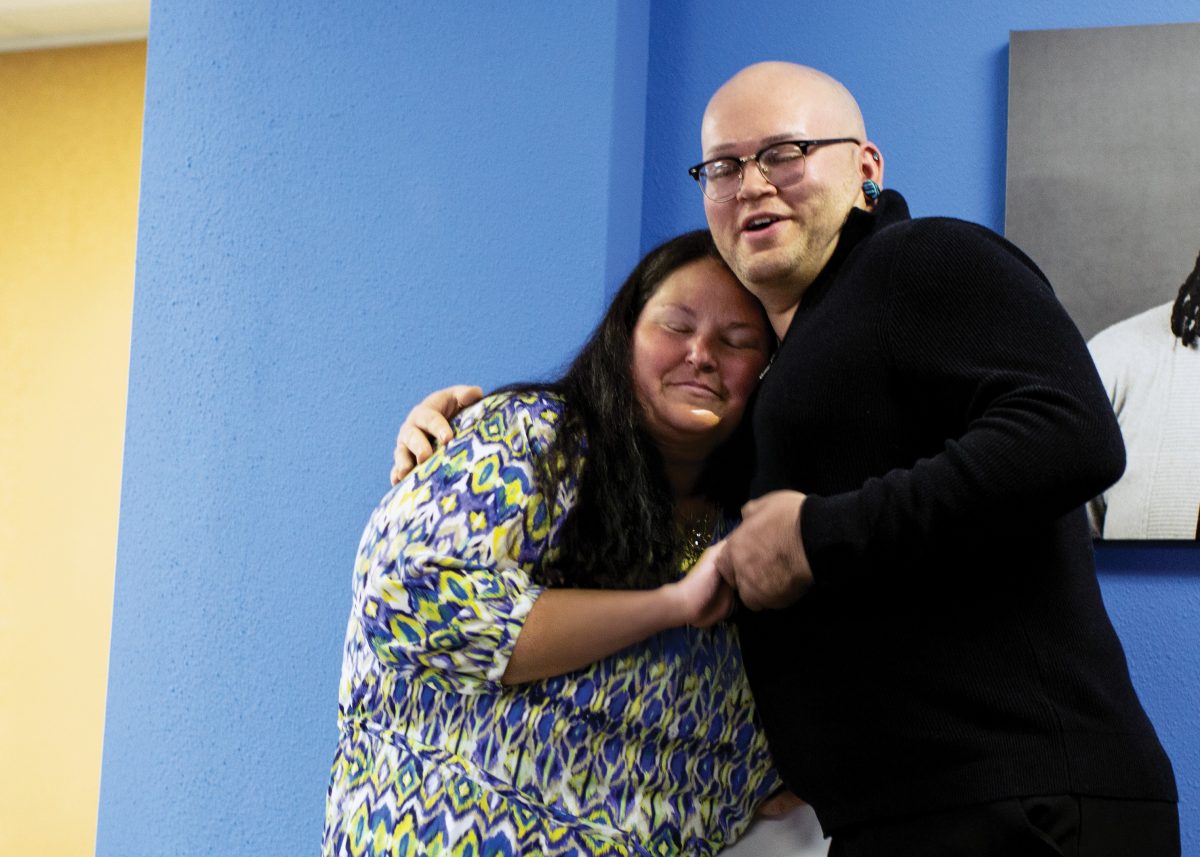
AI saturation of communication is also fueling a shift we’ve seen coming for a while. AI has not and will not replicate authentic human experiences. No matter how much the digital space is flooded with synthetic stories, real human narratives, especially those that carry emotional weight, have become more valuable than ever. But as marketers continue churning out AI content, authenticity is quickly becoming a premium asset. Not because it’s novel, but because it works—and because, at our core, all of us crave real connection: to see ourselves in someone else’s experience and to know we are not alone. Consumers are used to seeking out real, authentic voices. And as real becomes rare, people will gravitate even more toward authentic content.
Looking Back to Look Forward
If this moment feels like déjà vu, it’s because we’ve been here before. A few decades ago, healthcare marketers began to question the industry’s reliance on staged testimonials, hired actors, and polished but generic messaging. It looked and sounded good, but it lacked authenticity, and people knew it. A small but growing number of people believed that real patients sharing real experiences could deliver something far more powerful: trust. Confidential – Not for Public Consumption or Distribution
That idea sparked a quiet revolution and opened up the next frontier in pharma marketing: real, authentic patient stories. Over time, patient storytelling evolved from a niche offering to the industry standard, redefining the way healthcare brands engage with their most important stakeholders. This shift was something even the FDA acknowledged when it established its Patient-Focused Drug Development initiative in 2012 to more systematically collect patient experience and perspectives as part of regulatory and development decision-making. Today, authentic patient stories are a mainstay of modern life science communications, and the key to building trust.
And that authenticity is just as important as it ever was. Even before AI, many of our live connections and interactions had been pushed online by COVID. While virtual can be a boon for some, it can also create a pronounced isolation for patients living with serious health conditions. Now, replacing real, authentic content with AI-generated content runs the risk of deepening patient isolation and chipping away at hard-won patient trust.
Today, we find ourselves back at a similar inflection point. It’s no longer dramatization that stands in the way of authenticity but digitization. The new “fake” isn’t a paid actor; it’s a perfectly plausible AI-generated testimonial. And the new premium? It’s still the same as it was before: truth.
Providing Proof of Authenticity
What was true then is just as true now: patient audiences can spot the real from the fake. As the market gets better at producing content, audiences will get better at discerning what matters. In that environment, the real differentiator won’t be polish, it will be proof. Did a real person say this? Did this actually happen? Is there a real story behind the message?
Going forward, simply claiming authenticity won’t be enough. Organizations will need to prove it. Regulatory conversations around AI transparency in advertising are already happening as we speak, and we’re seeing the start of a nascent verification era. The technology and policy are racing to catch up. Standards like C2PA (Coalition for Content Provenance and Authenticity), NIST (National Institute of Standards and Technology) protocols, and Google’s SynthID are establishing what could become digital signatures for truth. The goal of these technologies is to distinguish between human- and machine-generated content, giving creators a tool to validate the authenticity of their work.
That matters, because audiences will demand it. For companies that have built their reputations on patient-centered work, verification tools for authentic stories will become critical. Some are already quietly aligning their processes with these tools because they recognize where the tide is going.
Why Authenticity Matters to Healthcare Marketers
In healthcare, trust isn’t optional. It’s everything. The messages we share have to ring true because they impact so much: treatment decisions, care choices, even the emotional journeys of people navigating serious diagnoses.
Yes, generative AI carries promise. It enhances and augments productivity in ways that can improve healthcare marketers’ work: organizing information, interview preparation, Confidential – Not for Public Consumption or Distribution
automating routine communications, even enhancing compliance. But it cannot duplicate human emotion or replace a real human voice. It cannot capture the emotional nuance of a patient facing a life-altering condition.
None of this is a rejection of AI. It’s a call to use it wisely, embrace what it can do, and elevate what it can’t replicate. And stories cannot be replicated because they come from people, not prompts. AI may be able to mimic story structures or overlay messaging. But the real voice is key to creating a story that connects a brand to a patient. Protecting that real, authentic voice is an ethical imperative, but it’s also strategically smart. Authenticity builds connection, fosters credibility, and does something AI cannot: it makes people feel.
Stepping Into the Future
Some fear a future where AI devalues human creativity. But history suggests a different outcome. Photography did not erase art: it gave artists new tools to explore their creativity. Email did not destroy handwritten letters; it made them more meaningful. And streaming did not put an end to live concerts; it made them a premium experience. Automation increases creativity’s worth. And worth isn’t measured by profit alone, but by impact. The pioneers of the new frontier won’t be the ones who generate the most but those who make what’s real, authentic, and emotionally resonant.
Authors


Anna Cunningham
Anna Cunningham is an expert in authentic patient cocreation in online settings as well as IRL. With her background in education and creative leadership, she has that rare skill that unlocks the critical truth contained in every human story.