Latest News


Feb-Superbowl-featured-image-1200x800.png

February 10, 2026 0

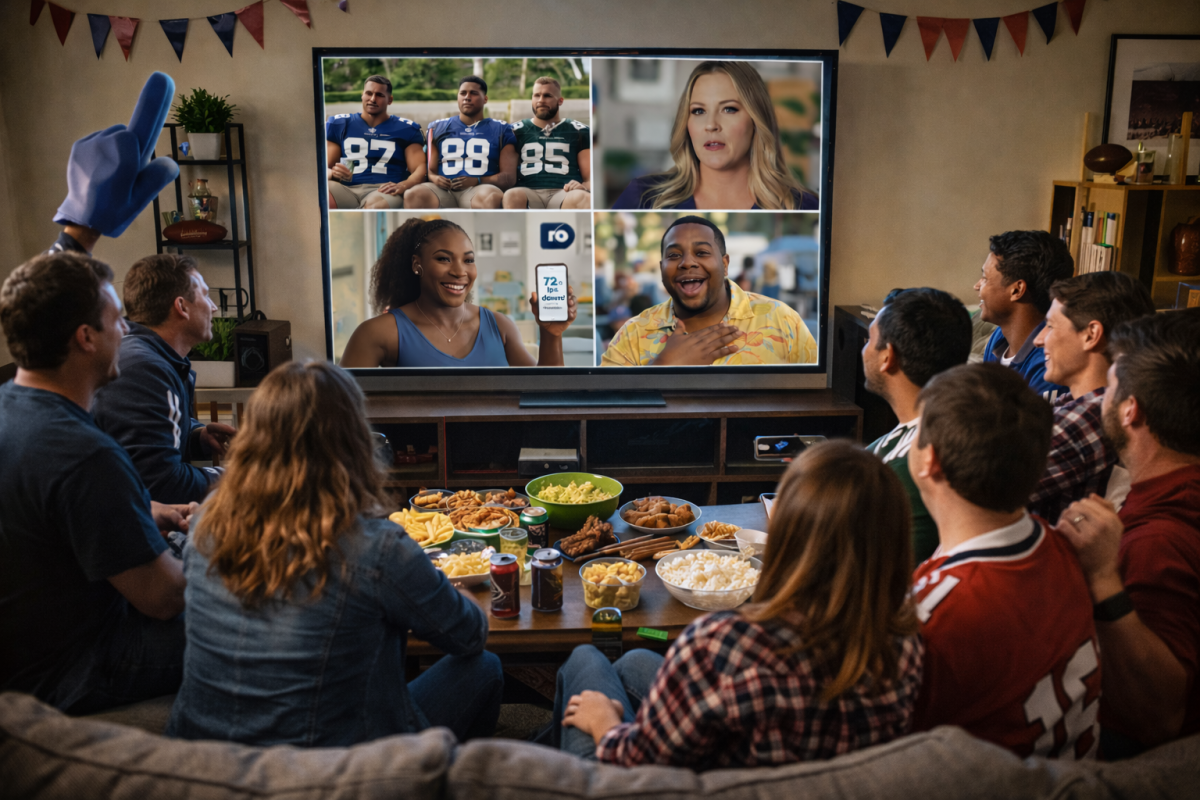
Direct-to-consumer (DTC) advertising once again took center stage during the Super Bowl. This year, four commercials aired that were directly related to prescription drugs or diagnostic testing—an increasing trend as pharmaceutical companies seek to make big, cultural-impact moments out of major live events.

Historically, drug manufacturers have not heavily invested in Super Bowl advertising. That appears to be changing, as companies recognize the power of this massive national platform to reach both patients and healthcare providers simultaneously.

Novartis led the way with another highly creative disease-education ad—this time focused on prostate cancer screening. Last year, the company ran a widely discussed breast cancer awareness spot. This year’s commercial cleverly played on the concept of “tight ends,” featuring NFL stars Rob Gronkowski, Tony Gonzalez, and George Kittle in relaxed settings. The message: men do not need to fear prostate cancer testing because today’s screening can be done with a simple blood test rather than a digital rectal exam.

Even under rising regulatory pressure, pharma is doubling down on the Super Bowl as a must-have DTC stage.

The second ad came from TG Therapeutics and featured actress Christina Applegate, who has lived with multiple sclerosis (MS) for years. In her characteristically candid style, she bluntly stated that “having MS sucks.” The ad directs viewers to a platform where Applegate will share more content about living with MS, while also raising awareness of TG Therapeutics’ treatment, Briumvi, which is designed to slow disease progression. Applegate has long been open about her MS journey, which has profoundly affected both her career and personal life.

The third ad spotlighted Ro, with tennis legend Serena Williams promoting weight loss using a GLP-1 medication available through the company. Williams has been a compelling spokesperson for a range of brands, and this commercial was particularly well executed and persuasive. Ro markets branded medications directly to consumers while also providing ongoing clinical support through its membership model.

The fourth ad promoted Wegovy, Novo Nordisk’s newly launched weight loss pill. The tone was lighthearted and star-studded, featuring celebrities such as Kenan Thompson, John C. Reilly, and Danny Trejo. Given that the pill only became available in January, the spot functioned largely as an announcement to build awareness.

This is a critical moment for Novo Nordisk, as it currently has a limited window to dominate the emerging oral weight loss market before Eli Lilly introduces its own pill version of Zepbound later this year. Novo Nordisk had also faced potential competition from Hims & Hers, but legal pressure and FDA warnings prompted that company to withdraw its lower-cost alternative.

Overall, it is encouraging to see pharmaceutical companies continue to embrace television advertising—even amid growing regulatory scrutiny. The FDA has signaled its intent to make branded DTC ads more difficult to execute by flagging more commercials as non-compliant and by reconsidering rules that currently allow abbreviated risk disclosures in 60-second spots. While the regulatory landscape remains uncertain, it is clear that drug makers are committed to maintaining their presence in major broadcast advertising.

Bob Ehrlich

Realistic_Photograph_Heavyset_Woman_Self_Injecting-GLP1-Diabetes-Insulin.jpeg

December 10, 2024 0

The obesity drug market potential is staggering. America is overweight. I am overweight. My friends are overweight. Willpower is obviously not the solution because most of us cannot sustain it. We need to get by with a little help. About 40% of adults in America are obese according to the CDC. Thankfully, we have two currently approved drugs in the GLP-1 category. Wegovy and Zepbound from Novo Nordisk and Lilly, respectively, currently lead the category. Others will follow.

There has never been a category so suitable for DTC advertising. High incidence, easy understanding of the condition, and fast action to see results are the hallmarks of a no brainer DTC drug. A JP Morgan analyst predicted the GLP-1 obesity market will grow to $71 billion by 2032. There are about 110 million Americans who could benefit from using obesity drugs. Currently only about 6% are using them according to the Kaiser Family Foundation.

Wegovy has been blasting its availability over the past year. We have all seen the great march of people down the street DTC ad. The power of “we”. Lilly’s Zepbound started DTC advertising mid-November. Supply issues made advertising unnecessary until capacity issues were resolved. Production has been recently expanded according to Lilly.

Lilly has set up its direct distribution system to consumers to offer that alternative to regular channels of retail pharmacies. They are ready to promote demand growth.

You can count on several new competitors in the next few years as the great gold rush for this market is making drug makers salivate. Lilly and Novo Nordisk know their premium priced drugs will be facing lower priced entries. The window for maximizing sales at premium prices is short. Insurers will be gradually increasing coverage because the added benefits of these drugs are exciting. At current prices, insurers are not rushing to cover them.

The weight loss category from GLP-1 drugs is set to become a massive DTC advertising spender, reshaping how America addresses obesity and its related health challenges.

Research studies are showing a litany of health outcomes beyond weight loss such as reducing blood sugar, blood pressure, heart disease, addictive behaviors, and potentially dementia. It is just a matter of time before they are covered because of the potential reduction in costs of treating heart disease, diabetes, and dementia.

The pressure will be on drug makers to make these drugs more affordable to the average American. Hearings in Congress were recently held with the Novo Nordisk CEO to pressure the company to lower prices on Ozempic and Wegovy, which run about $1,200 a month for self-pay. Discount cards are available, so the real consumer price is about $600 a month unless covered by insurance.

DTC ads will help keep demand high and new competitors will eventually drive down price. Expanding capacity will allow both Lilly and Novo Nordisk to reduce price and make it up on volume. After all, better to have more customers on these drugs for years at affordable prices than have them start and stop due to cost.

Once we see new competitors, we will see DTC ads evolve to highlight brand advantages. Those might be based on price, form of dose as in pill or injection, frequency needed, side effects, efficacy of weight loss, or other collateral health benefits. The weight loss category from GLP-1 drugs is going to be a massive DTC spender for years to come.

Bob Ehrlich

GLP1-injector-pen-shutterstock.jpg

November 6, 2024 0

On September 24, Novo Nordisk CEO Lars Jørgensen testified before the Senate which I watched on C-SPAN. He was asked to appear to discuss the reasons for high prices for GLP-1 diabetes drug Ozempic and its weight loss sister drug Wegovy. The savaging of drug company pricing policies is an ongoing cause for Sen. Sanders.

Bernie pointed out in his opening statement that US prices for Ozempic and Wegovy are multiples of their price in Germany, the UK, Canada, and other European countries. With his usual outrage, Bernie demanded answers from big pharma. Mr. Jørgensen had a few reasons for higher prices, most important that the list prices are high because Pharmacy Benefit Managers (PBMs) want drugs with high list prices. This is because rebates to them are a percent of list price. According to Mr. Jørgensen, Novo only gets 26% of the list price, the rest going to PBMs.

He also said that insurance companies set the net price consumers pay, not drug companies. Bernie then said that even with PBM rebates US prices are still too high. There was no definitive answer given by Mr. Jørgensen on the reasons for the difference between US and European pricing. What was clear was neither Republicans nor Democrats were satisfied they got their answers. Senators seemed frustrated with the complex nature of drug pricing and want legislative action on how PBMs get compensated.

The reality is that US drug prices are higher because the drug makers face price controls in most other countries. Prices would be lower if PBMs were cut out of the loop but still be higher than Canada or Europe. The US consumer partially subsidizes R&D for the world. That is unfair, of course, but reality. If Bernie got his wish and drug companies charged the European price, we would have less R&D. Mr. Jørgensen pointed out Novo Nordisk is spending $30 billion on increasing manufacturing capacity and $4.2 billion on Diabetes R&D last year. He said their annual R&D budget was more than the National Institutes of Health spent. If US drug prices historically matched Europe, it is likely we would not have Ozempic or Wegovy available today.

Innovative drugs like Wegovy will come down in price as production is ramped up and competitors enter the market. The obesity market is huge and Wegovy and Lilly’s Mounjaro will grow exponentially if price comes down significantly. Their makers know this and once they have enough production capacity, they will cut prices and vastly expand usage. Their large DTC spending shows how much they think they can grow the market.

As the GLPs increasingly show health benefits beyond diabetes and obesity, such as for cardiovascular and kidney disease, it is imperative that prices are low enough to get mass use covered by insurers and affordable for direct pay patients. Our collective health may depend on a significant cut in prices.

Bob Ehrlich