Latest News


Feb-Superbowl-featured-image-1200x800.png

February 10, 2026 0

Direct-to-consumer (DTC) advertising once again took center stage during the Super Bowl. This year, four commercials aired that were directly related to prescription drugs or diagnostic testing—an increasing trend as pharmaceutical companies seek to make big, cultural-impact moments out of major live events.

Historically, drug manufacturers have not heavily invested in Super Bowl advertising. That appears to be changing, as companies recognize the power of this massive national platform to reach both patients and healthcare providers simultaneously.

Novartis led the way with another highly creative disease-education ad—this time focused on prostate cancer screening. Last year, the company ran a widely discussed breast cancer awareness spot. This year’s commercial cleverly played on the concept of “tight ends,” featuring NFL stars Rob Gronkowski, Tony Gonzalez, and George Kittle in relaxed settings. The message: men do not need to fear prostate cancer testing because today’s screening can be done with a simple blood test rather than a digital rectal exam.

Even under rising regulatory pressure, pharma is doubling down on the Super Bowl as a must-have DTC stage.

The second ad came from TG Therapeutics and featured actress Christina Applegate, who has lived with multiple sclerosis (MS) for years. In her characteristically candid style, she bluntly stated that “having MS sucks.” The ad directs viewers to a platform where Applegate will share more content about living with MS, while also raising awareness of TG Therapeutics’ treatment, Briumvi, which is designed to slow disease progression. Applegate has long been open about her MS journey, which has profoundly affected both her career and personal life.

The third ad spotlighted Ro, with tennis legend Serena Williams promoting weight loss using a GLP-1 medication available through the company. Williams has been a compelling spokesperson for a range of brands, and this commercial was particularly well executed and persuasive. Ro markets branded medications directly to consumers while also providing ongoing clinical support through its membership model.

The fourth ad promoted Wegovy, Novo Nordisk’s newly launched weight loss pill. The tone was lighthearted and star-studded, featuring celebrities such as Kenan Thompson, John C. Reilly, and Danny Trejo. Given that the pill only became available in January, the spot functioned largely as an announcement to build awareness.

This is a critical moment for Novo Nordisk, as it currently has a limited window to dominate the emerging oral weight loss market before Eli Lilly introduces its own pill version of Zepbound later this year. Novo Nordisk had also faced potential competition from Hims & Hers, but legal pressure and FDA warnings prompted that company to withdraw its lower-cost alternative.

Overall, it is encouraging to see pharmaceutical companies continue to embrace television advertising—even amid growing regulatory scrutiny. The FDA has signaled its intent to make branded DTC ads more difficult to execute by flagging more commercials as non-compliant and by reconsidering rules that currently allow abbreviated risk disclosures in 60-second spots. While the regulatory landscape remains uncertain, it is clear that drug makers are committed to maintaining their presence in major broadcast advertising.

Bob Ehrlich

ChatGPT-Image-Dec-9-2025-02_10_09-PM-FDA-letters-after-90-days-1200x800.png

December 11, 2025 0

The FDA 9/9 letters reshaped DTC advertising. Three months later the real impact is emerging, from ad pauses to pushback on net impression claims. On September 9 the FDA issued 27 untitled letters to pharma companies over allegedly misleading television ads. We reviewed what has actually happened to the DTC efforts of those cited brands.

Nine brands have gone completely dark on television. Eleven are still running what appear to be the same ads, which likely means they are disputing FDA’s interpretation or are negotiating modifications. Four brands have revised the cited ads and returned to air. Three have introduced entirely new creative.

Only four matters have been formally closed, indicating FDA has accepted the company response. The fact that eleven cited ads are still on air suggests drug makers believe they remain in compliance and are prepared to defend their position.

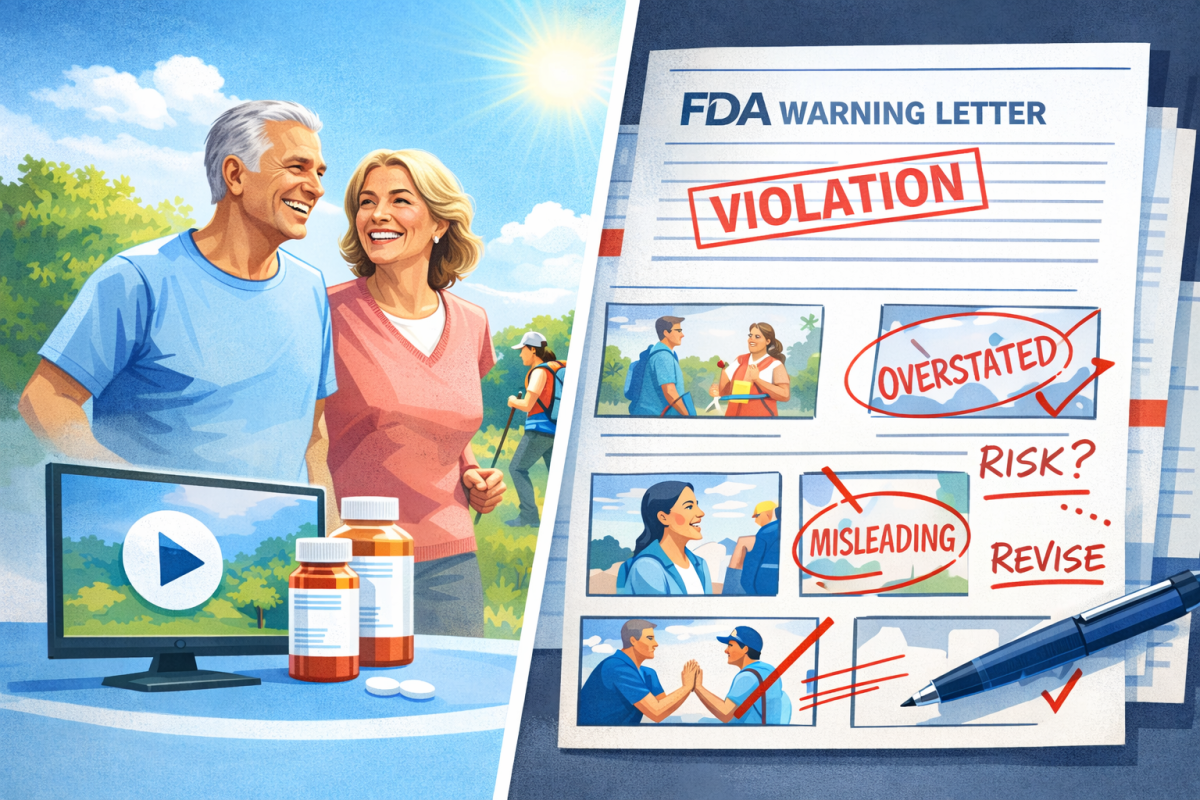
FDA’s rationale for citations varies, but the most common is overstated efficacy. Sometimes FDA points to clinical data they believe contradicts the claim. Other times they argue the “net impression” overstates benefit, even when the supers are clinically accurate. In those cases, FDA says the emotional tone—patients looking “too happy,” “too energized,” or “too cured”—creates an impression inconsistent with the drug’s actual performance.

Another recurring issue is distraction during fair balance: rapid scene cuts, visually stimulating footage, heavy music, or supers that are difficult to read. These are adjustments drug makers can fix relatively easily. Consumers are not harmed by a more subdued fair balance section; in fact, boring is often better.

A tougher FDA means advertisers must be more cautious, not that they should abandon television.

What troubles me most is the widening use of the net impression standard. It gives FDA enormous latitude to declare a violation based on the subjective view of a single reviewer. Several letters cite nothing more than “smiling patients” as evidence of overstated efficacy. That is an arbitrary benchmark and I expect companies will push back hard.

The good news: after the 9/9 blitz, FDA appears to have cooled down. They made their point, and the entire DTC ecosystem is now paying attention. The bigger question is what comes next—specifically, whether FDA intends to eliminate the “adequate provision” pathway that has enabled broadcast advertising for nearly three decades. Any attempt to restrict it will ultimately be a First Amendment fight, and courts have historically required a very high bar to curtail commercial speech. With 28 years of DTC television and no demonstrated public health harm, FDA would need overwhelming evidence to justify new limits.

I remain confident that DTC television will endure. A tougher FDA simply means advertisers must be more cautious in claims and more disciplined in fair balance. The industry will adapt. And we should not let FDA bluster scare us off the broadest reach channel we have.

Bob Ehrlich